Nurse Attorney in Clinton Township, MI

As a nurse attorney in Clinton Township, Eileen E. Kroll, RN, JD, focuses on the hours after surgery. Those hours are often the riskiest part of an operation, and they are usually watched by nurses, not surgeons. When warning signs go unnoticed, a routine recovery can turn into a life-changing injury. We help Clinton Township families find out what the post-op record really shows.
If a loved one took a turn for the worse after surgery and help came too late, contact us for a free consultation or call 1-866-MICH-LAW anytime, 24/7.
A Former Surgical ICU Nurse Reviewing Surgical Care

Eileen spent five years as a registered nurse in the surgical intensive care unit of a large Detroit hospital. Her patients were fresh from the operating room, often on breathing support, pain drips, and multiple IV lines. She knows what careful post-op monitoring looks like, because she did it shift after shift.
That experience changes how she reads a surgical chart. She knows how often vital signs should be checked for a given patient, what an early sign of bleeding looks like on a flowsheet, and when a nurse should have picked up the phone. Her full background is on the profile of Eileen E. Kroll, RN, JD.
After Surgery: When Nurses Miss the Warning Signs
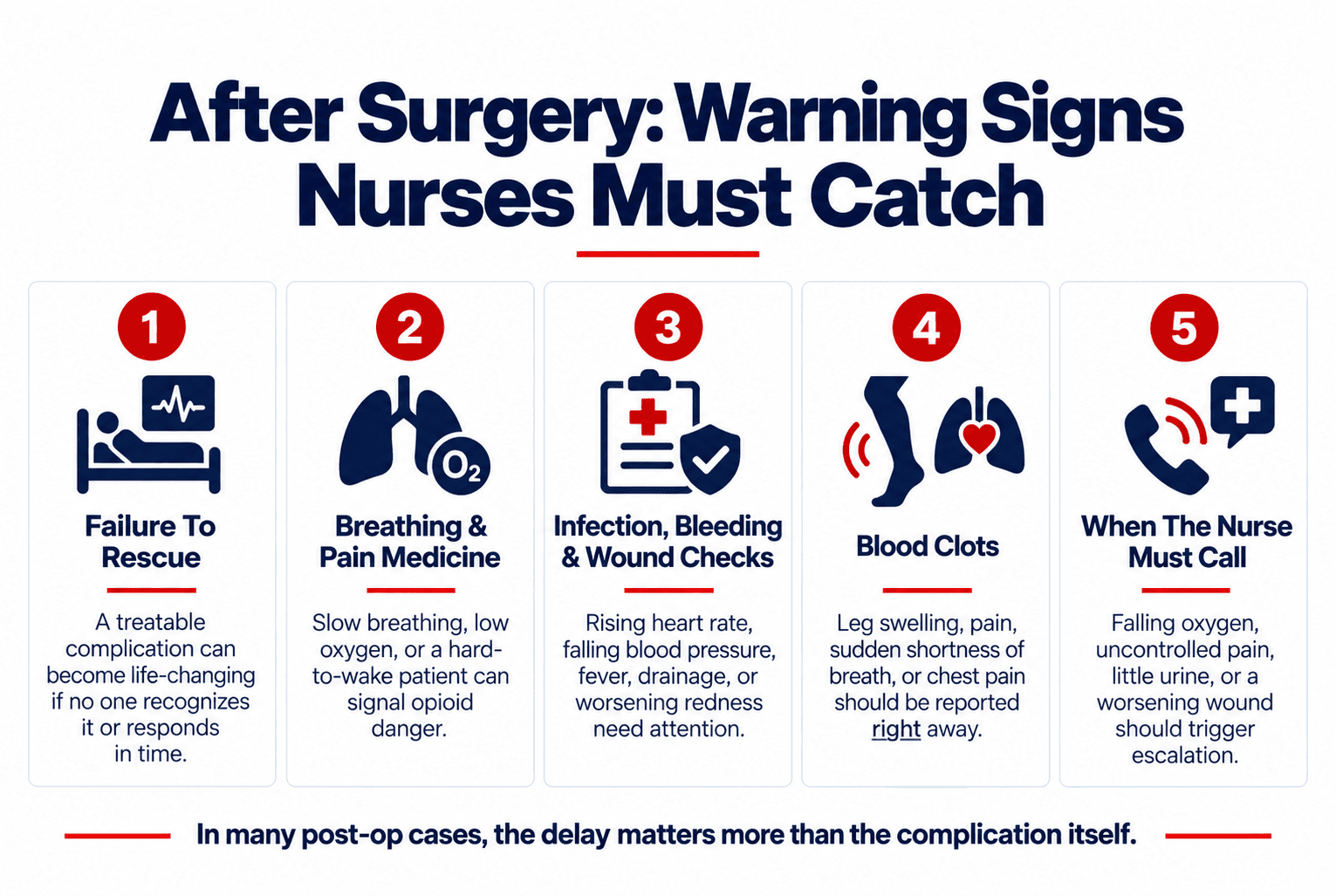
Most complications after surgery can be treated if they are caught early. The injuries we see often come from delay, not from the complication itself.
What “Failure to Rescue” Means
Failure to rescue describes a patient who develops a treatable complication, such as bleeding, infection, or a breathing problem, but dies or is seriously harmed because nobody recognized it or acted fast enough. The complication may not be anyone’s fault. The slow response can be. Research on missed nursing care shows how skipped assessments on busy units can let a problem grow.
Breathing and Pain Medicine After Surgery
Opioid pain medicines are common after surgery, and they can slow breathing, especially in older patients, people with sleep apnea, or anyone receiving several sedating drugs at once. Patients on PCA pumps (patient-controlled pain pumps) need regular checks of breathing rate, oxygen level, and how easily they wake up. When a patient becomes hard to rouse and the dose isn’t adjusted, breathing can slow until it stops.
Infection, Bleeding and Wound Checks
Nurses check the incision, drains, and dressings and watch for changes in heart rate, blood pressure, and temperature. A rising heart rate with falling blood pressure can signal internal bleeding. Redness, swelling, drainage, or fever can point to infection, a risk explained in the Patient Safety Network’s overview of surgical site infections. Catching these trends early is a core nursing duty.
Blood Clots After Surgery
Patients who lie still for long periods after surgery can develop blood clots in the legs, which can break loose and travel to the lungs. Prevention often includes blood thinners, compression devices, and getting the patient up and walking. Leg swelling or pain, sudden shortness of breath, or chest pain are warning signs nurses should report right away.
When the Nurse Must Call the Surgeon
Nurses are expected to report important changes to the surgeon or on-call doctor and to keep going up the chain of command if nobody responds. Warning signs that should trigger a call include:
- Oxygen levels dropping or breathing becoming slow or shallow
- A patient who is unusually sleepy, confused, or hard to wake
- Heart rate climbing or blood pressure falling
- Bleeding that soaks through dressings or fills a drain quickly
- Severe pain that isn’t controlled by the ordered medication
- Little or no urine output over several hours
- New fever, chills, or a wound that looks worse
Burns and Positioning Injuries in the Operating Room
Some surgical injuries happen before recovery even starts, such as burns from surgical equipment or nerve damage from poor positioning on the table. Our page on surgical burns covers those claims.
How Families Can Call for Help on a Surgical Floor
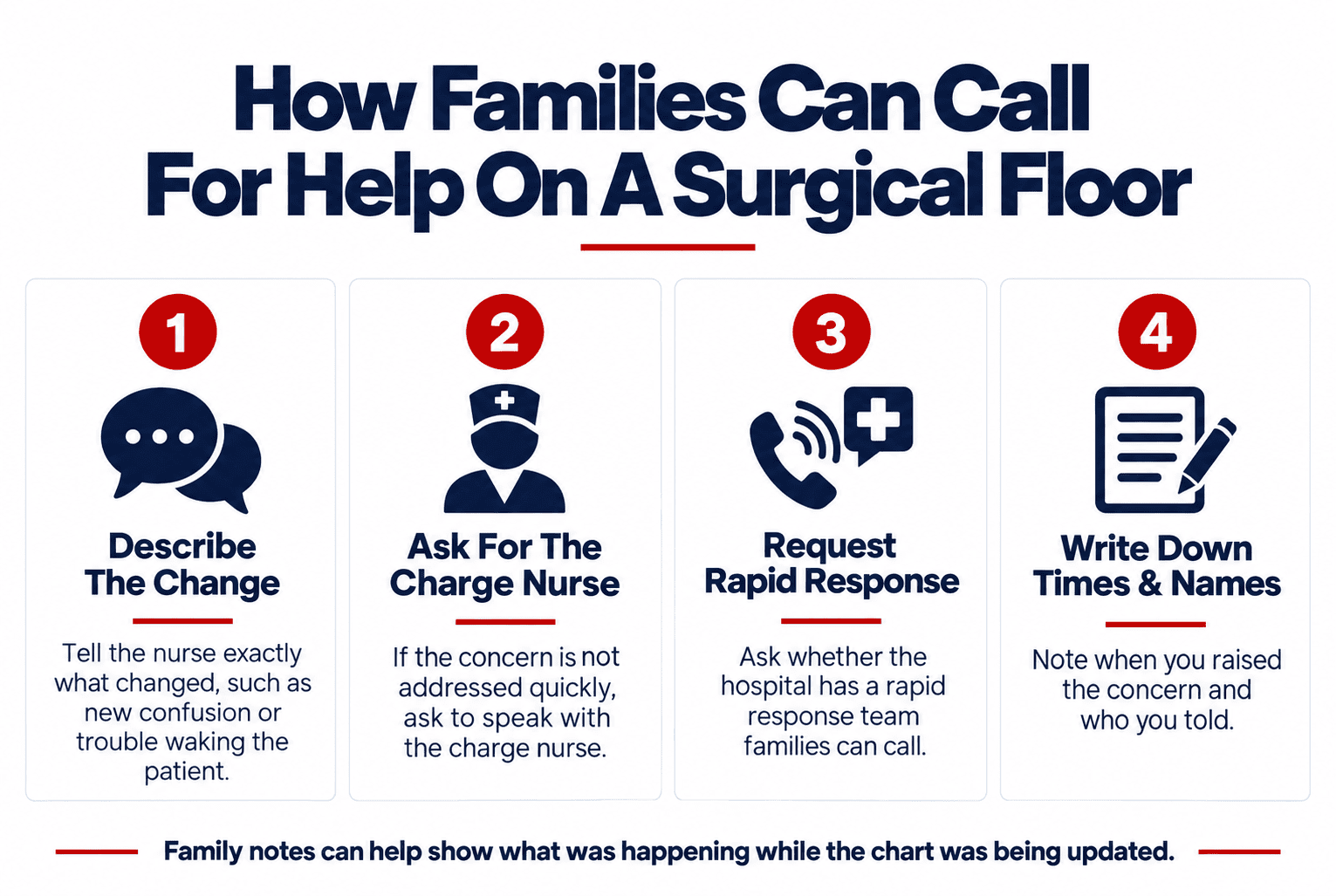
You know your loved one best. If something seems wrong after surgery, you have more options than waiting for the next nursing check:
- Tell the nurse exactly what changed, such as “He was talking an hour ago, and now I can’t wake him.”
- Ask for the charge nurse if your concern isn’t addressed quickly.
- Ask whether the hospital has a rapid response team that families can call. Many hospitals do, and the Patient Safety Network’s overview of rapid response systems explains how these teams work.
- Write down times and names, including when you raised a concern and who you told.
Those notes can matter later. A chart may show a nurse charted “patient resting comfortably” at the same time a family member was asking for help.
What a Nurse Attorney in Clinton Township Checks in a Post-Op Case
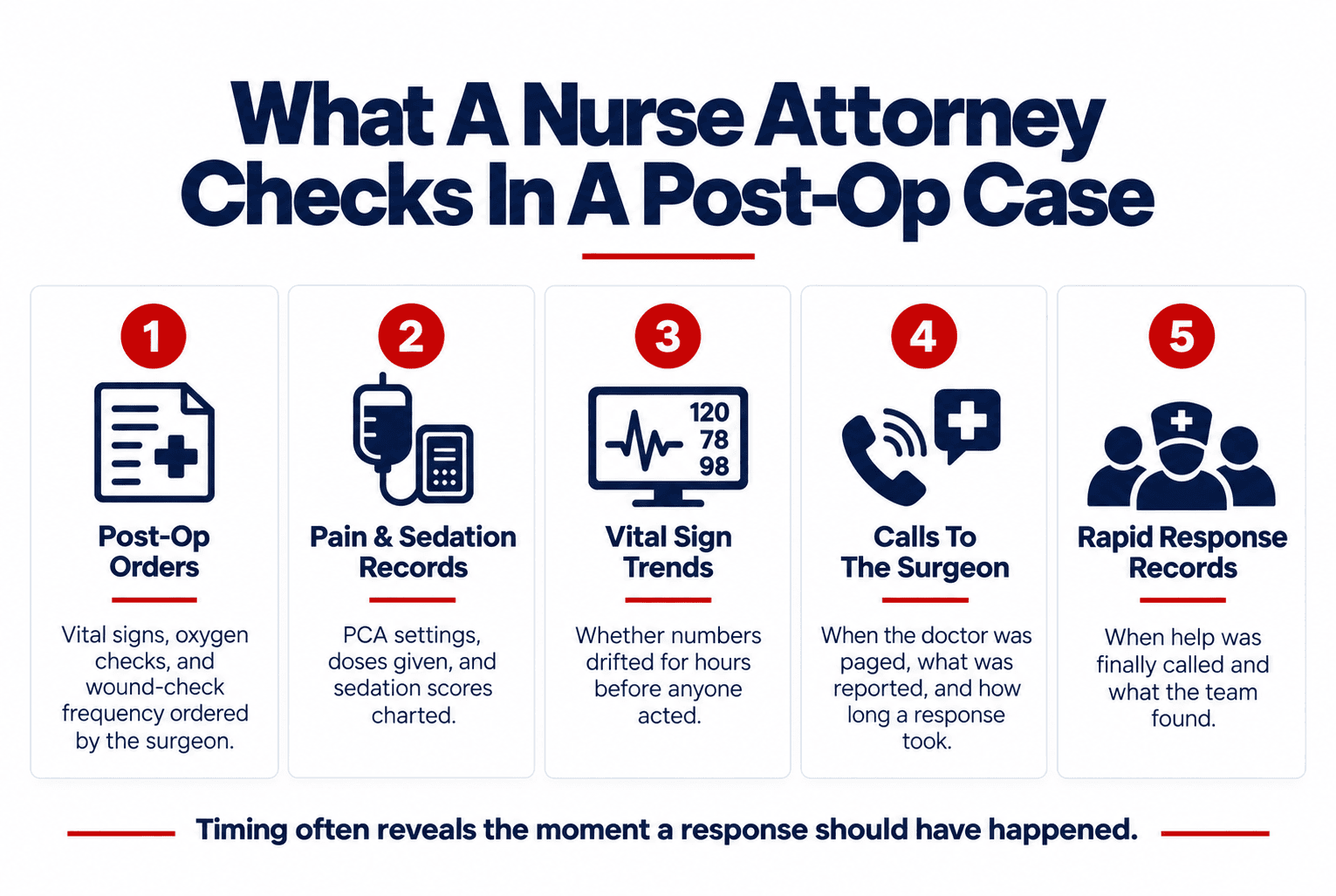
When we review a surgical case, the first questions are about timing and monitoring. We focus on:
- The post-op orders: how often the surgeon ordered vital signs, oxygen checks, and wound checks
- Sedation and pain records: PCA settings, doses given, and any sedation scores charted
- Vital signs trends: whether numbers were drifting for hours before anyone acted
- Calls to the surgeon: when the doctor was paged, what was reported, and how long a response took
- Rapid response or code records: when help was finally called and what the team found
Lined up hour by hour, these records often show the moment a response should have happened. Our Michigan nurse attorney page explains the notice and expert rules that apply once we find a problem.
A Wrongful Death Recovery From Oakland County
Our firm secured a $1 million result in an Oakland County wrongful death case. A mother of three died after she was not properly treated for a closed-head injury. Cases like this turn on whether warning signs of a worsening condition were recognized in time, the same question at the heart of many post-surgery claims. Our wrongful death claims page explains how Michigan families bring these cases.
Past results do not guarantee a similar outcome in any future case.
Clinton Township Hospitals, Nursing Schools and the Macomb County Courthouse
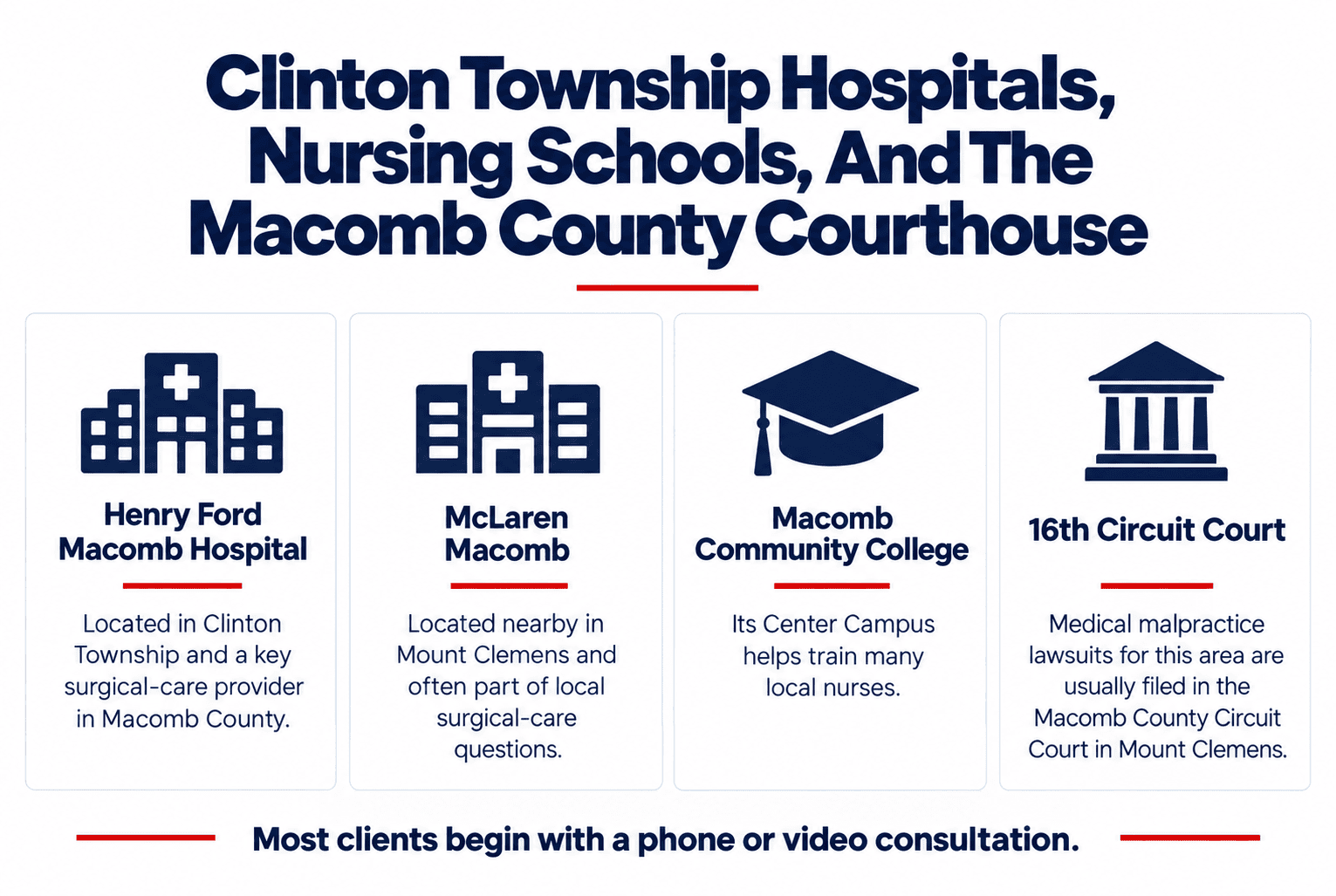
Clinton Township is a hub for surgical care in Macomb County:
- Henry Ford Macomb Hospital sits in the township (Henry Ford Macomb)
- McLaren Macomb is just next door in Mount Clemens
Many local nurses begin their training at Macomb Community College, whose Center Campus is in Clinton Township. The University of Detroit Mercy also offers a nursing degree program with Macomb Community College.
Malpractice lawsuits for care given in Clinton Township, Warren, and Sterling Heights are filed in the Macomb County Circuit Court (16th Circuit), located at 40 N. Main St. in Mount Clemens. Court details are listed on Michigan Legal Help’s 16th Circuit Court page. Macomb County cases often go through case evaluation before trial, and many settle along the way.
Our Livonia office is about 40 minutes from Clinton Township, and our Flint office is about 55 minutes. Most Macomb County clients start with a phone or video consultation. We work on a contingency fee, so you pay no attorney fee unless we recover compensation for you.
Request a Free Surgical Care Case Review
Post-op records, pump histories, and monitor data can be hard to get once time passes. An early review helps protect them.
Contact us at Cochran, Kroll & Associates, P.C. for a free consultation. We’ll request the surgical and nursing records, compare the monitoring to what was ordered, and tell you honestly whether you have a case. Remember, we don’t get paid unless you win.
Call us at 1-866-MICH-LAW anytime, 24/7, to schedule a free case evaluation.
Frequently Asked Questions
Can I bring claims against both the surgeon and the hospital for one post-surgery injury?
Yes, when both contributed to the harm. The surgeon may be responsible for surgical decisions or for not responding to a nurse’s call, while the hospital may be responsible for its nurses’ monitoring. Each one needs its own Notice of Intent before a lawsuit can be filed.
How often should nurses check on a patient after surgery?
There is no single number. The surgeon’s orders and the patient’s condition set the schedule, and checks are usually more frequent right after surgery, when pain medication is increased or when a patient’s condition changes. We compare what was ordered with what was actually charted.
My father stopped breathing while on a pain pump after surgery. Is that malpractice?
It may be. We would look at whether he had risk factors, how the pump was set, how often his breathing and alertness were checked, and whether anyone acted when he became drowsy. Breathing problems from pain medicine are often preventable with proper monitoring.
Does your Clinton page cover Clinton Township or another Clinton in Michigan?
This page focuses on Clinton Township in Macomb County. Michigan has other communities named Clinton, and we represent Michigan residents statewide, so if you live in another Clinton, we can still review your case.
Will I have to go to court in Mount Clemens?
Maybe not. Most malpractice cases settle before trial, and many steps happen through written exchanges, depositions, and video calls. If your case does go to trial, it would usually be heard at the Macomb County courthouse in Mount Clemens.