Nurse Attorney in Sterling Heights

A nurse attorney in Sterling Heights can help when a parent or spouse in long-term care is hurt by neglect. Many local families rely on nursing homes and assisted living, where much of the daily care comes from nurses and aides. Eileen E. Kroll, RN, JD, knows what that care should look like and how to prove when it fell short.
Worried about how a loved one is being treated in a Sterling Heights care facility? Contact us for a free consultation or call 1-866-MICH-LAW anytime, 24/7.
Nursing Home Neglect: The Care Families Should Expect
Nursing home neglect means a facility failed to provide the basic care a resident needed, and the resident was harmed because of it. It is often quieter than abuse. There may be no single bad moment, just weeks of missed turns, skipped meals, or unanswered call lights. A nurse attorney reads the facility’s own records to show where that pattern began.
Bedsores and Turning Schedules
Bedsores, also called pressure injuries, form when constant pressure cuts off blood flow to the skin. Residents who cannot move on their own need to be repositioned on a regular schedule, and their skin needs to be checked often. Pressure injuries are graded in stages. Stages 1 and 2 affect the skin’s surface. Stage 3 and 4 wounds reach through the skin into fat, muscle, or even bone, and they are a serious red flag that care may have broken down.
Falls and Fall-Risk Plans
Every resident should be assessed for fall risk when they arrive and again when their condition changes. If they are at risk, the care plan should list specific steps: bed alarms, a low bed, help getting to the bathroom, non-slip footwear, or closer supervision. “Supervision” means staff actually carry out those steps, not just write them down. The federal Patient Safety Network’s overview of falls explains why these prevention steps matter so much for older adults.
Weight Loss, Dehydration and Missed Meals
Residents who need help eating depend completely on staff at mealtime. Sudden weight loss, dry mouth, confusion, or frequent infections can point to meals and fluids that never reached the resident. Facilities are expected to weigh residents regularly and report significant changes to the physician and the family.
Too Much Sedation
Some residents receive medications that calm or sedate them. These drugs have legitimate uses, but they can also be misused to make residents easier to manage. Signs include a loved one who suddenly sleeps most of the day, seems withdrawn, or stops recognizing family. Families have a right to ask what was given and why.
Care Plans and Staffing Records as Evidence
The strongest nursing home cases are built from paperwork the facility created itself. A nurse attorney asks for:
- Resident assessments, which record the resident’s needs and risks at set intervals
- The written care plan, which lists what staff committed to do
- Turning, meal and fluid logs, showing whether that care happened
- Staffing sheets, which show how many nurses and aides were on duty each shift
- Incident reports and wound records, documenting falls and skin breakdown
When the care plan says “turn every two hours” but the logs are blank, the gap often speaks for itself. Our page on nursing home abuse and neglect covers the wider range of these claims.
How to Check a Nursing Home’s Record
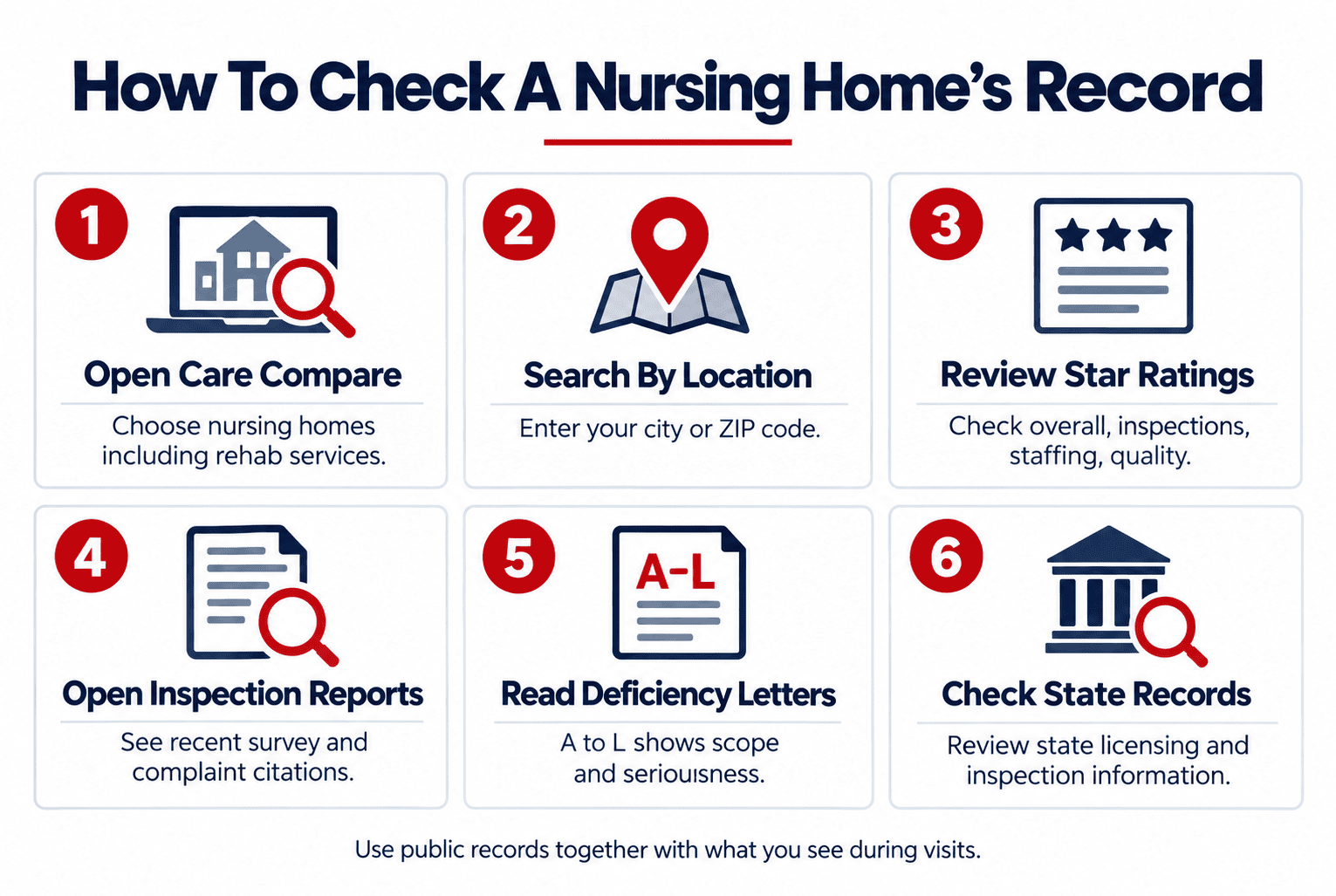
You can learn a lot about a facility before or after something goes wrong. These steps take about 20 minutes:
1. Open Care Compare. Go to Medicare’s Care Compare tool and choose “Nursing homes including rehab services.”
2. Search by location. Enter “Sterling Heights, MI” or your ZIP code and set a distance.
3. Review the star ratings. Look at the overall rating, then at the separate ratings for health inspections, staffing, and quality measures. A low staffing score deserves a closer look.
4. Open the inspection reports. Each facility lists its recent health inspection results and any complaints that led to citations.
5. Read each deficiency. Every citation carries a letter from A to L. Letters toward the end of the alphabet mean more residents were affected or the harm was more serious, and J, K, and L signal “immediate jeopardy” to resident health or safety.
6. Check state records. Michigan’s Department of Licensing and Regulatory Affairs (LARA) licenses and inspects nursing homes and posts information on facilities it regulates.
Having a few citations does not always mean a facility is unsafe, and a clean record does not guarantee good care for every resident. The records are one tool alongside what you see during visits.
Care Settings In and Around Sterling Heights
Sterling Heights is one of Michigan’s largest cities, yet it has no major acute care hospital inside its borders. When residents of local care facilities need hospital care, they usually go to Henry Ford Macomb Hospital in Clinton Township, McLaren Macomb in Mount Clemens, or Henry Ford Warren Hospital. The Henry Ford Medical Center in Sterling Heights provides outpatient care.
That means many transfers. A resident might move from a Sterling Heights nursing home to a hospital in a neighboring city and then back again, and each move creates a chance for orders, medications, or wound care instructions to get lost.
Local employers shape demand too. Stellantis’s Sterling Heights Assembly Plant and the region’s other large employers draw many working-age families, and many of them have parents who need long-term care close by.
Who Can Be Held Responsible When a Resident Is Harmed
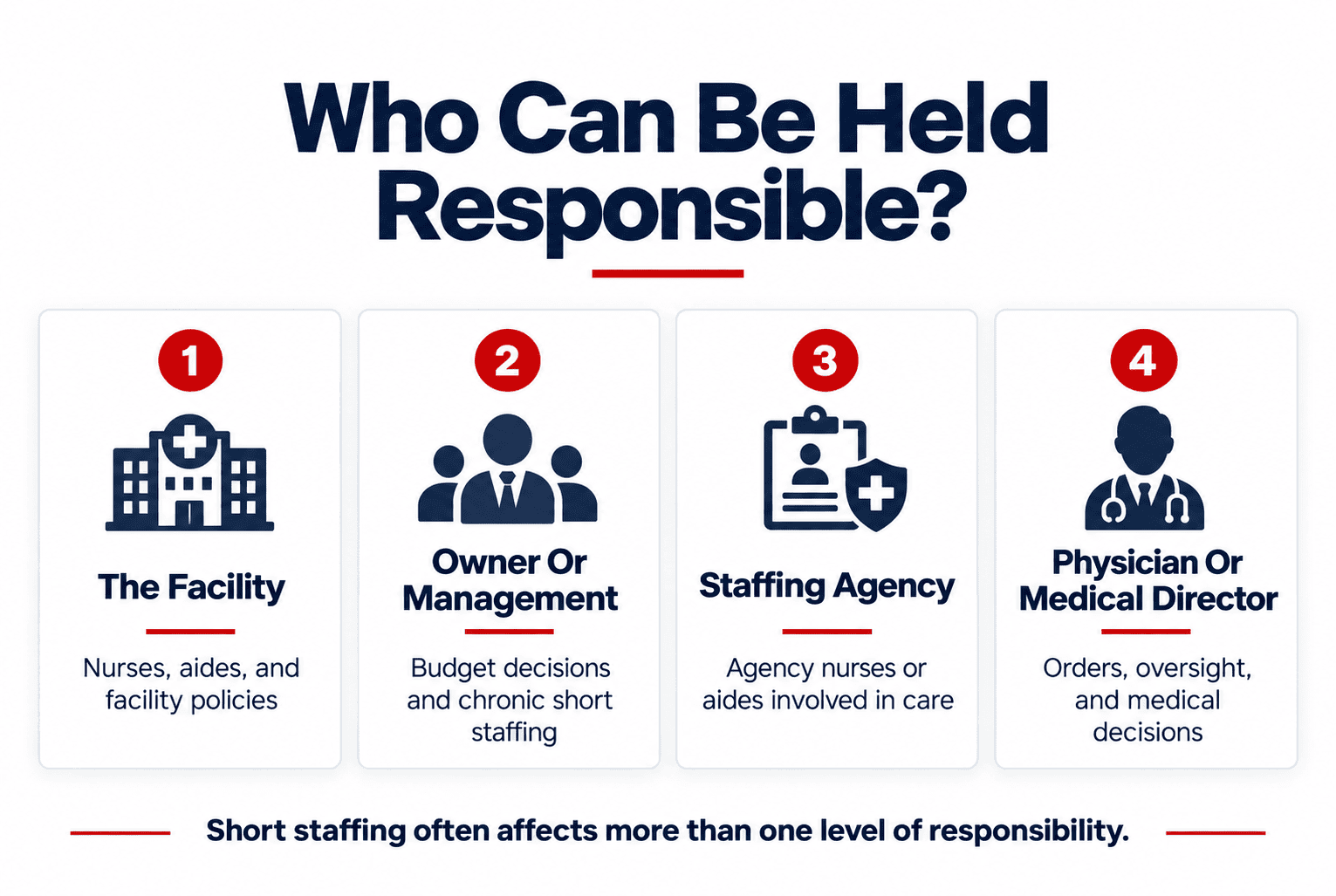
Nursing home claims often involve more than one party. Depending on the facts, responsibility may fall on:
- The facility, for the actions of its nurses and aides and for its own policies
- The owner or management company, especially when budget decisions led to chronic short staffing
- A staffing agency, if agency nurses or aides provided the care
- The attending physician or medical director, when medical orders or oversight were the problem
Short staffing is a common thread. Families often hear that “we just didn’t have enough people.” That explanation does not excuse the harm. Facilities are expected to staff at a level that meets their residents’ needs, and staffing records can show whether they did.
Assisted Living vs. Nursing Homes: Why the Difference Matters
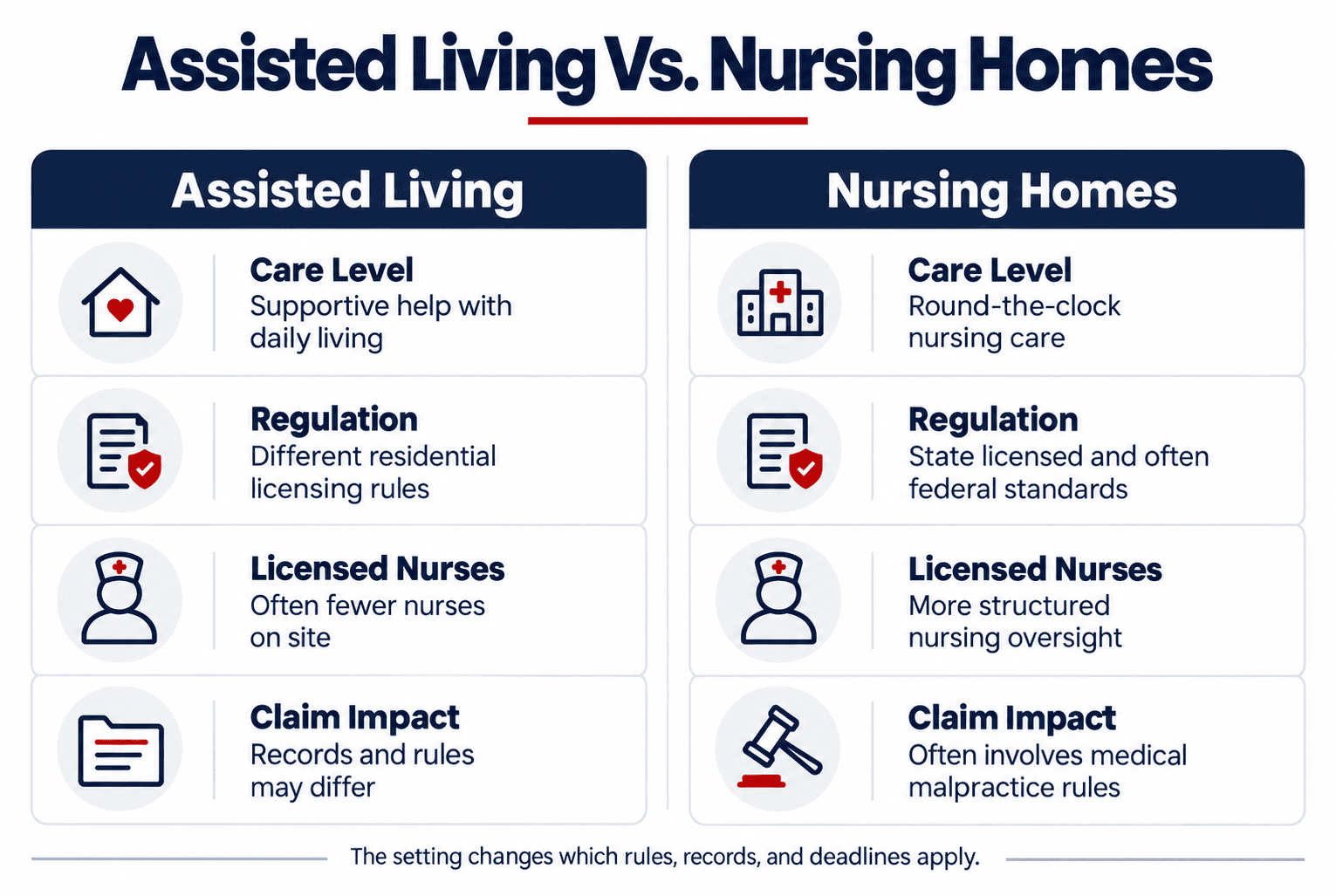
Many families use the terms interchangeably, but they are different settings under Michigan law. Nursing homes provide round-the-clock nursing care, are licensed by the state, and, if they accept Medicare or Medicaid, must meet federal standards. Assisted living residences in Michigan are usually licensed as homes for the aged or adult foster care homes, which follow different rules and often have fewer licensed nurses on site.
The difference matters for a claim. It changes which rules apply, which records exist, and whether Care Compare has any data on the facility at all. It can also affect whether a case is treated as medical malpractice, with Michigan’s notice and expert requirements, or as ordinary negligence. We sort that out early, because it shapes every deadline.
When Neglect Leads to a Death
Sometimes neglect ends in a death that should not have happened, such as an infection from an untreated pressure injury or a fatal fall after warnings were ignored. In those cases, Michigan allows a personal representative of the estate to bring a claim on behalf of the family. Our page on wrongful death claims explains who can file and what compensation may cover.
Steps to Take Before You Call a Nurse Attorney in Sterling Heights
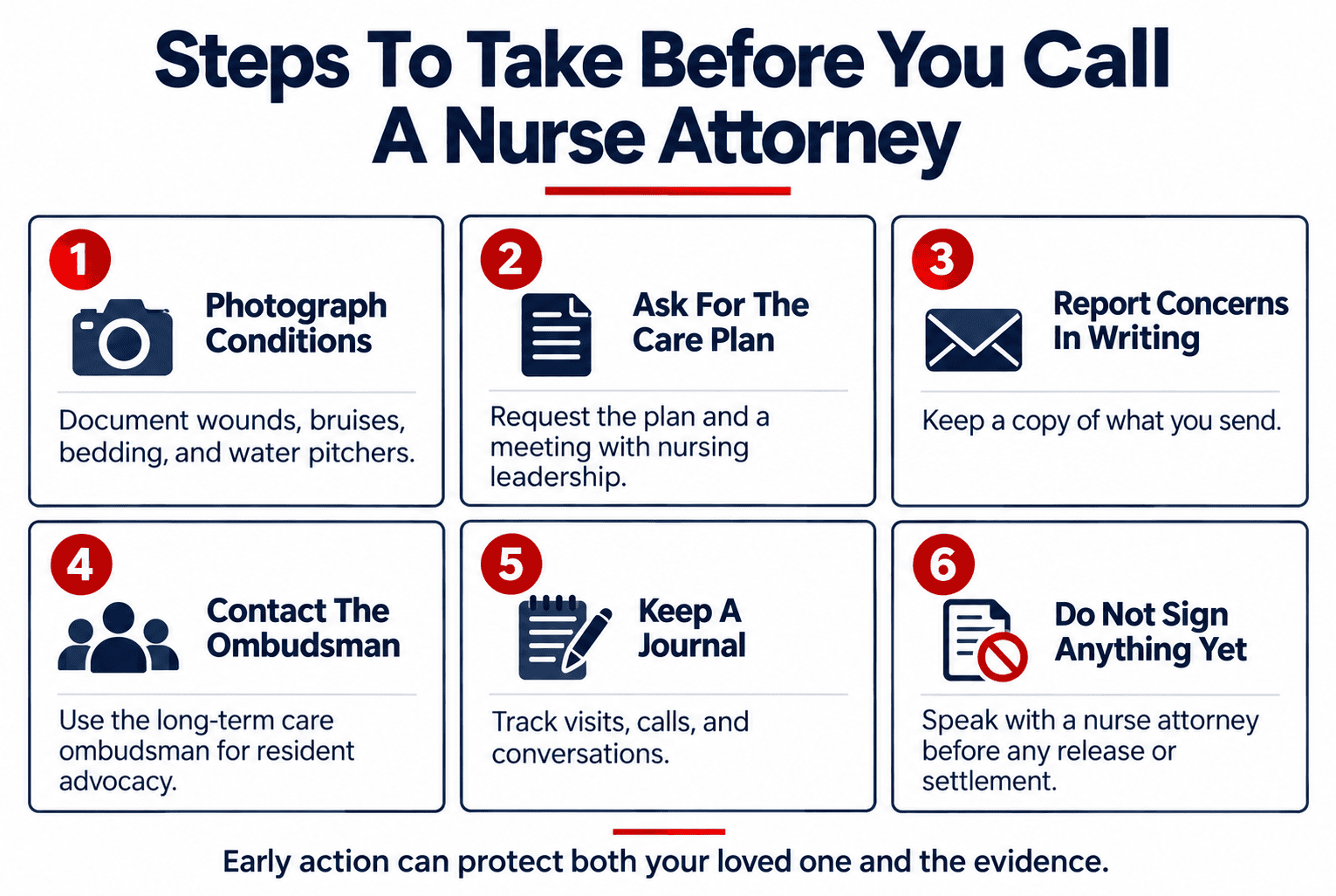
If you suspect a loved one is being neglected, these steps protect both the resident and a possible claim:
- Photograph what you see, including wounds, bruises, soiled bedding, and an empty water pitcher, with dates.
- Ask for the care plan and a meeting with the director of nursing.
- Report concerns to the facility in writing and keep a copy.
- Contact the [Michigan Long Term Care Ombudsman Program](https://mltcop.org/), a free advocate for residents of nursing homes and assisted living.
- Keep a journal of every visit, call, and conversation.
- Talk with a nurse attorney before signing any release or settlement paperwork from the facility.
A nurse attorney can request records the facility may not share with you directly. Eileen’s background as a registered nurse means she knows what a proper wound record or fall assessment should contain. You can read her full background on the profile of Eileen E. Kroll, RN, JD, and our statewide page on Michigan nurse attorney services lists the filing deadlines that apply.
We handle nursing home cases on a contingency fee. You pay no attorney fee unless we recover compensation for your family.
Contact Our Nursing Home Neglect Attorneys in Sterling Heights
Bedsores, falls, and weight loss rarely fix themselves. Acting early protects your loved one and the records that show what happened.
Contact us at Cochran, Kroll & Associates, P.C. for a free consultation. We’ll explain how a claim works, what evidence to gather now, and how we can help your family. Remember, we don’t get paid unless you win.
Call us at 1-866-MICH-LAW anytime, 24/7, to schedule a free case evaluation.
Frequently Asked Questions
Is a bedsore always a sign of neglect?
No. Some very ill residents develop pressure injuries even with good care. A bedsore becomes a warning sign when it reaches stage 3 or 4, when it was not documented until it was advanced, or when the records show turning and skin checks were missed. A nurse attorney can compare the wound’s history against the care plan.
Should I move my parent to another facility while a claim is pending?
Your parent’s safety comes first. If you believe the care is unsafe, you can move them at any time, and a pending claim does not stop you. Before the move, take photos, request a copy of the chart, and write down the names of the staff involved so evidence is not lost.
My parent signed an arbitration agreement at admission. Can we still bring a claim?
Often, yes, though the agreement may affect where the claim is heard. Federal rules limit how nursing homes that take Medicare or Medicaid can use these agreements, including a ban on requiring them as a condition of admission. We review the paperwork your family signed as part of our free consultation.
Do Michigan's malpractice caps apply to nursing home cases?
It depends on how the claim is classified. Claims about professional nursing judgment are usually treated as medical malpractice, which brings in Michigan’s damages caps and notice rules. Some claims about basic care failures may be treated as ordinary negligence instead. That early call affects the whole case.
How can my family afford a lawyer if my parent's savings went to their care?
You do not pay anything up front. We work on a contingency fee, so our fee comes only from a recovery. If there is no recovery, you owe no attorney fee.