Nurse Attorney in Warren, Michigan
When you need a nurse attorney in Warren, it is often because a medication went wrong. Wrong doses, missed doses, and mixed-up drugs are among the most common ways hospital care fails. Eileen E. Kroll, RN, JD, reads medication records the way a nurse does, which helps Warren families learn what really happened and who is responsible.
If you think a wrong drug or dose hurt you in Warren, contact us for a free medication error review. You can also call 1-866-MICH-LAW anytime, 24/7.
Medication Errors: What Went Wrong and Who Answers for It
A medication error is any preventable mistake in how a drug is prescribed, prepared, dispensed, or given. Not every mistake causes harm. When one does, a Michigan claim depends on showing which step failed and whose job that step was. In a hospital, nurses handle the last step, giving the drug to the patient, so their checks are often the final safety net.
The Five Checks Nurses Make Before Every Dose
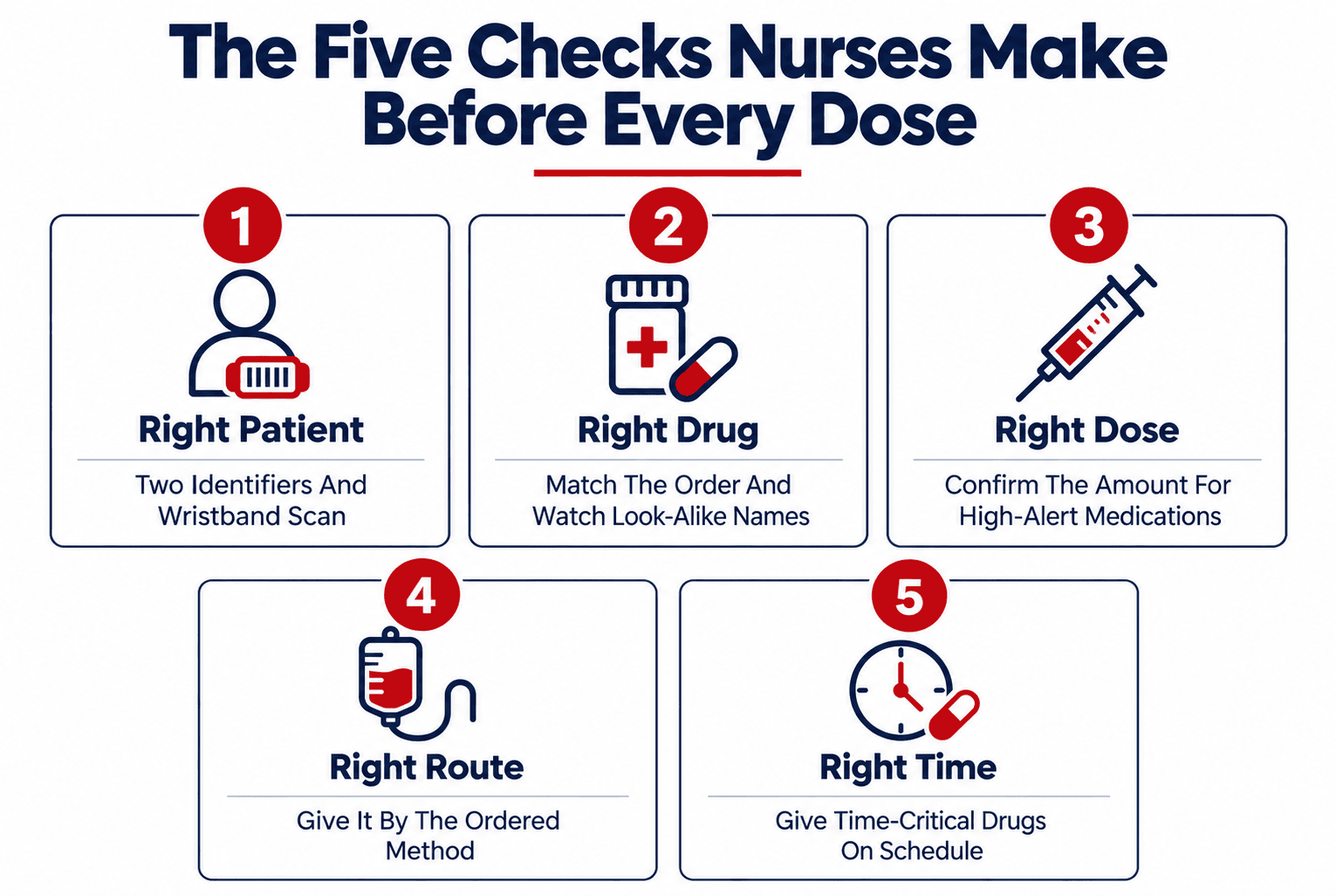
Nursing students learn these checks in their first semester, and every nurse is expected to follow them before giving any drug:
1. Right patient: confirm identity with two identifiers, usually name and date of birth, plus a wristband scan.
2. Right drug: match the medication to the order and watch for names that look or sound alike.
3. Right dose: confirm the amount, especially for weight-based drugs and high-alert medications such as insulin, blood thinners, and opioids.
4. Right route: give it the way it was ordered, whether by mouth, IV, injection, or feeding tube.
5. Right time: give time-critical drugs on schedule and not too close to the last dose.
When one of these checks is skipped, the error can reach the patient in seconds. The stakes are highest with drugs that have a narrow margin for error. The Institute for Safe Medication Practices keeps a list of high-alert medications, including insulin, heparin, opioids and chemotherapy, where a single mistake is more likely to cause serious harm. Hospitals are expected to add extra safeguards for these drugs, such as a second nurse double-checking the dose.
Where Nursing Medication Errors Usually Happen
Research collected by the federal AHRQ Patient Safety Network on medication administration errors shows how often these mistakes happen at the bedside. The patterns we see most in Michigan cases include:
- Wrong dose, such as a decimal point in the wrong place or a tenfold overdose
- Missed or late doses of antibiotics, seizure drugs, insulin, or blood thinners
- Look-alike and sound-alike names, a known risk tracked on the ISMP list of confused drug names
- IV pump programming mistakes, where the rate or concentration is entered incorrectly
- Missed allergies that were listed in the chart but not checked
- Wrong patient, often when two patients with similar names share a unit
Pharmacy Error or Nursing Error?
Many medication injuries involve more than one link in the chain. A pharmacist may fill the wrong strength, and then a nurse gives it without catching the mismatch. Or a physician writes an unclear order that both the pharmacy and the nurse follow without asking questions. Michigan law lets responsibility be shared among the people and facilities involved, and our page on pharmacy negligence claims covers the pharmacy side in more depth.
The Records That Prove It
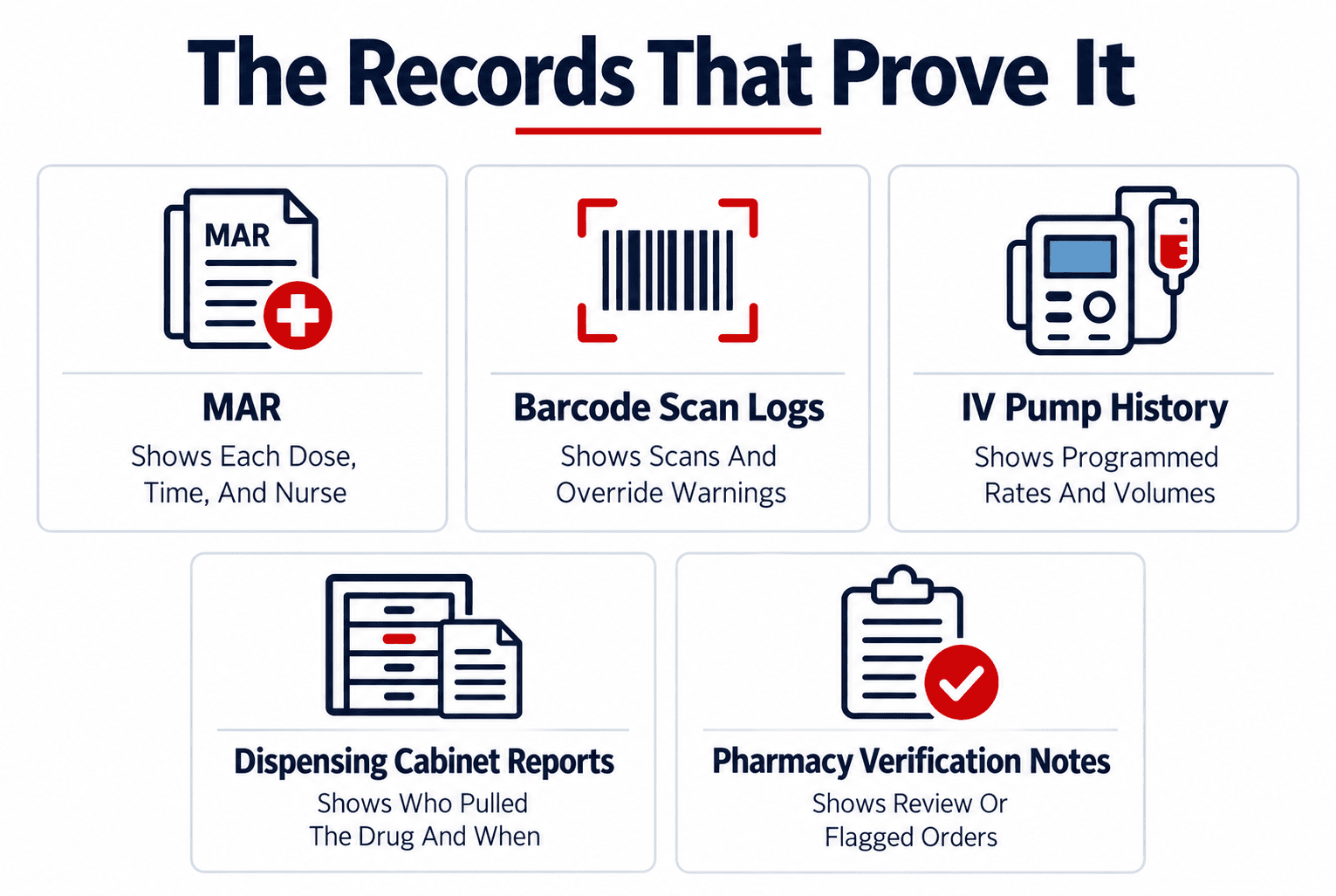
Modern hospitals leave a detailed electronic trail every time a drug moves. A nurse attorney knows these records exist and asks for them by name, because they are rarely included when a family simply requests “the chart”:
- The medication administration record (MAR), showing each dose given, the time, and the nurse who gave it
- Barcode scan logs, which record whether the patient wristband and the drug were scanned, and any warnings a nurse overrode
- IV pump history logs, which store the rates and volumes actually programmed
- Automated dispensing cabinet reports, showing who pulled which drug and when, including overrides
- Pharmacy verification notes, where a pharmacist reviewed or flagged the order
Our article on medication errors as medical malpractice explains how these records fit into a claim.
Signs a Medication May Have Been Given Wrong
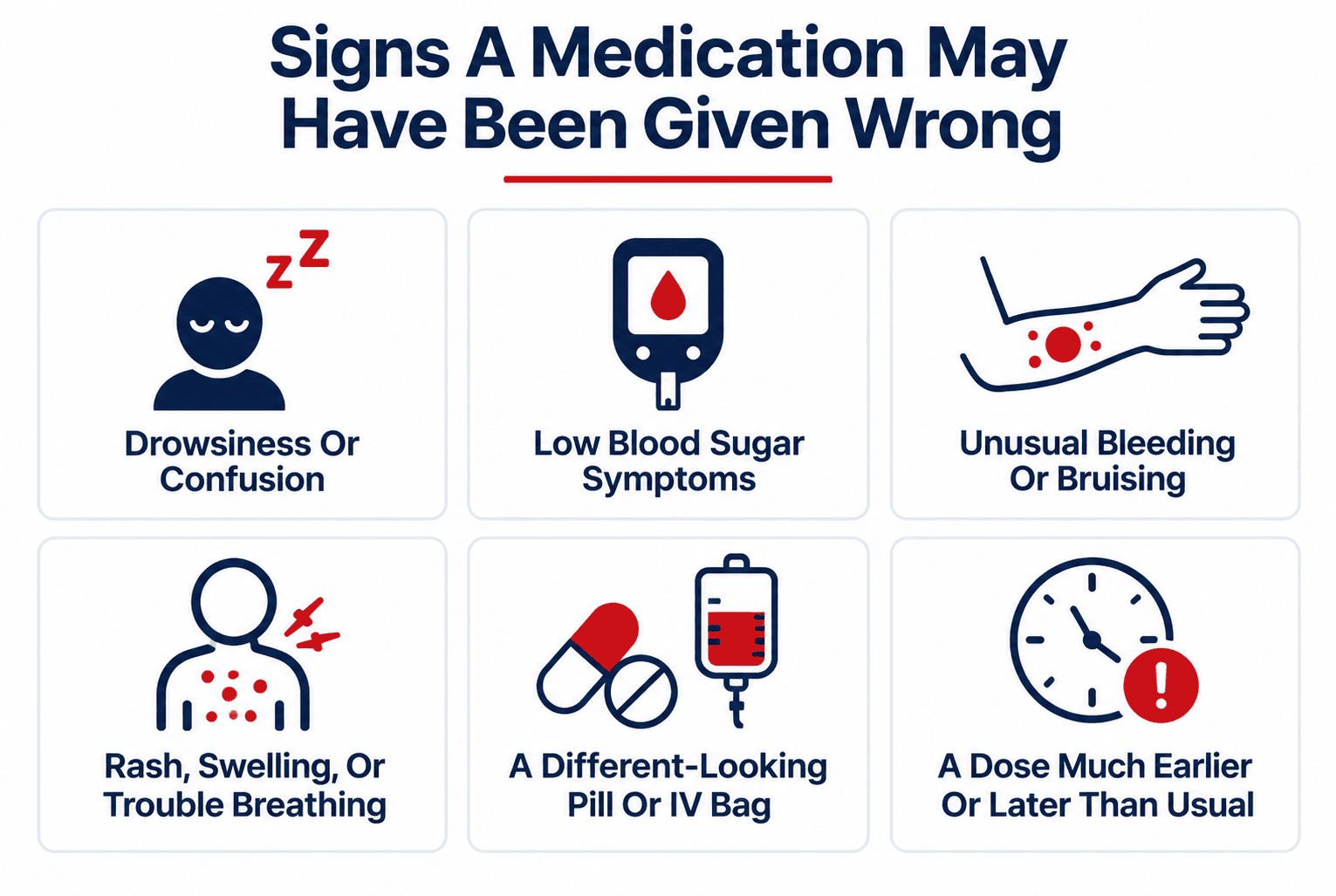
Patients and families are often the first to notice something is off. Watch for:
- Sudden drowsiness, confusion, or trouble waking up
- Very low blood sugar, shakiness, or sweating
- Unusual bleeding or bruising while on a blood thinner
- A new rash, swelling, or trouble breathing
- A pill or IV bag that looks different from earlier doses
- A dose given much later or earlier than usual
If you see any of these, ask the nurse right away which drug and dose was just given. Write down the time, the drug name, and the names of the staff involved. Keep any pill bottles, labels, or discharge medication lists. Those small details can matter a great deal later.
A Medication Error Result
Eileen Kroll and our firm secured a $1.5 million settlement in a pharmaceutical error case from northern Michigan. The error caused a patient with late-stage kidney failure to reject a donor kidney. The patient then had to go back on dialysis for about a year until another suitable kidney became available. More outcomes are on our verdicts page.
Past results do not guarantee a similar outcome in any future case.
Health Care in Warren and Where a Claim Is Filed
Warren is Macomb County’s largest city, and much of its hospital care happens close to home. Henry Ford Warren Hospital, formerly the Ascension Macomb-Oakland Warren campus, serves the city, and Henry Ford Madison Heights Hospital sits just to the west. Many residents also use pharmacies, outpatient clinics, and rehab centers along Van Dyke, Mound, and 12 Mile.
The city’s workforce shapes local care too. Stellantis Warren Truck Assembly and GM’s Global Technical Center employ thousands of people, and large employers often run on-site clinics staffed by nurses. Nursing students from Macomb Community College, which added a practical nursing (LPN) program in 2025 according to the college’s announcement, train in hospitals and facilities across the county.
Because Warren is in Macomb County, a malpractice lawsuit over care given here is usually filed in the Macomb County 16th Judicial Circuit Court in Mount Clemens.
Medication Mistakes Outside the Hospital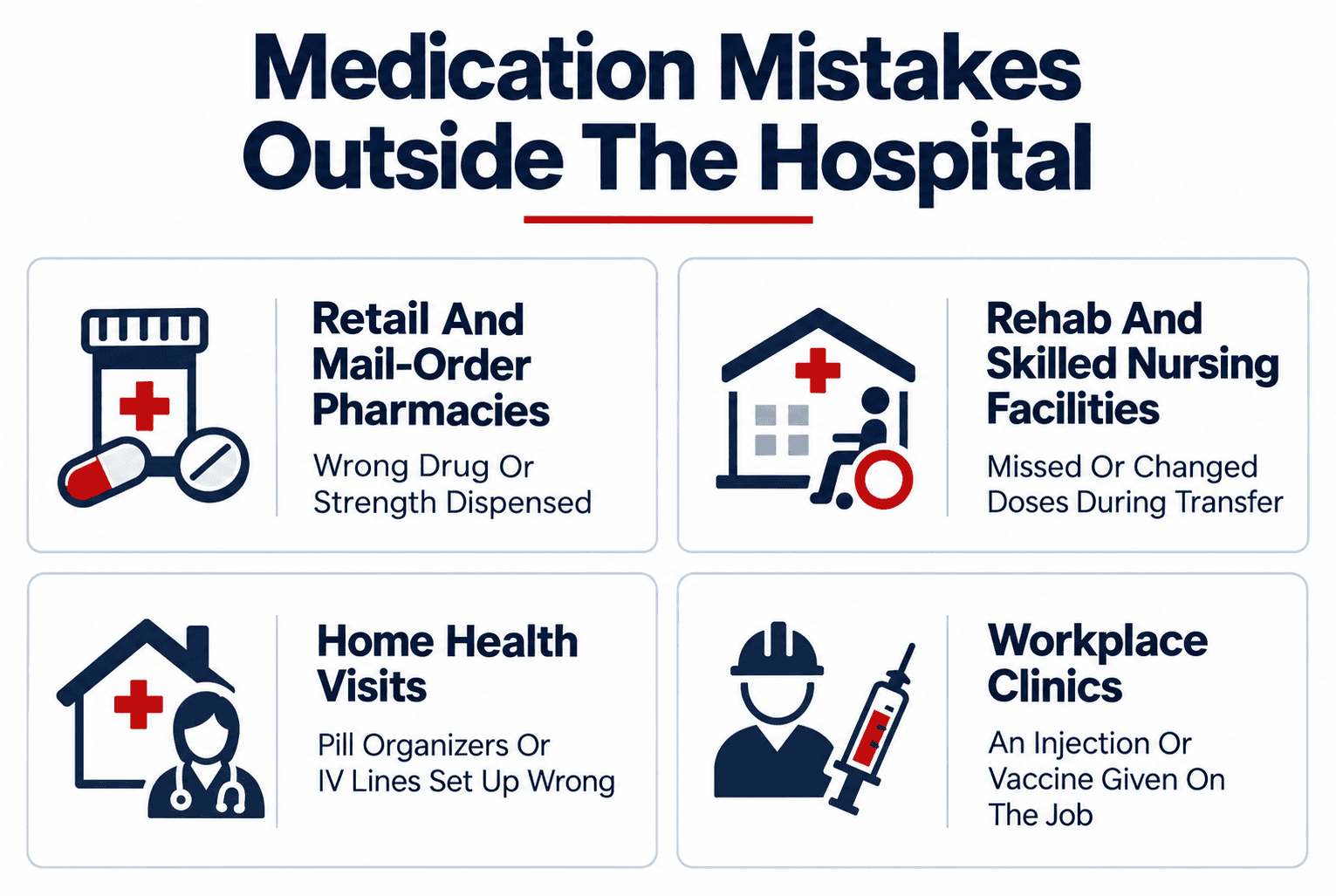
Not every medication error happens on a hospital floor. Warren clients come to us after mistakes in several other places:
- Retail and mail-order pharmacies, where the wrong drug or strength is dispensed
- Rehab and skilled nursing facilities, where patients go after surgery and doses are missed during the transfer
- Home health visits, where a visiting nurse sets up pill organizers or IV lines
- Workplace clinics, where a nurse gives an injection or a vaccine on the job
Handoffs are a weak point. When a patient moves from the hospital to rehab or home, the medication list has to be matched up again, and doses often get dropped or doubled. We look closely at discharge instructions and admission orders to find where the list changed. Emergency room errors follow their own rules, which our Flint nurse attorney page covers.
How Our Nurse Attorney in Warren Handles a Medication Error Case
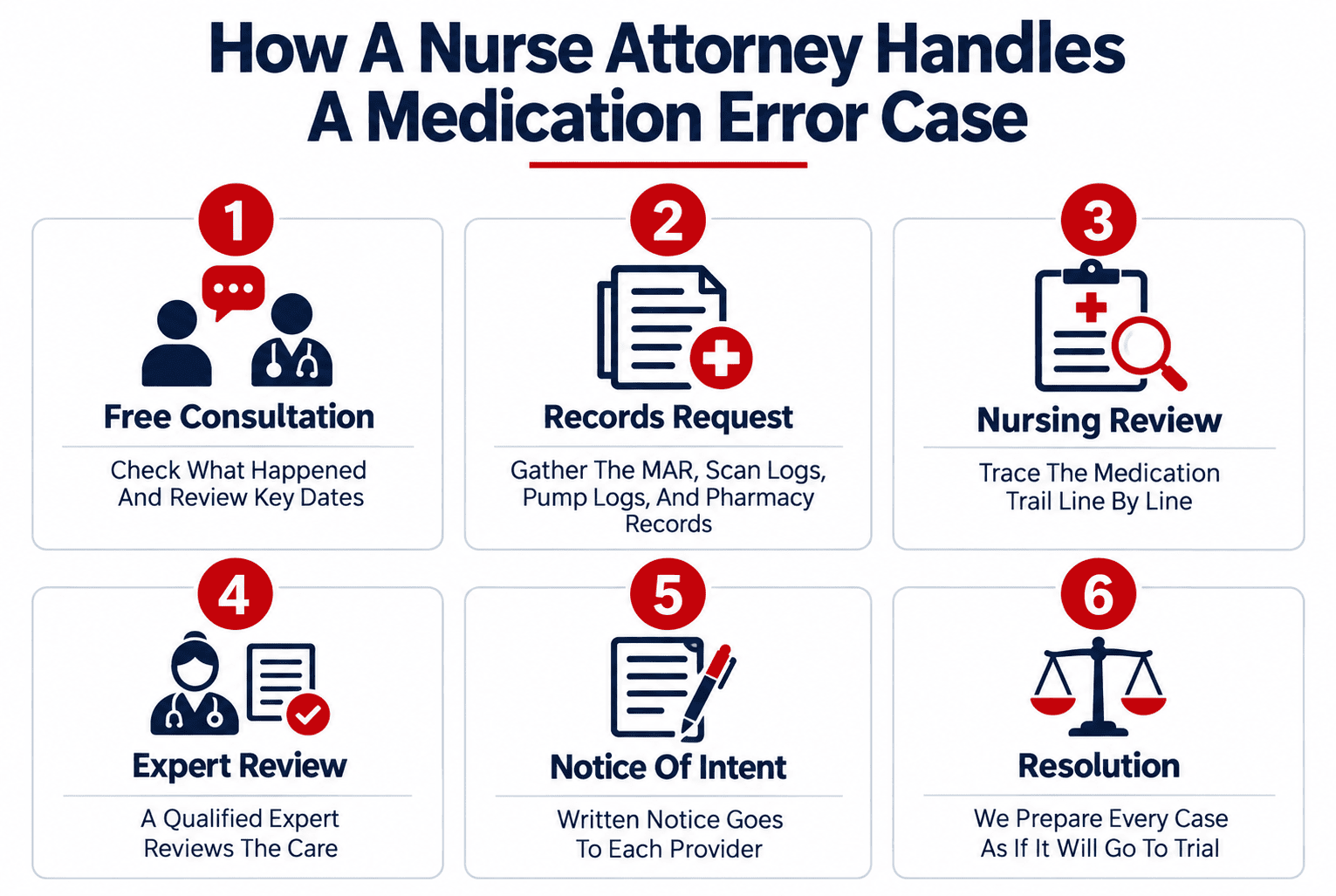
Every case follows the same basic path, though timing depends on the facts:
1. Free consultation. We listen to what happened and check key dates against Michigan’s filing deadlines.
2. Records request. We gather the MAR, scan logs, pump logs, and pharmacy records from each provider involved.
3. Nursing review. Eileen reviews the medication trail line by line to find where the error entered.
4. Expert review. A qualified expert in the right field reviews the care, as Michigan law requires.
5. Notice of Intent. Each provider receives written notice at least 182 days before a lawsuit can be filed.
6. Resolution. Most cases settle, but we prepare every case as if it will go to trial.
The full rules behind these steps are laid out on our main Michigan nurse attorney page. To learn more about the nurse and lawyer leading this work, see the profile of Eileen E. Kroll, RN, JD.
You pay nothing up front. We work on a contingency fee, so there is no attorney fee unless we recover compensation for you.
Contact Our Warren Medication Error Team
Pump logs and scan records can be overwritten, so the sooner someone asks for them, the stronger your evidence.
Contact us at Cochran, Kroll & Associates, P.C. for a free consultation. We’ll request the records that matter, review them with a nurse’s eye, and lay out your next steps. Remember, we don’t get paid unless you win.
Call us at 1-866-MICH-LAW anytime, 24/7, to schedule a free case evaluation.
Frequently Asked Questions
Is every medication mistake in a Warren hospital considered malpractice?
No. A claim needs a preventable error that broke the standard of care and caused real harm. A missed dose that caused no injury, while frustrating, usually is not a case. A wrong drug that led to a stroke, organ damage, or a longer hospital stay may be.
A nurse at my workplace clinic gave me the wrong medication. Can I bring a claim?
Possibly, but it depends on who employed the nurse. If your own employer ran the clinic, Michigan’s workers’ compensation law may limit you to comp benefits. If an outside medical company ran it, a separate claim against that company may be possible.
Should I keep the pill bottle, IV bag, or label?
Yes. Keep bottles, labels, packaging, and printed medication lists in a safe place, and do not throw away remaining pills. Take clear photos of every label as well. Physical evidence like this can confirm what was actually dispensed or given.
Can I get the hospital's internal report about the error?
Usually not. Michigan law protects many hospital peer review and quality records from being shared in a lawsuit. That is why we build cases from the chart, scan logs, and pump data instead of relying on the hospital’s own review.
How quickly should I contact a nurse lawyer after a medication error?
As soon as you can. Michigan’s general deadline is two years from the error, and the required 182-day notice period uses up much of that time. Electronic logs such as pump histories can also be overwritten, so an early records request helps protect the evidence.