Nurse Attorney in Grand Rapids

A nurse attorney in Grand Rapids can help when a serious illness was missed or caught too late. Nurses are often the first to see that something is wrong, so their notes can show when a diagnosis should have been made. Eileen E. Kroll, RN, JD, serves West Michigan families from our Livonia and Flint offices, by phone, video, and in person when needed.
If a diagnosis in West Michigan came too late, contact us for a free consultation by phone or video, or call 1-866-MICH-LAW anytime, 24/7.
Serving West Michigan From Our Livonia and Flint Offices
We want to be upfront: we do not have an office in Grand Rapids. Our offices are in Livonia and Flint, roughly two hours away. Here is how we work with West Michigan clients:
- Consultations by phone or video, so you can talk with us from home
- Travel for key meetings, such as depositions or important case events
- Records gathered electronically from West Michigan hospitals and clinics
- Cases filed locally. Malpractice lawsuits over care given in Grand Rapids are generally filed in the Kent County Circuit Court (17th Circuit), 180 Ottawa Ave. NW, described on Kent County’s 17th Circuit Court page
We represent Michigan residents only for malpractice cases, so every West Michigan client we take on is someone whose care happened under the same state rules we work with every day. Distance matters less than you might think in a malpractice case. Much of the work is reviewing records and working with medical experts, and that can happen from anywhere.
Missed and Delayed Diagnosis: The Nurse’s Part
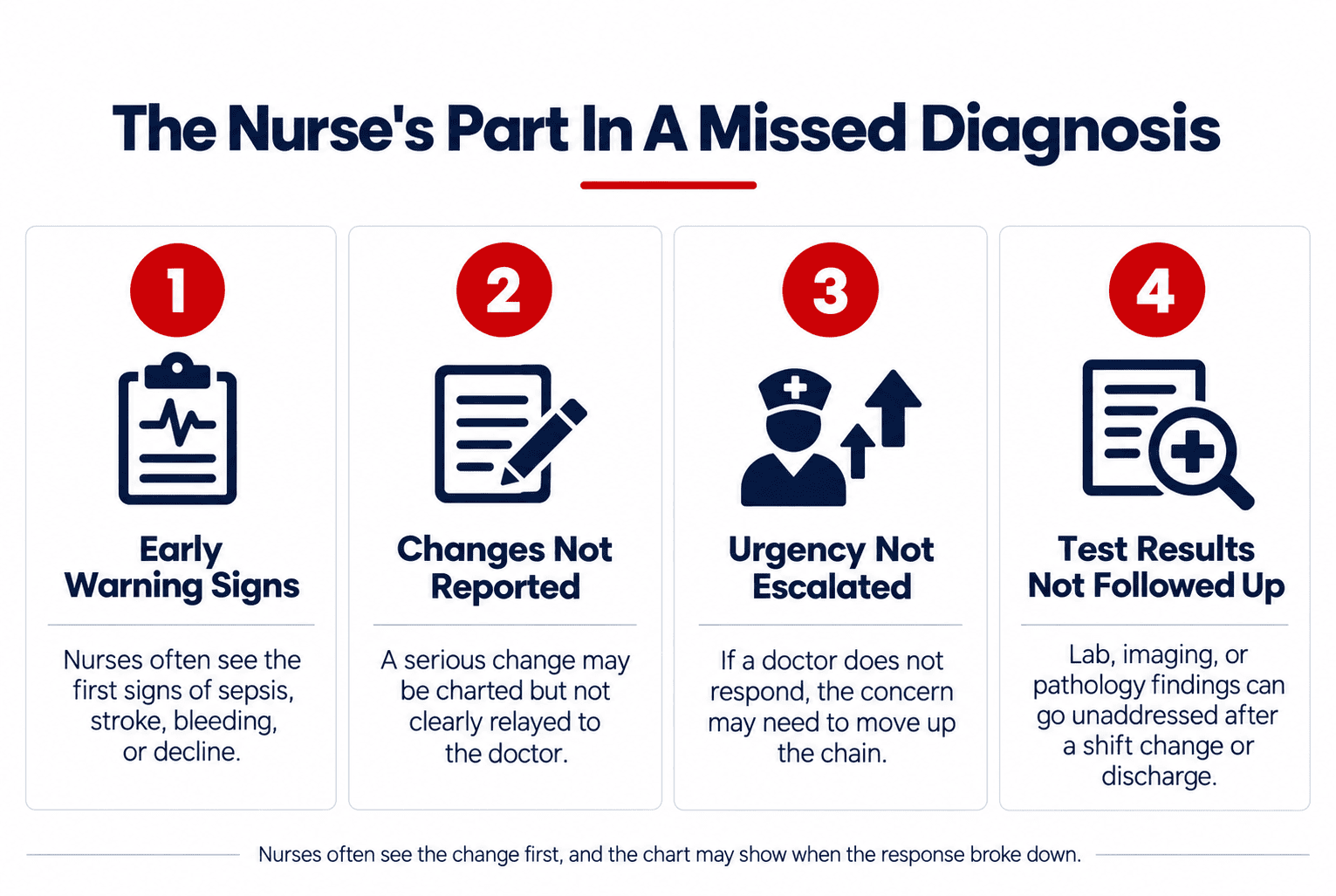
People usually picture a doctor when they think of a misdiagnosis. But nurses spend far more time at the bedside, and they are often the ones who notice first that a patient is getting worse. When that information doesn’t reach the doctor, or reaches it too late, the diagnosis slips.
Nurses as the Early-Warning System
Nurses are trained to recognize patterns that point to serious illness, such as the early signs of sepsis, stroke, or internal bleeding. Sepsis is a good example. A fast heart rate, fever or low temperature, rapid breathing, and new confusion together can signal a body-wide infection that needs treatment within hours. The Patient Safety Network’s discussion of challenges in sepsis diagnosis shows how easily these signs can be missed. When nurses screen for these signs and act on them, lives are saved.
When Changes Aren’t Reported to the Doctor
A nurse may chart a worrying change but never pass it on, or pass it on without making its urgency clear. Other times, the doctor is told but doesn’t respond, and the nurse doesn’t push further up the chain of command. Either way, the chart often shows the change sitting unaddressed for hours.
Test Results Nobody Followed Up On
Lab results, imaging reports, and pathology findings can come back after a shift change or after the patient leaves. If nobody reviews them and acts, a treatable problem can go unaddressed for weeks or months. Hospitals are expected to have reliable systems for communicating critical test results, and nurses often play a key role in making sure abnormal results reach the right doctor.
Michigan’s “Lost Chance” Rule
Some delayed-diagnosis cases involve a patient who was already very sick. In those cases, the question may be whether the delay took away a real chance of a better outcome. Michigan law (MCL 600.2912a) sets a high bar here: a claim for a lost opportunity to survive or recover generally requires that the lost chance was greater than 50%. How courts apply this rule has been debated, so each case needs careful expert analysis.
In plain terms, it is not enough to show that earlier treatment might have helped a little. The evidence usually needs to show that earlier action would more likely than not have made a meaningful difference. Our article on when misdiagnosis becomes medical malpractice covers the broader rules.
How a Nurse Attorney in Grand Rapids Separates Misdiagnosis From a Bad Outcome
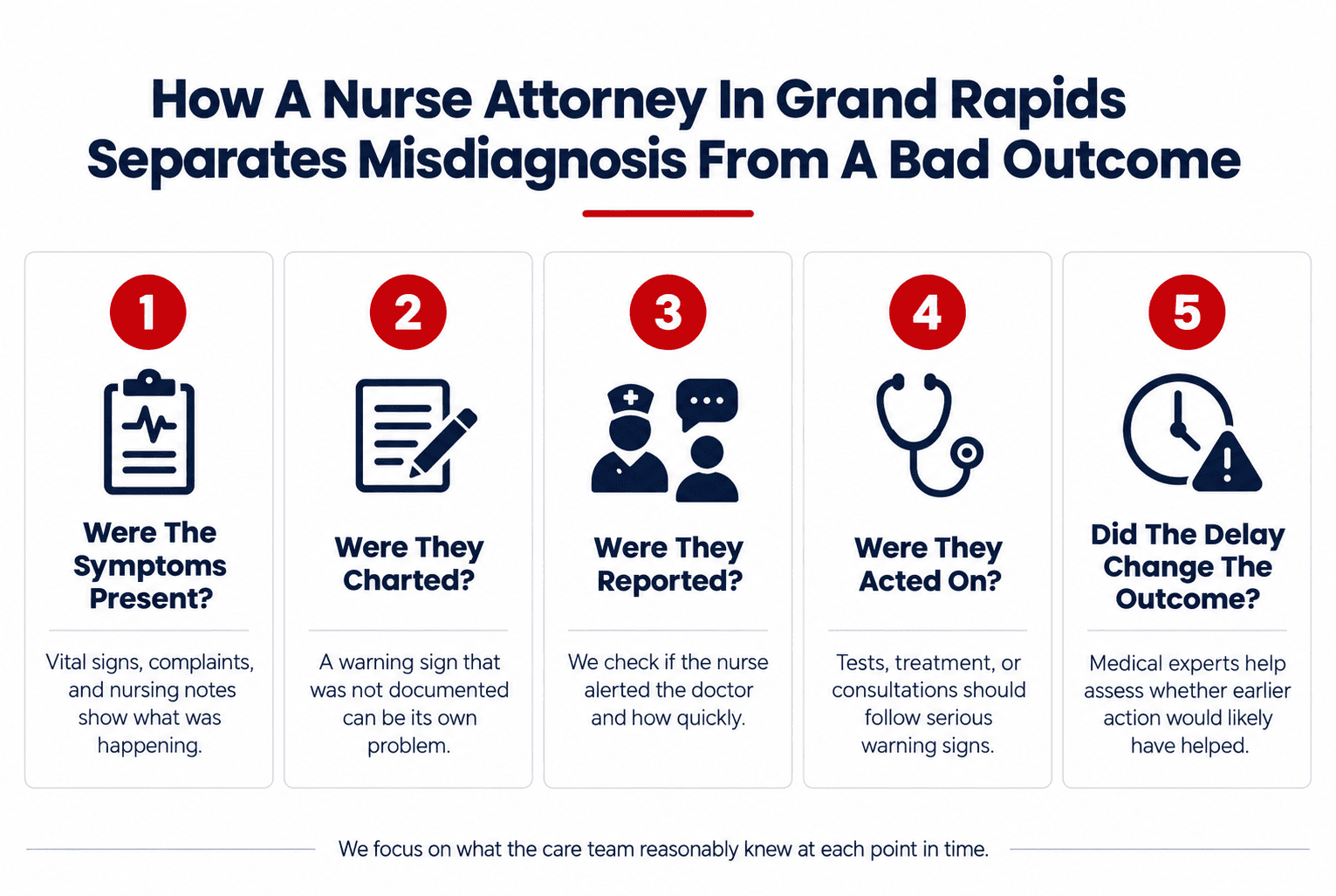
Not every missed diagnosis is malpractice. Some illnesses hide well, and even careful clinicians miss them. What matters is whether the warning signs were there and whether a reasonable nurse or doctor would have acted on them. When we review a West Michigan case, we ask:
1. Were the symptoms present? We look for them in the vital signs, nursing notes, and patient complaints.
2. Were they charted? A sign that was seen but never written down is its own problem.
3. Were they reported? We check whether the nurse told the doctor, and how quickly.
4. Were they acted on? We look for tests ordered, treatment started, or specialists consulted.
5. Did the delay change the outcome? Medical experts help answer whether earlier action would likely have made a difference.
This approach keeps hindsight from driving the analysis. Knowing the final diagnosis makes early signs look obvious, so we focus on what the care team could reasonably have known at each point.
When a Transfer to Grand Rapids Adds Delay
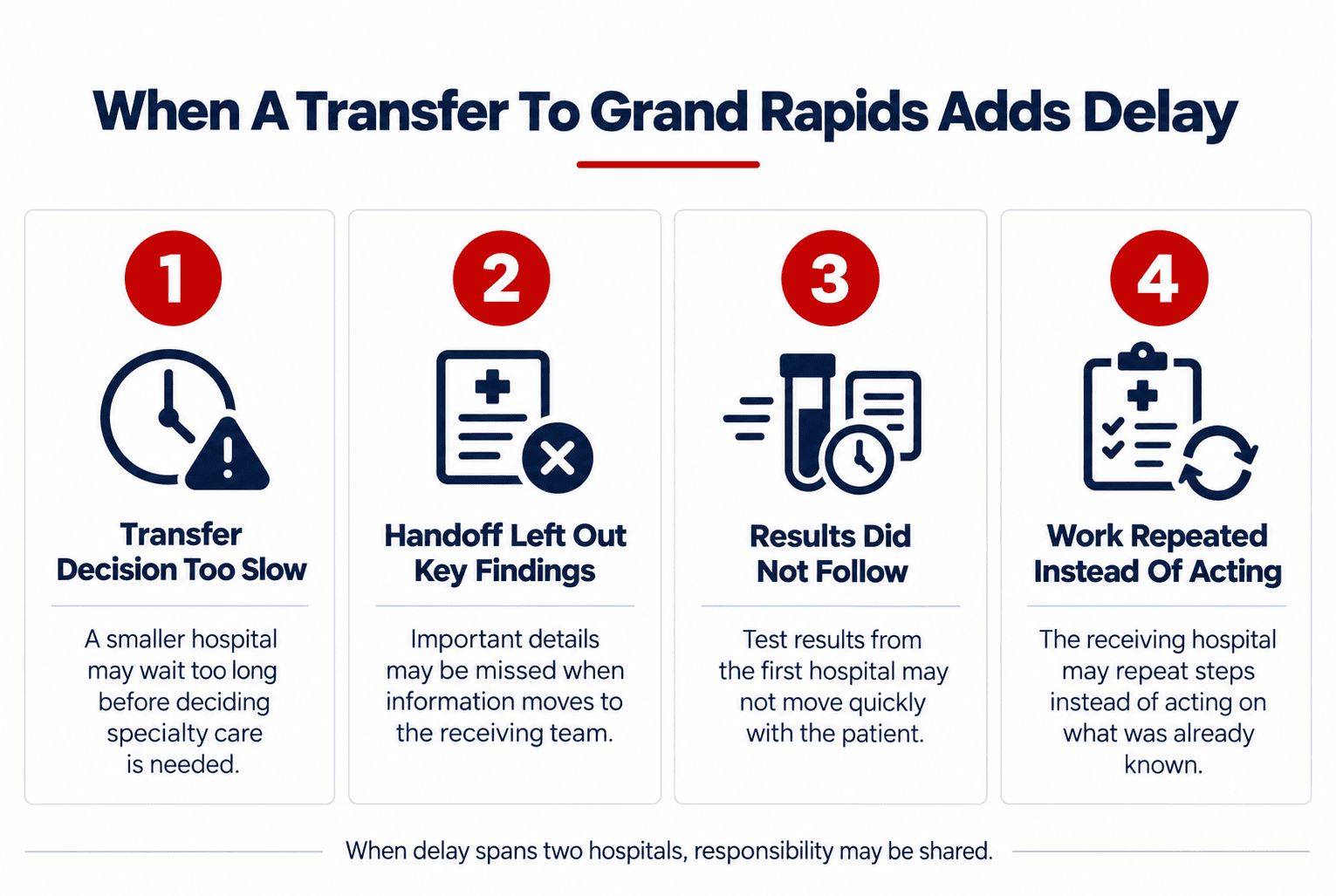
Grand Rapids is the medical center for much of West Michigan. Patients from smaller community hospitals are often transferred in for specialty care. Transfers help, but they can also add delay:
- A smaller hospital may wait too long to decide a transfer is needed
- Key findings may be left out of the handoff to the receiving team
- Test results from the first hospital may not follow the patient
- The receiving hospital may repeat work instead of acting on what was already known
When a delay spans two hospitals, each may share responsibility, and each needs its own Notice of Intent. Our Michigan nurse attorney page explains that rule and Michigan’s filing deadlines. Similar monitoring problems after surgery are covered on our Clinton Township nurse attorney page.
A Cancer Misdiagnosis Case We Resolved
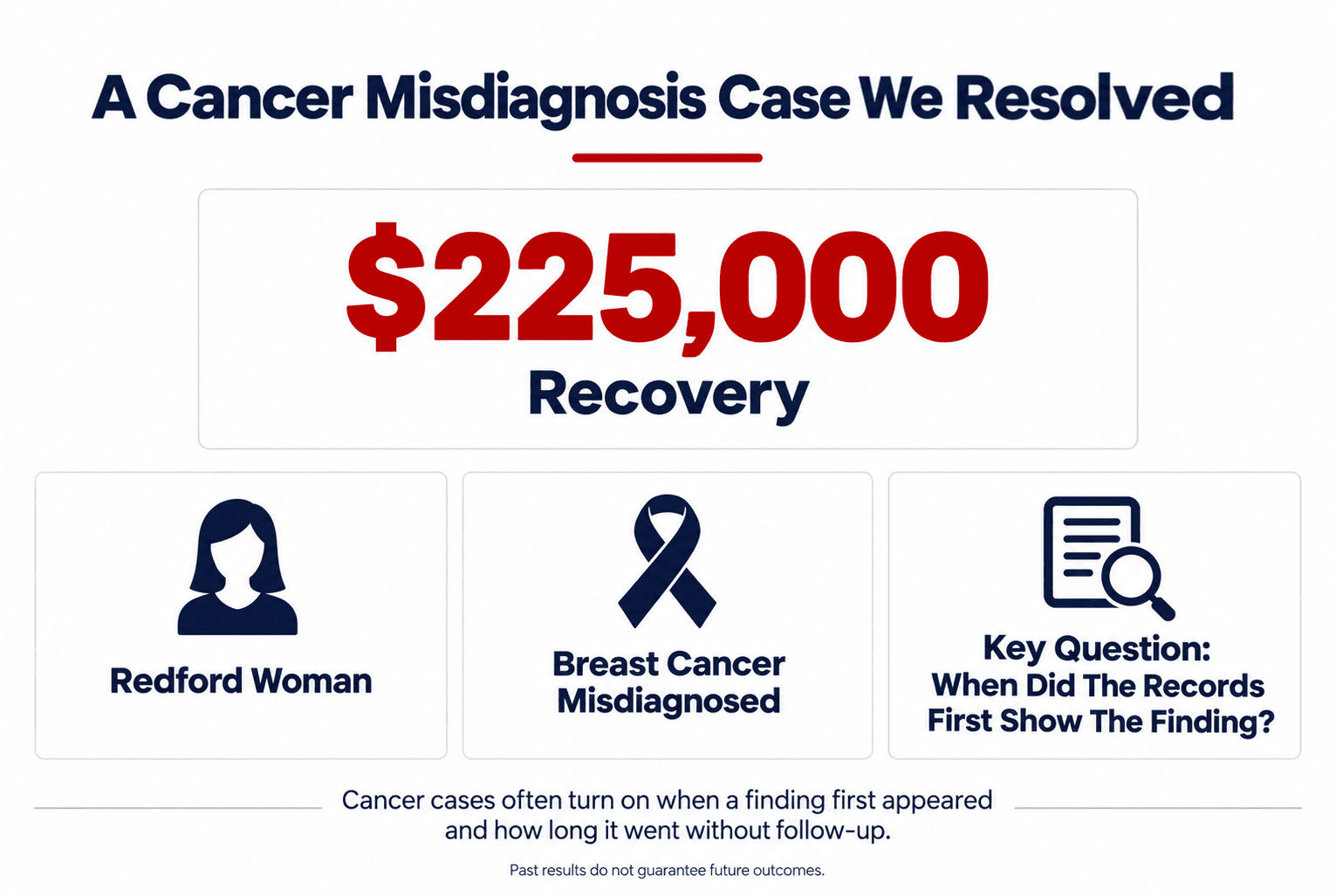
Cochran, Kroll secured a $225,000 result for a Redford woman whose breast cancer was misdiagnosed. Cancer cases often turn on when a finding first appeared in the records and how long it went without follow-up. More outcomes are listed on our verdicts page.
Past results do not guarantee a similar outcome in any future case.
West Michigan Health Care and Nursing Schools
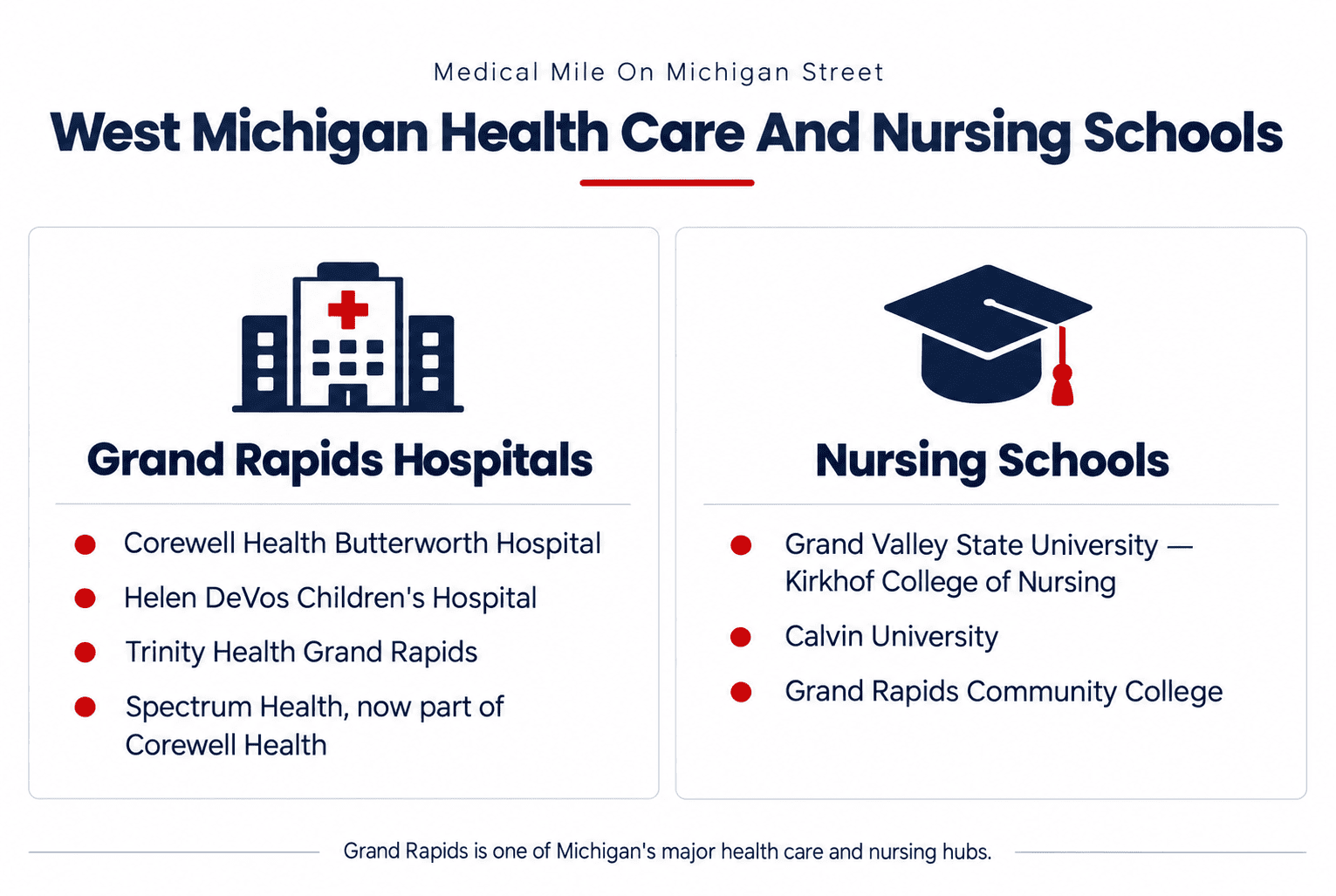
Grand Rapids is home to one of Michigan’s largest concentrations of hospitals, much of it along the Medical Mile on Michigan Street:
- Corewell Health Butterworth Hospital, West Michigan’s Level I trauma center (Corewell Health Butterworth)
- Helen DeVos Children’s Hospital, the region’s children’s hospital
- Trinity Health Grand Rapids, formerly Saint Mary’s
The city was also the home base of Spectrum Health before it became part of Corewell Health. Local nurses train at Grand Valley State University’s Kirkhof College of Nursing, Calvin University and Grand Rapids Community College.
Eileen’s background, including five years as a surgical ICU nurse, is on the profile of Eileen E. Kroll, RN, JD. For broader malpractice cases in the region, see our Grand Rapids medical malpractice lawyer page. We work on a contingency fee, so there is no attorney fee unless we recover compensation for you.
Was a Diagnosis Missed? Get a Free Review From Our West Michigan Team
Records from West Michigan hospitals can be requested from anywhere, and the sooner we start, the more complete the picture will be.
Contact us at Cochran, Kroll & Associates, P.C. for a free consultation. We’ll gather the records, trace when the warning signs first appeared, and tell you honestly whether the delay may support a claim. Remember, we don’t get paid unless you win.
Call us at 1-866-MICH-LAW anytime, 24/7, to schedule a free case evaluation.
Frequently Asked Questions
Is a missed sepsis diagnosis malpractice?
It can be. Sepsis often shows early signs that nurses are trained to screen for, and delays in treatment can be deadly. If those signs were present and charted but not acted on in time, and the delay caused serious harm, a claim may be possible.
My loved one was moved from a smaller hospital to Butterworth. Who is responsible for the delay?
It depends on where the delay happened. The first hospital may have waited too long to transfer, the handoff may have left out key facts, or the receiving hospital may have been slow to act. Sometimes more than one facility shares responsibility, so we review both charts.
Can I work with a lawyer who is two hours away?
Yes. Most of our work with West Michigan clients happens by phone, video, and electronic records, and we represent Michigan residents statewide. We are open about where our offices are so you can decide what feels right.
My cancer was caught late but is treatable now. Do I still have a claim?
Possibly. A delay can still cause harm even if you survive, such as more aggressive treatment, a worse prognosis, or added costs. Whether that supports a claim depends on what an earlier diagnosis would likely have changed, which medical experts help determine.
Should I get a second opinion before calling a lawyer?
If you have health concerns, get the medical care you need first, and a second opinion can be part of that. You don’t need one before calling us, though. We have the records reviewed by qualified medical experts as part of evaluating any delayed-diagnosis claim.