Long Term Disability Lawyers in Michigan
Long-term disability (LTD) benefits are meant to replace part of your income when illness or injury keeps you from working. If your claim was denied, delayed, or your benefits stopped, the next steps usually depend on your policy type and the reasons in your denial letter.
If your long-term disability claim has been denied or unfairly delayed in Michigan, then please call us today at 1-866-MICH-LAW. We work on a no win, no fee agreement, and our long-term disability lawyers in Michigan are specialists in helping people in recover their long-term disability benefits.
Key Takeaways
- Your policy type (through work vs private) can change the steps you must follow.
- Denial letters usually explain why you were denied and what to do next—save it and read it closely.
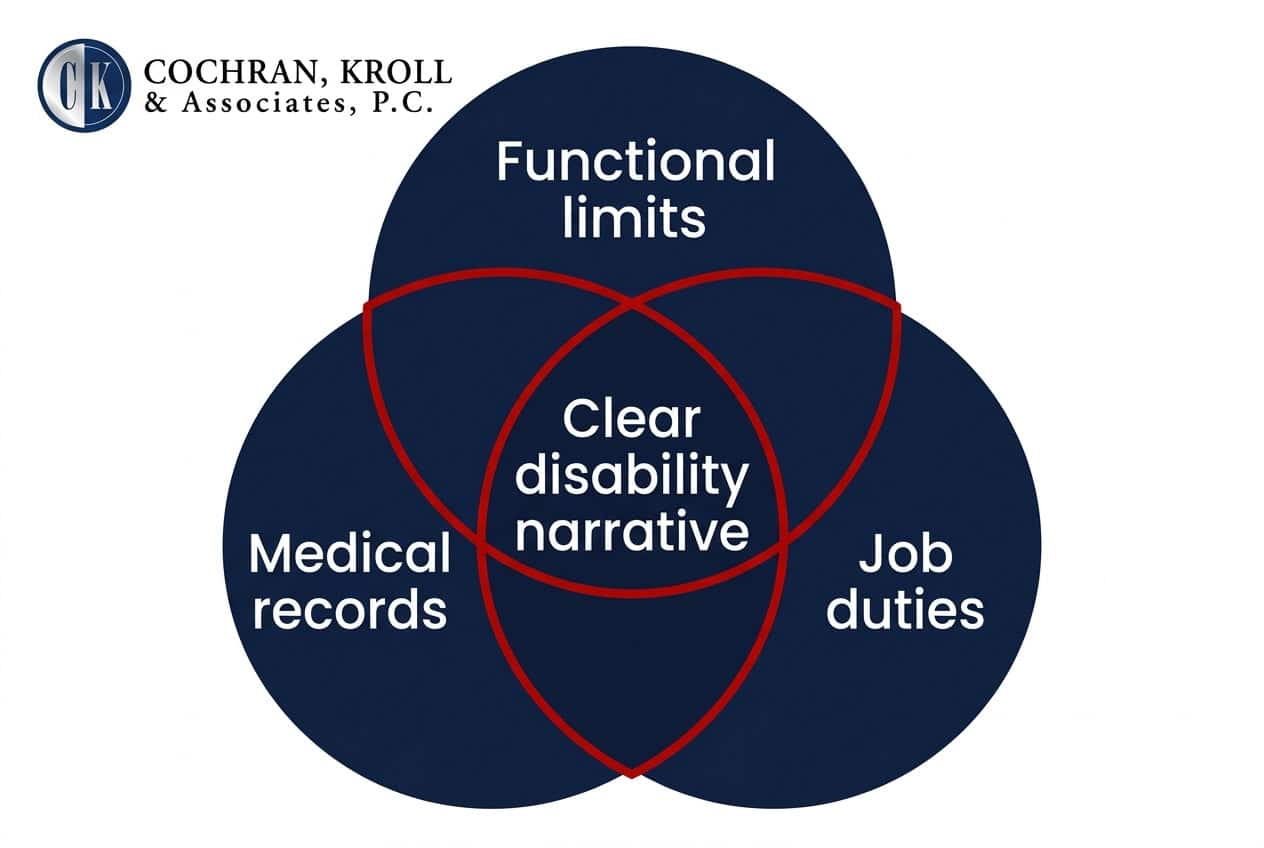
- Strong claims link medical proof to real work limits (not just a diagnosis).
- Missed paperwork or inconsistent records can be as damaging as the medical issue itself.
- Get help early if deadlines are unclear, the insurer requests exams, or benefits were terminated.
Need help now? Call 1-866-MICH-LAW any time, or start a free case evaluation form.
Fast qualifiers (if any of these are happening, it’s worth getting clarity quickly):
- Your claim was denied, or your monthly benefits stopped.
- Your coverage is through an employer plan or a private policy you purchased.
- Short-term disability is ending, and LTD paperwork is starting.
- The insurer is requesting exams, recorded statements, or monitoring your activities.
Why do people choose Cochran Law?
- Free, no-obligation case evaluation: Get in touch
- Contingency fee basis in many matters (no fees unless a recovery is made)
- Serving Michigan statewide from Livonia and Flint
- See what clients say about our firm: Reviews
What to bring to your case evaluation
- The denial/termination letter (or the most recent insurer letter)
- Any policy/plan documents you have
- Claim forms you submitted and anything the insurer sent back
- A list of doctors/clinics and recent appointment dates
- A simple description of your job duties and what you can’t do now
Do you have an LTD case, and what should you do first?
You may have an LTD case if:
- You received a denial letter after applying.
- Benefits were approved and later stopped.
- The insurer is delaying decisions or repeatedly asking for the same items.
- The insurer says you can return to work even though you and your doctors disagree.
Do this today (simple checklist)
- Save every letter and email from the insurer in one folder.
- Write down your claim number and the name of the adjuster/claims rep.
- Keep a basic log of calls, uploads, and document requests.
- Ask your treating provider for updated notes that describe functional limits, not just a diagnosis.
- Don’t guess at deadlines; use your letter and plan documents as your source of truth.
Watch out: LTD deadlines and steps can differ by policy and by the letter you received. If the timeline is unclear, it’s safer to verify before you act.
What is long-term disability, and what do insurers usually focus on?
LTD is a type of disability coverage that can pay benefits when you can’t work for an extended period because of illness or injury. It’s different from short-term disability, which is usually designed for shorter recovery periods.
Here’s what often drives disputes:
- The policy’s definition of disability (for example, whether you must be unable to do your own job or any job).
- Whether your medical records clearly match your day-to-day limits.
- Whether your job duties are documented accurately.
- Whether your file shows consistent care and follow-through.
Quick clarity: Is this an employer plan or a private policy?
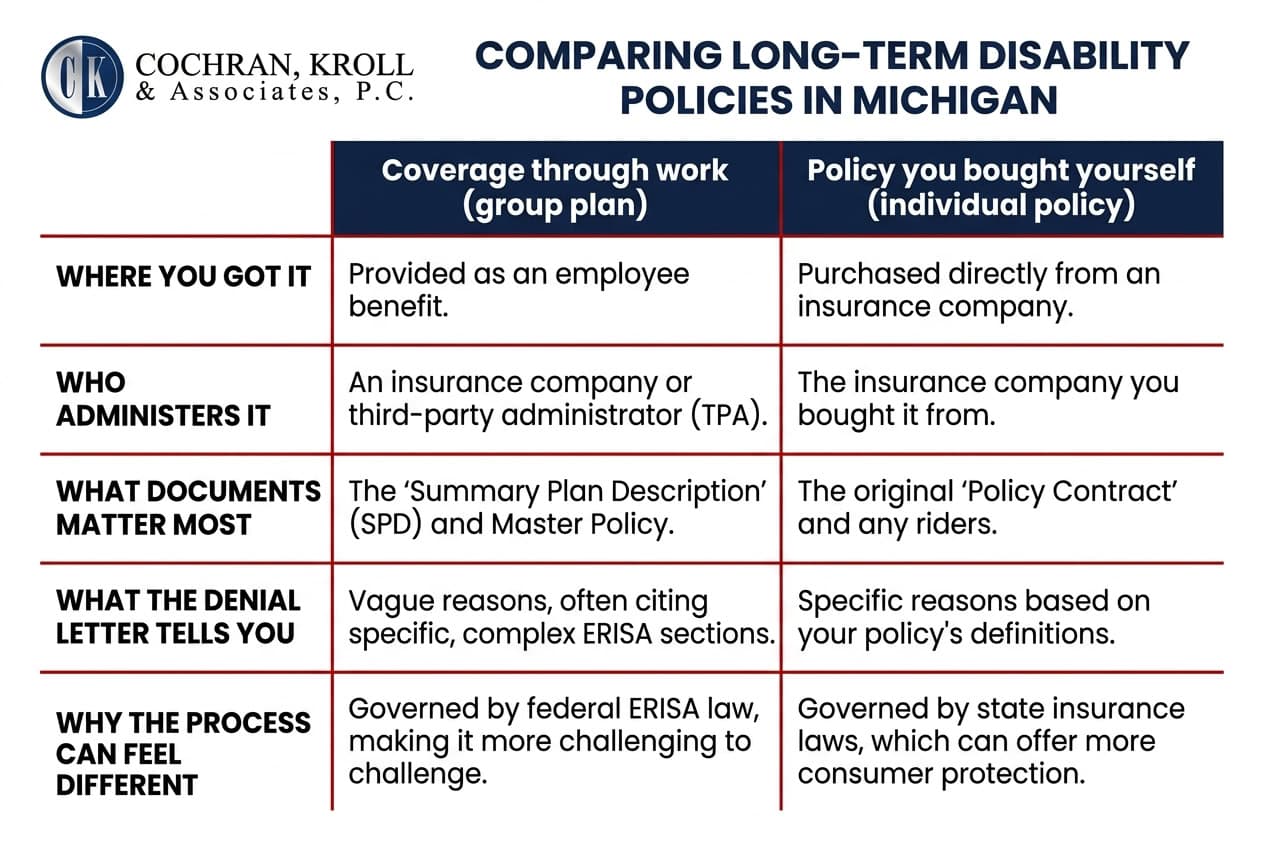
This one detail can change what the “right next step” looks like.
| Question |
Usually points to… |
| You enrolled through work benefits |
Employer/group plan |
| You bought it directly from an insurer/agent |
Individual/private policy |
| HR is involved in paperwork |
Employer/group plan |
| The insurer deals only with you (no employer) |
Individual/private policy |
If you’re unsure, a lawyer can often tell quickly by reviewing the policy documents and your letters.
What Health Conditions Qualify for Social Security Disability in Michigan?
There is no fixed list of qualifying diagnoses. What matters is whether the condition limits your ability to work in the way your policy defines disability. That said, certain conditions come up again and again in Michigan claims:
- Serious physical injuries that prevent a return to regular duties
- Back, neck, spinal cord, and orthopedic conditions that limit lifting, standing, or sitting
- Traumatic brain injuries affecting memory, focus, or stamina
- Chronic pain and fatigue-related conditions that reduce reliability over a full workday
- Neurological, cardiac, and autoimmune illnesses
- Cancer and the effects of ongoing treatment
- Mental-health conditions, where the policy provides coverage for them
Two people with the same diagnosis can reach opposite outcomes. Approval turns on documented functional limitations rather than the label of the condition, which is why a traumatic brain injury claim built around clear medical evidence often succeeds where a stronger-sounding diagnosis with thin records does not. If you also qualify for federal benefits, a Social Security Disability claim may run alongside your LTD claim, subject to any offset in your policy.
Why do LTD claims get denied, or benefits get cut off later?
Common reasons include:
- Missing records or unclear documentation in the file
- Insurer says the medical support doesn’t show work-limiting restrictions
- Treatment gaps or inconsistent follow-up
- A policy definition shift (what “disabled” means under the policy)
- Exclusions or limitations in the policy wording
- The insurer points to activities that seem inconsistent with reported limits
What you can control (even when your health is unpredictable)
- Keep medical appointments consistent when you can.
- Make sure your providers document restrictions in plain terms (lifting, standing, concentration, fatigue).
- Use one place to store every letter, upload confirmation, and request.
- Respond to document requests promptly and keep proof of submission.
What should you do after a denial letter in Michigan?
Start with the letter. It’s usually the clearest explanation of the insurer’s position.
Denial letter checklist
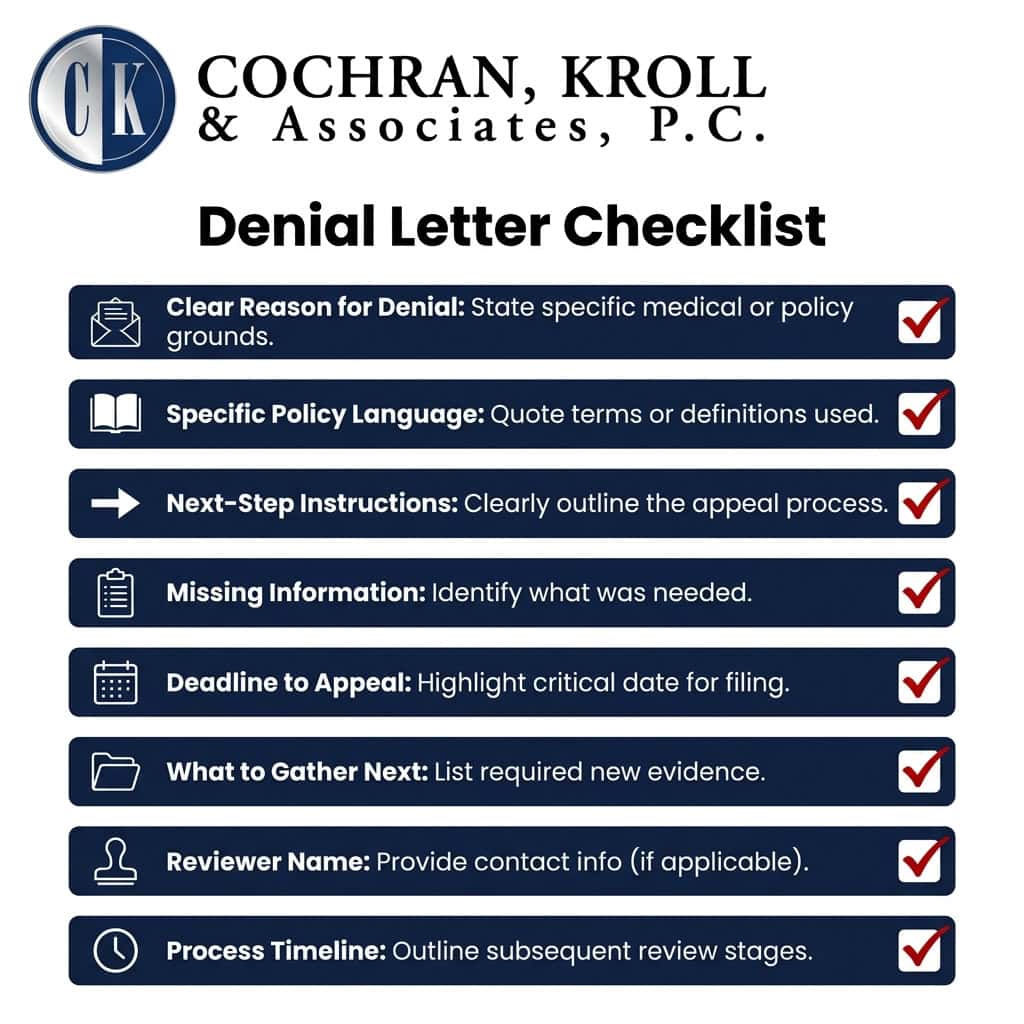
Confirm the letter clearly states:
- The reasons for the denial or termination
- The policy/plan provisions the insurer relied on
- What you can do next (and how to submit it)
- What documents or information does the insurer say are missing
Then, gather the basics:
- The letter itself (and any enclosures)
- The policy/plan documents you have
- Your most recent medical notes and test results
- A written description of your job duties and what you can’t do now
Request the claim file and build the record
Many disputes come down to what’s in the file and what isn’t. A practical approach is to:
- Identify what the insurer relied on
- Spot what’s missing (specialist notes, work restrictions, job description details)
- Submit organized support that ties your condition to your functional limits
If you’re dealing with multiple claim types (injury + disability questions), our common legal questions hub can help you get oriented.
How do you file an LTD claim in Michigan without avoidable delays?
A clean filing reduces back-and-forth and helps the insurer understand your limitations.
Filing checklist (practical steps)
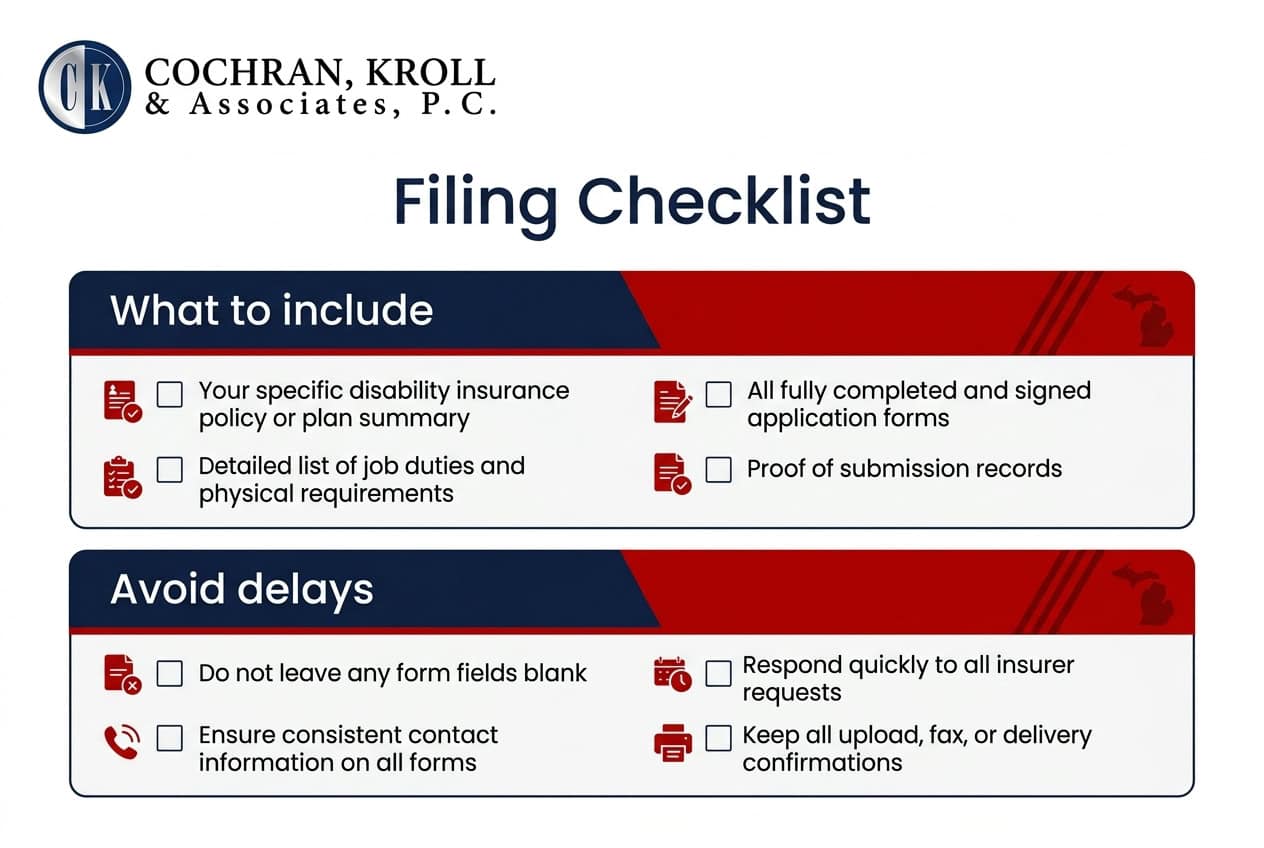
- Gather your policy or plan summary and note the definition of disability.
- Write down your job title and the core tasks you performed each week.
- Ask treating providers for documentation that explains restrictions in daily terms.
- Submit forms carefully and keep proof of everything you send.
- Track requests and follow up if you don’t receive confirmation.
Avoid delays (quick mini-checklist)
- Don’t leave blanks on forms if you can avoid it.
- Keep your contact information consistent across documents.
- Reply quickly to reasonable document requests.
- Keep copies of uploads, faxes, and mail receipts.
If you also need help with related claims, you can review personal injury cases in Michigan.
How can Long-Term Disability Lawyers at Cochran, Kroll & Associates help with LTD claims?
When LTD benefits are on the line, small paperwork issues can turn into big problems. Our role is to bring structure to a stressful process.
Claim triage (what we clarify first)
- What type of policy are you under
- What the insurer says is missing or disputed
- What steps does the letter require, and what documents matter most
Evidence planning and appeal packaging
We help organize evidence so it’s easier to understand:
- Medical support that explains restrictions and limitations
- A clear picture of job duties and why symptoms prevent performance
- A consistent timeline of care and communications
Communication ownership
We can help by:
- Managing insurer communications
- Tracking document requests and submissions
- Reducing the risk of missed steps or confusion
You can also review our published verdicts and settlements page for general background on the firm (past results do not predict future outcomes).
What evidence usually matters most in an LTD claim?
Most successful files do more than prove a diagnosis. They show how symptoms limit work.
Medical and functional evidence
Helpful support often includes:
- Consistent treatment notes over time
- Specialist records when appropriate
- Testing or evaluation results when relevant
- Provider statements describing functional limits (standing, sitting, lifting, focus, fatigue)
Occupational and vocational evidence
A strong LTD file usually connects limitations to job tasks:
- A realistic description of your job duties
- How often tasks are performed
- Why do symptoms prevent reliable performance
Red flags insurers often point to
- Activity descriptions that don’t match claimed limits
- Gaps in treatment without explanation
- Missed appointments or incomplete forms
- Surveillance references or selective interpretations of activity
If your case overlaps with a crash injury, see vehicle accident claims:
How Our Michigan Disability Lawyers Are Different From Others?
Winning an LTD claim is rarely about proving you are sick. It is about proving, in the insurer’s own terms, that you cannot work. A strong case usually depends on several things at once:
- Reading the actual language of your disability policy, not a summary of it
- Connecting your medical evidence to your specific work limitations
- Building a complete claim record before a decision is made
- Responding to insurer requests and disputes without creating inconsistencies
- Meeting every appeal deadline
- Preparing for litigation when an insurer refuses to pay
Here is how our approach reflects that:
- We review your disability policy, not just your medical records
- We connect your medical evidence to your ability to work
- We help build the claim before the insurance company makes its decision
- We know what to do when an LTD claim is denied, delayed, or terminated
- We understand the rules that can apply to ERISA disability claims, which govern many employer-sponsored plans
- We prepare for the possibility of litigation, not just settlement
- We start with a free case evaluation
That combination matters most when a claim moves from paperwork to a genuine dispute, which is exactly the point where many claimants are left on their own.
Should you consider a buyout or lump-sum settlement?
A buyout is typically an offer to resolve the claim with a one-time payment, often in exchange for signing releases.
Before you sign anything, it’s smart to review:
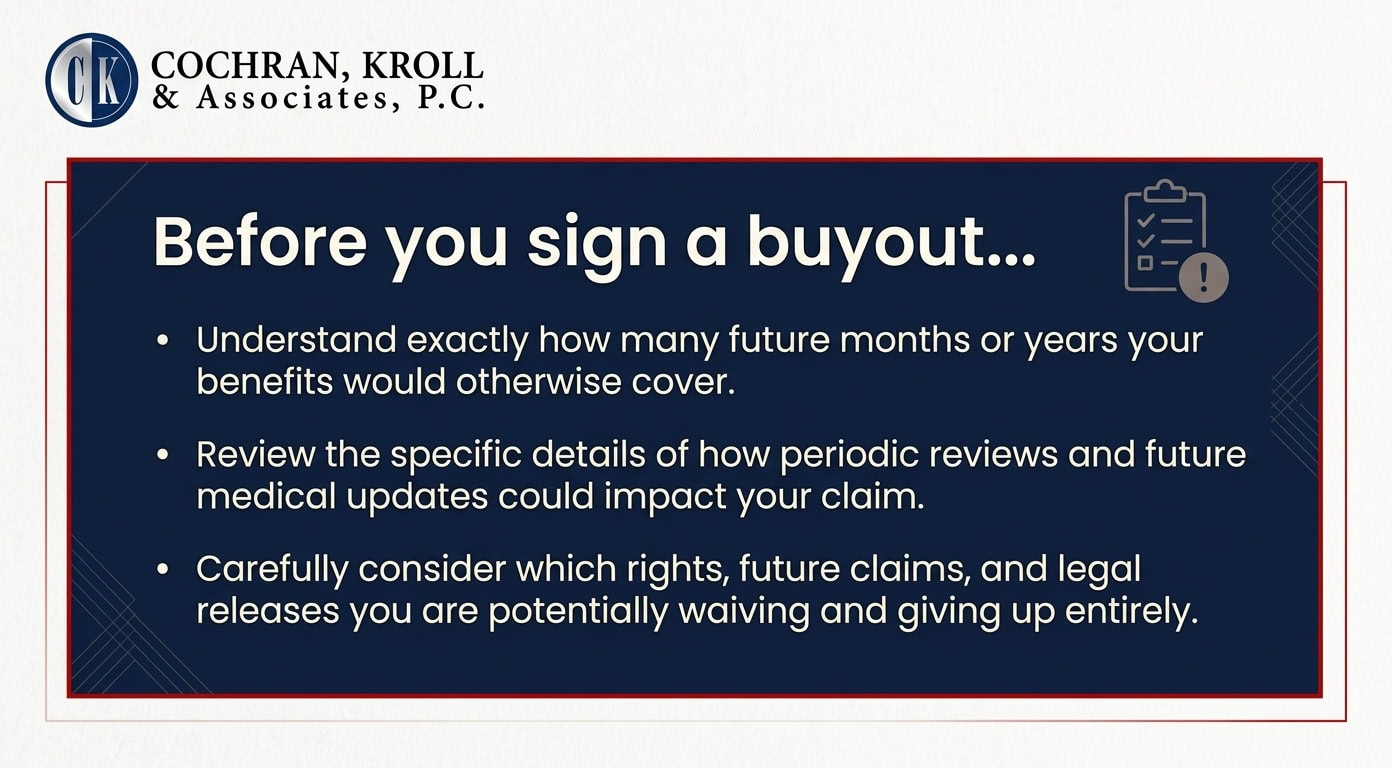
- What your policy says about how long benefits can last
- How the policy definition can change over time
- Whether offsets apply (for example, other benefits)
- What rights do you give up in the release language
If you’re unsure what a document means, get it reviewed before making a permanent decision.
How Much Does A Long-Term Disability Lawyer Charge?
Most long-term disability attorneys work on a contingency basis, which means no fee unless they recover benefits for you. There are usually no upfront costs and no hourly billing, so the arrangement is built around the outcome rather than the hours spent.
Cochran, Kroll & Associates, P.C. starts every matter with a free case evaluation and handles many disability cases on a contingency fee basis, with no fee unless a recovery is made. Because terms can vary from one case to the next, the exact fee arrangement should always be confirmed in the written representation agreement before you sign it.
Contact Our Long-Term Disability Lawyers in Michigan
If your LTD claim was denied, delayed, or reduced, you may still have options through appeals or additional documentation. The right approach often depends on the policy language and the record already submitted.
Contact us at Cochran, Kroll & Associates, P.C. for a free consultation. We’ll review your denial, explain your options, and map out the strongest path forward. Remember, we don’t get paid unless you win.
Call us at 1-866-MICH-LAW anytime, 24/7, to schedule a free case evaluation.
FAQs about long-term disability claims in Michigan
How do I know if my long-term disability claim was wrongfully denied?
A denial may be wrong if the insurer relied on incomplete records, applied the wrong policy definition, ignored key restrictions, or focused on paperwork issues instead of your real work limits. Your denial letter and the policy language usually explain the stated reasons. A lawyer can review what the insurer relied on and what evidence is missing.
How long does an LTD claim decision take?
Timelines vary by policy and by where you are in the process (initial claim vs appeal). Some claims move quickly, while others involve added document requests, exams, or reviews. The most reliable source is your policy and the letters you receive, which should describe what happens next and what information is needed.
What if my benefits stop after being approved?
Benefits can stop if the insurer says your medical support has changed, your file is missing updates, or the policy definition shifts. Get the termination letter, confirm the stated reasons, and gather updated records that show your restrictions. It also helps to track every request the insurer makes and respond promptly.
Will SSDI reduce my LTD payments?
Some long-term disability policies include offsets that reduce LTD benefits if you receive other benefits, such as Social Security Disability. Whether an offset applies depends on the policy terms. Check your policy and any benefit calculation letters before assuming how payments will be handled.
How much does a long-term disability lawyer cost?
Fee structures vary by firm and case type. Cochran, Kroll & Associates, P.C. offers a free, no-obligation case evaluation and works on a contingency fee basis in many matters, meaning you pay no fees unless a recovery is made. Ask for the fee agreement details during your evaluation.
What should I bring to a free case evaluation for an LTD claim?
Bring your denial or termination letter, any policy or plan documents you have, claim forms you submitted, a list of treating providers, recent medical records you can access, and a description of your job duties. If you have a timeline of calls and emails with the insurer, bring that too.
Do I have to appeal before I can file a lawsuit?
That depends on your policy type and the rules that apply to your coverage. Many employer-sponsored plans have specific appeal steps and paperwork requirements, while some individual policies follow a different path. Because the wrong move can limit your options, review your denial letter and policy before acting.
Should I accept a lump-sum buyout from my disability insurer?
A buyout can trade ongoing monthly benefits for a one-time payment, often in exchange for signing releases. Before signing, review how long benefits might last under your policy, how future reviews work, and what rights you give up. It’s smart to have the documents reviewed so you understand the tradeoffs.