Birth Injury Lawyer Michigan
If your baby or your family was harmed during labor or delivery, a birth injury lawyer in Michigan can help you ask hard questions, protect key records, and find out whether negligent medical care played a role. Our team at Cochran, Kroll & Associates, P.C. represents Michigan families in serious medical malpractice cases and offers a strong next step when you need answers.
Free, no-obligation consultation.
No fees until we win.
Call now: 1-866-MICH-LAW
Start here: Free Case Evaluation
Key Takeaways
- Birth injuries may involve harm to a baby, a mother, or both during labor and delivery.
- Some cases involve preventable mistakes such as delayed C-section decisions, poor fetal monitoring, or improper delivery techniques.
- Records matter. Early review can help preserve timelines, test results, and staff notes.
- Some injuries are obvious right away, while others become clearer over time.
- Cochran, Kroll & Associates, P.C. offers a free case evaluation and works on a contingency fee basis.
How Do I Know If I Have a Birth Injury Case?
Families often reach out when they believe something went wrong during pregnancy care, labor, delivery, or immediate newborn care. It may also help parents who were told everything was fine at first, but later noticed serious symptoms, developmental delays, or unexpected complications.
A review may make sense if you are asking questions about:
- a delayed emergency C-section
- signs of fetal distress that were not addressed
- forceps or vacuum use during delivery
- shoulder dystocia or difficult extraction
- loss of oxygen, seizures, or brain injury
- untreated maternal complications
- NICU concerns right after birth
It may be less likely to fit if the condition appears fully unrelated to medical care or is clearly a genetic issue with no negligence question. Even then, a record review can help you understand the difference.
| Concern |
Why do families ask questions |
What to gather |
| Emergency delivery delay |
Timing may matter when a baby shows distress |
discharge papers, timeline notes, names of providers |
| Oxygen loss or seizures |
These events can point to labor-and-delivery mistakes |
NICU records, imaging summaries, follow-up notes |
| Shoulder or arm weakness |
Nerve injuries may be linked to a difficult delivery technique |
pediatric notes, therapy records, photos or videos |
| Mother and baby were both injured |
One event may create more than one claim |
hospital records for both patients |
What Is the Difference Between a Birth Injury and a Birth Defect?
A birth injury usually refers to harm that happens before, during, or shortly after delivery. A birth defect usually refers to a condition that developed during pregnancy and is not automatically tied to how the medical team handled labor or delivery.
That distinction matters because families are often trying to answer two different questions at once: What happened medically, and could it have been prevented?
Why The Distinction Matters Legally?
A preventable delivery injury may support a malpractice claim. A developmental condition may not. The records, fetal monitoring, delivery notes, neonatal care records, and later follow-up all help tell that story.
That is one reason families often speak with a medical malpractice lawyer in Michigan when they suspect a serious error during childbirth.
What Are the Medical Mistakes Can Lead to a Birth Injury Claim?
Not every complication is malpractice. Birth can become high-risk very quickly. But some cases raise clear questions about whether the medical team acted soon enough, monitored carefully enough, or used the right delivery method.
Common concerns include:
- delayed response to fetal distress
- Failure to order a timely C-section
- misuse of forceps or vacuum extraction
- Poor monitoring of labor progression
- missed umbilical cord complications
- failure to diagnose or manage maternal conditions
- errors in emergency-room or urgent obstetric care
- failures in the immediate newborn response
When early emergency care is part of the story, families sometimes also need to explore whether an ER malpractice lawyer should be involved in the review.
Common delivery concerns and why families ask questions
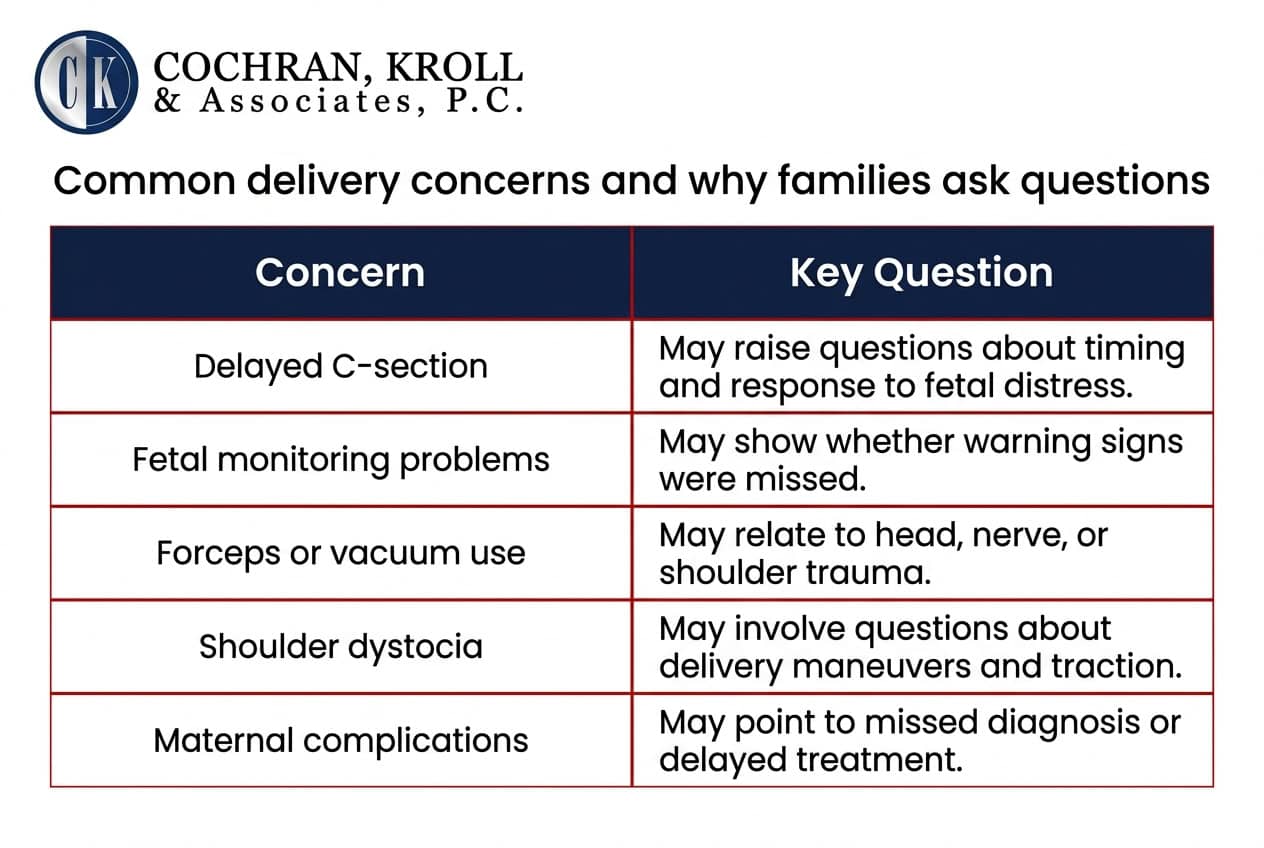
| Delivery concern |
Why it matters |
| Delayed C-section |
A late surgical decision may worsen oxygen-loss injuries |
| Fetal monitoring problems |
Warning signs may have been visible before the injury |
| Shoulder dystocia |
Improper traction can affect nerves, bones, or oxygen flow |
| Forceps or vacuum misuse |
Head, neck, facial, or nerve trauma may follow |
| Untreated maternal complications |
A missed diagnosis can affect both the mother and the baby |
What Are the Types of Birth Injuries Can Happen?
Birth injury cases can look very different from family to family. Some involve physical trauma. Others involve a lack of oxygen, missed distress, or complications that affect long-term development.
Common injuries and case themes include:
- Hypoxic-ischemic encephalopathy (HIE): brain injury connected to oxygen loss around delivery
- Cerebral palsy: sometimes associated with preventable birth-related brain injury
- Brachial plexus injuries and Erb’s palsy: nerve injuries that can affect arm and shoulder movement
- Shoulder dystocia complications: injuries linked to a baby becoming stuck during delivery
- Intracranial bleeding or other brain trauma: sometimes connected to prolonged labor or instrument use
- Facial nerve injury or fractures: It may happen during a difficult extraction
- Maternal injuries: hemorrhage, surgical errors, tears, infection, or other serious delivery-related harm
Some cases involve only the baby. Others involve both the baby and the mother. That matters when the legal team evaluates who was harmed and what the long-term impact may be.
Call us at 1-866-MICH-LAW anytime, 24/7, to schedule a free case evaluation.
What Could be the signs should families watch for after delivery?
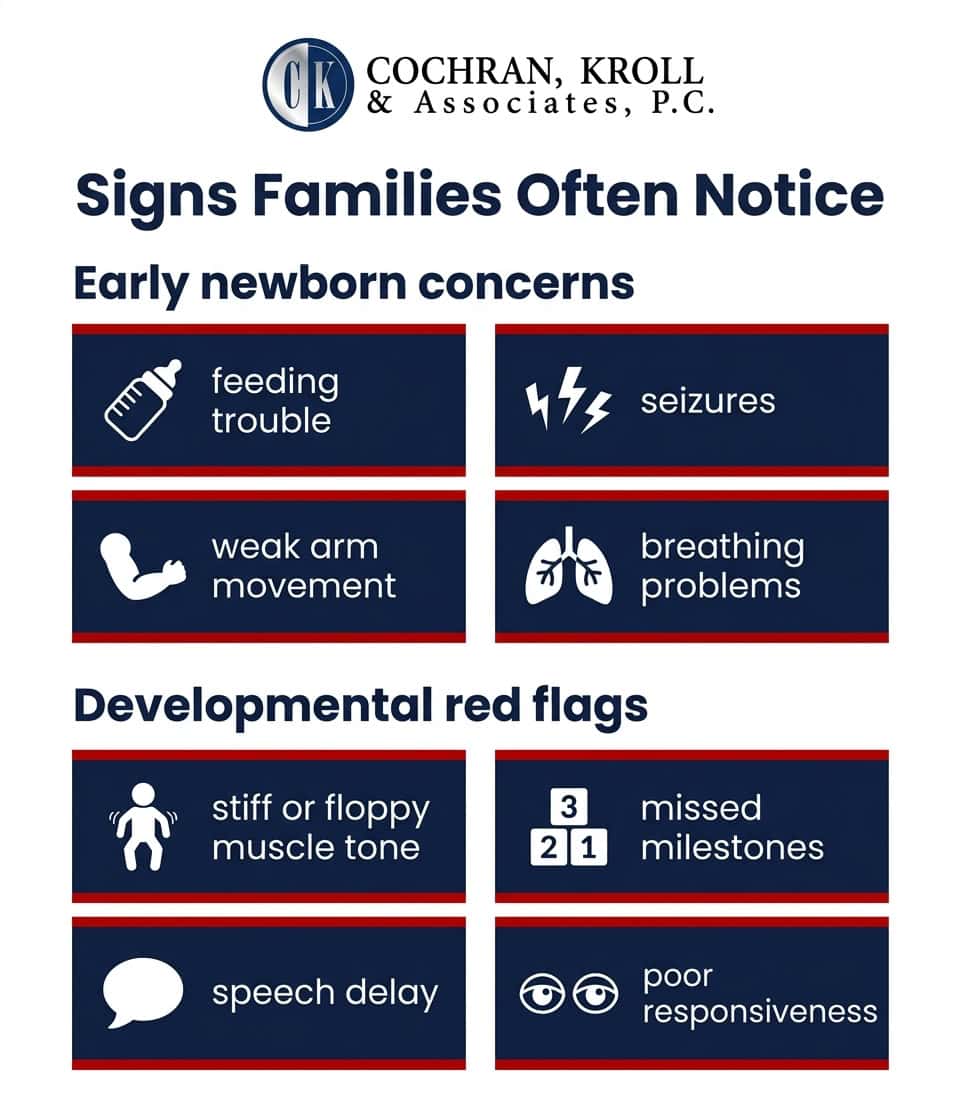
Some delivery injuries are obvious right away. Others are not. A child may leave the hospital, then show concerns weeks or months later.
Families often ask questions when they notice:
- Seizures or unusual movements
- Trouble feeding or weak sucking
- Breathing problems
- Very stiff or very floppy muscle tone
- One arm that does not move normally
- Facial drooping
- Unusual crying or poor responsiveness
- Missed motor milestones
- Speech delay
- Vision or hearing concerns
A symptom does not prove malpractice by itself. But it can be an important reason to request records, seek medical guidance, and preserve a timeline.
A practical step parents can take
Keep a simple log. Write down dates, symptoms, provider comments, therapy referrals, and testing milestones. Short videos can also help show movement problems or developmental concerns over time.
How do we investigate a possible birth injury case?
These cases usually turn on details that do not appear in a short hospital summary. The real story may be buried in nursing notes, monitoring strips, medication records, operative reports, neonatal records, and later specialist evaluations.
Our role is to look at the timeline and ask whether the care met the standard expected in that situation.
What we often review
- Prenatal and hospital records
- Labor and delivery notes
- Fetal monitoring records
- C-section or operative reports
- Newborn and NICU records
- Imaging, neurology, or therapy records
- Discharge instructions and follow-up care notes
Why the nurse-attorney advantage matters
Eileen Kroll is both a registered nurse and an attorney, which gives the team an added advantage when reviewing medical records in malpractice cases. That combined medical and legal perspective can matter when the facts are buried in technical charts, provider notes, and treatment timelines.
Who may be responsible for a birth injury?
Responsibility depends on the facts. In some cases, the focus is a single provider. In others, several people or entities may be involved.
A case may involve questions about:
- OB/GYN decision-making
- Labor and delivery nursing care
- Midwife care and escalation
- Anesthesia issues
- Neonatal response after delivery
- Hospital policies, staffing, or supervision
- Resident or team communication failures
Some families also need help with related injury issues outside birth trauma. When a case overlaps with a broader negligence event, it can help to review the firm’s personal injury lawyer in Michigan services as well.
What does it cost to hire our team, and what affects the value of a claim?
These cases are handled on a contingency fee basis. That means there are no upfront attorney fees, and the firm is paid only if there is a recovery.
What affects the value of a case?
Every case is different. The value of a claim may depend on:
- How severe the injury is
- Whether the harm is permanent
- Future therapy or care needs
- Whether the child may need lifelong support
- How strongly the records show a breach in care
- Whether more than one party may be responsible
- The impact on the family’s income, time, and daily life
If you want to understand the firm’s public proof points, you can review its verdicts and settlements and client reviews. Past results do not guarantee future outcomes.
Why do families choose our team?
Families looking for help after a delivery injury are usually not looking for a flashy pitch. They want a serious team that can review records, explain the process, and move quickly.
Families choose this team for several reasons:
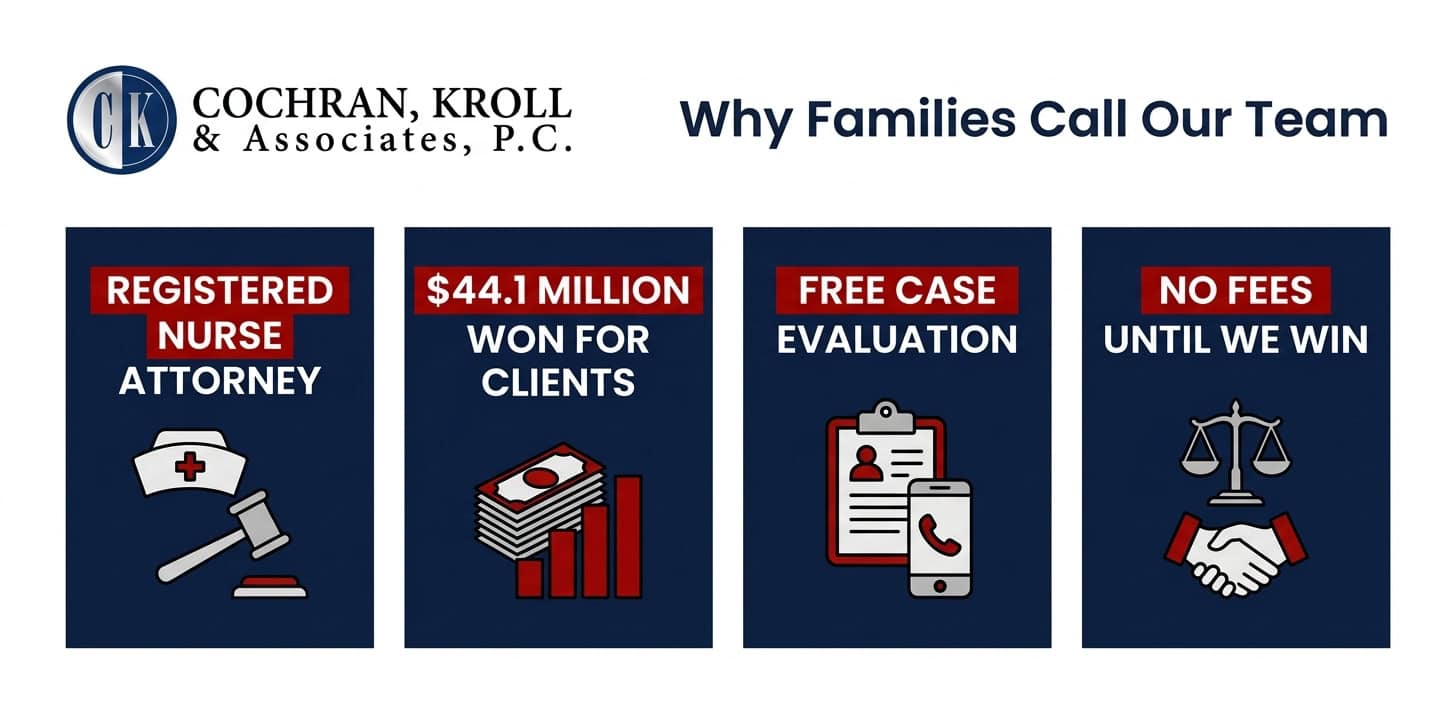
- Free, no-obligation consultation
- No fees until we win
- Michigan-focused representation
- 24-hour toll-free intake
- A registered nurse attorney on the team
- Documented case results and public trust signals
- Offices in Livonia and Flint, with statewide service across Michigan
Families also look at 44.1 million won for clients, decades of proven experience, public recognition, trial lawyer memberships, and media features.
If you want a broader view of the firm’s services and experience, visit Cochran, Kroll & Associates, P.C;
What happens after you contact our team?
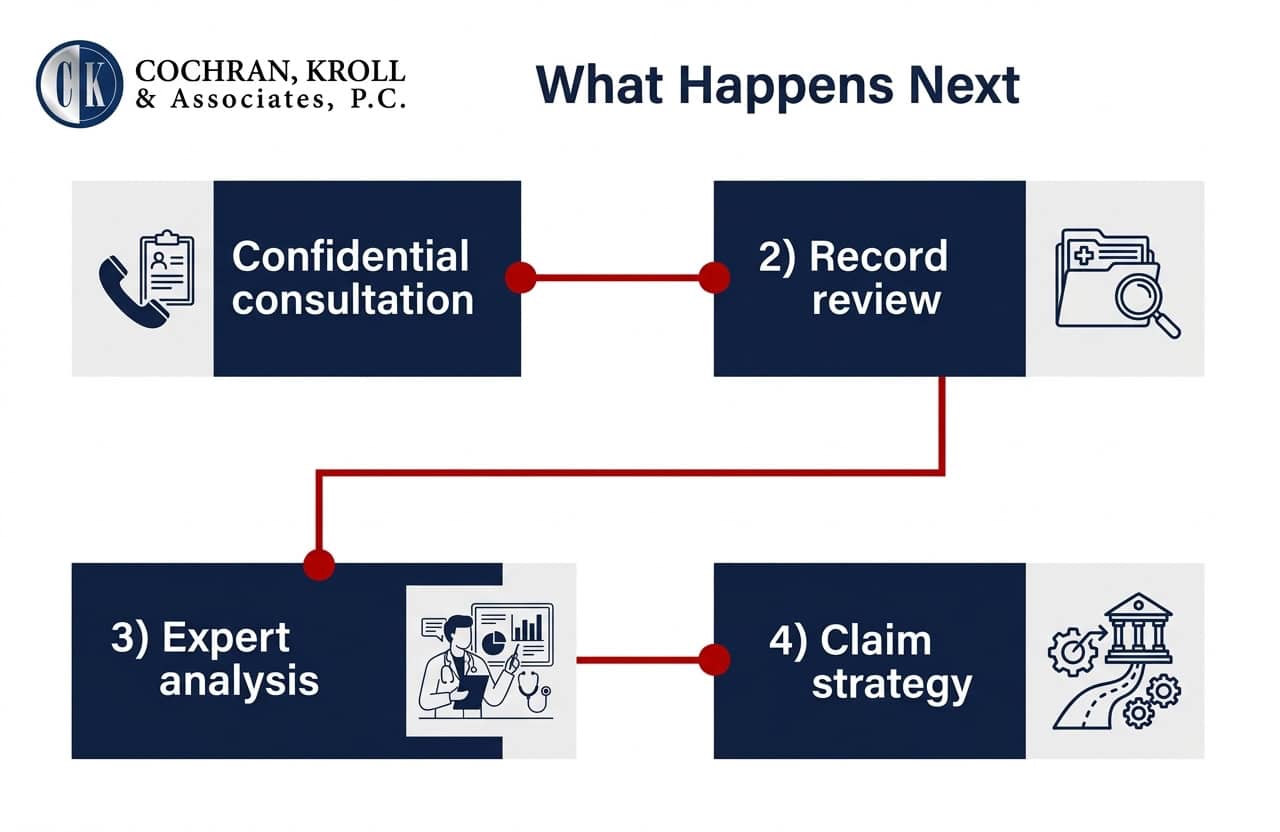
A good intake process should lower stress, not add to it.
Step 1: We listen to what happened
You tell us what you know so far. That may include labor details, delivery timing, emergency decisions, NICU care, and how your child is doing now.
Step 2: We identify the key records
We look at what records may matter most and what timeline questions need answers.
Step 3: We review the care closely
The case is evaluated for warning signs, missed opportunities, and whether the response appears to match the standard of care.
Step 4: We explain the next move
If the case appears actionable, we explain the process, what the firm may need from you, and what comes next. If more review is needed, we will let you know.
Contact Birth Injury Lawyer Michigan
If a newborn suffered complications during pregnancy, labor, or delivery, a birth injury lawyer Michigan can review medical records and expert opinions to determine whether preventable errors may have occurred. An early legal review can help families understand their options and the next steps for pursuing a claim.
Contact us at Cochran, Kroll & Associates, P.C. for a free consultation. We’ll review your case, explain your options, and map out the strongest path forward. Remember, we don’t get paid unless you win.
Call us at 1-866-MICH-LAW anytime, 24/7, to schedule a free case evaluation.
Frequently asked questions
What is the difference between a birth injury and a birth defect?
A birth injury usually points to harm connected to labor, delivery, or immediate newborn care. A birth defect usually refers to a condition that developed during pregnancy and is not automatically linked to negligence.
When should I talk to a lawyer after a delivery injury?
As soon as you have concerns. These cases often depend on records, timelines, and rules that can become harder to manage when delayed.
Can I sue a hospital for a birth injury?
In some cases, yes. A claim may involve a doctor, nurse, hospital system, or several parties, depending on who was responsible for the care and decisions.
What does it cost to hire a birth injury attorney?
These cases are handled on a contingency fee basis. You do not pay upfront legal fees, and the firm only gets paid if it wins a recovery.
What compensation may be available in a birth injury case?
Possible damages may include medical expenses, therapy needs, long-term care, lost earning capacity, and pain and suffering. The exact value depends on the facts and the lasting impact.
What if my child’s condition was not diagnosed right away?
That can still matter. Some injuries are not fully understood on day one and become more visible over time through symptoms, testing, or developmental delay.
Can the mother also have a claim?
Possibly. Some delivery events harm both the baby and the mother, and those injuries may need to be evaluated separately.
What are common warning signs after delivery?
Families often watch for seizures, feeding trouble, breathing issues, unusual muscle tone, weakness on one side, missed milestones, or other concerns raised by a doctor.