Grand Rapids Nursing Home Abuse Lawyer
A Grand Rapids Nursing Home Abuse Lawyer in helps families take action when a loved one may face abuse or neglect in a care facility. This can include bedsores, falls, medication mistakes, or wrongful death.
Schedule A Call with Our Lawyer
Call 1-866-MICH-LAW | Start a free case evaluation form.
Why Are Grand Rapids and Kent County Families Paying Close Attention to This Issue?
Grand Rapids has a large elder-care landscape, with more than 46 nursing homes and skilled nursing facilities, including 26 facilities in Kent County alone. Kent County has roughly 670,000 residents, with about 14.5% age 65 or older, and only a portion of metro-area facilities reached “High Performing” status in the 2024 U.S. News data. Average local nursing home costs are around $6,514 per month according to senior cost data, which raises the stakes for families who expect safe, dignified care.
Families in Grand Rapids often ask about facilities such as Heartland Health Care Center-Greenview, SKLD Leonard, SKLD Wyoming, Medilodge of Wyoming, Samaritas Senior Living Grand Rapids Lodge, Marywood Health Center, Pilgrim Manor, and St. Ann’s Home. The safest approach is not to assume anything from a name alone. Review current CMS ratings, staffing information, inspection history, and complaint records for any facility you are considering or questioning.
Poor care in a nursing home can overlap with issues often examined by a medical malpractice lawyer in Michigan, especially when the harm involves treatment failures, wound care breakdowns, medication handling, or missed medical escalation.
What Kinds of Abuse and Neglect Are Common in These Cases?
Nursing home cases are rarely limited to one problem. One resident may suffer neglect, a medication error, and a preventable fall in the same period.
Physical Abuse
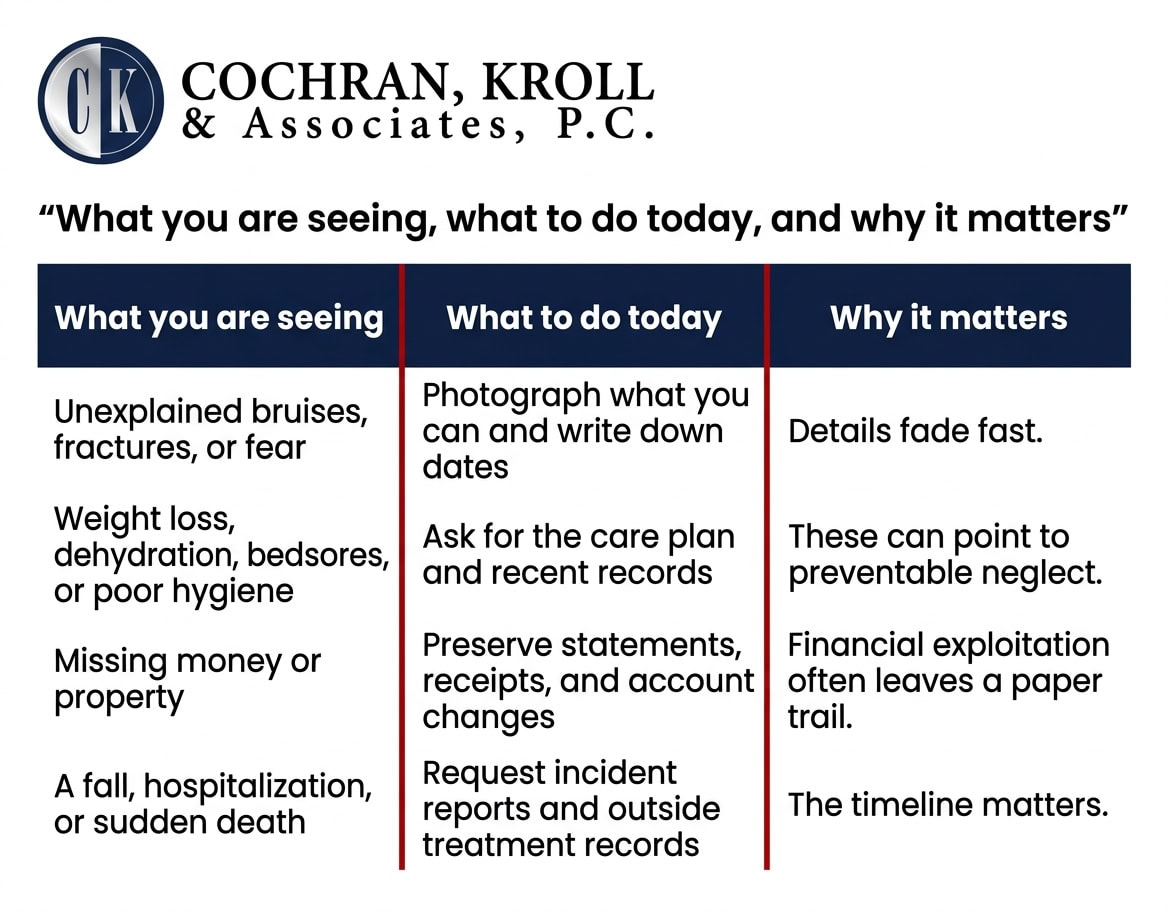
Physical abuse can include hitting, pushing, rough handling, improper restraint use, or force that leaves bruises, cuts, fractures, or injury patterns that do not match the explanation given. Clustered bruising, injuries at different healing stages, and injuries inconsistent with staff reports deserve close review.
Neglect, Bedsores, and Medication Errors
Neglect often shows up through dehydration, malnutrition, unchanged bedding or briefs, poor hygiene, untreated wounds, or a general decline that does not make sense. Bedsores are especially important because they may signal failures in repositioning, skin checks, wound care, and documentation.
Medication issues can involve the wrong drug, the wrong dose, missed doses, or failure to monitor side effects. Some nursing home injury claims also overlap with treatment problems discussed on the ER malpractice lawyer services when the harm involves delayed emergency response or poor medical handling.
Emotional, Sexual, and Financial Abuse
Not every case leaves a visible mark. Emotional abuse may show up as fear, withdrawal, or a sudden change in behavior around specific staff. Sexual abuse may involve injuries, torn clothing, fear, or signs that a resident with cognitive impairment could not meaningfully consent. Financial exploitation can involve missing cash, unusual withdrawals, changes to documents, or staff showing an unusual interest in a resident’s money.
Falls and Wrongful Death
Falls are not always “just accidents.” A fall may indicate poor supervision, poor transfer technique, missing assistive devices, ignored care plan instructions, or failure to reassess fall risk after an earlier incident. When neglect or abuse leads to death, the family may also need to explore a wrongful death claim. These issues fall within the broader scope of negligence work, often handled by a personal injury lawyer in Michigan.
What Warning Signs Should Families Watch During Visits?
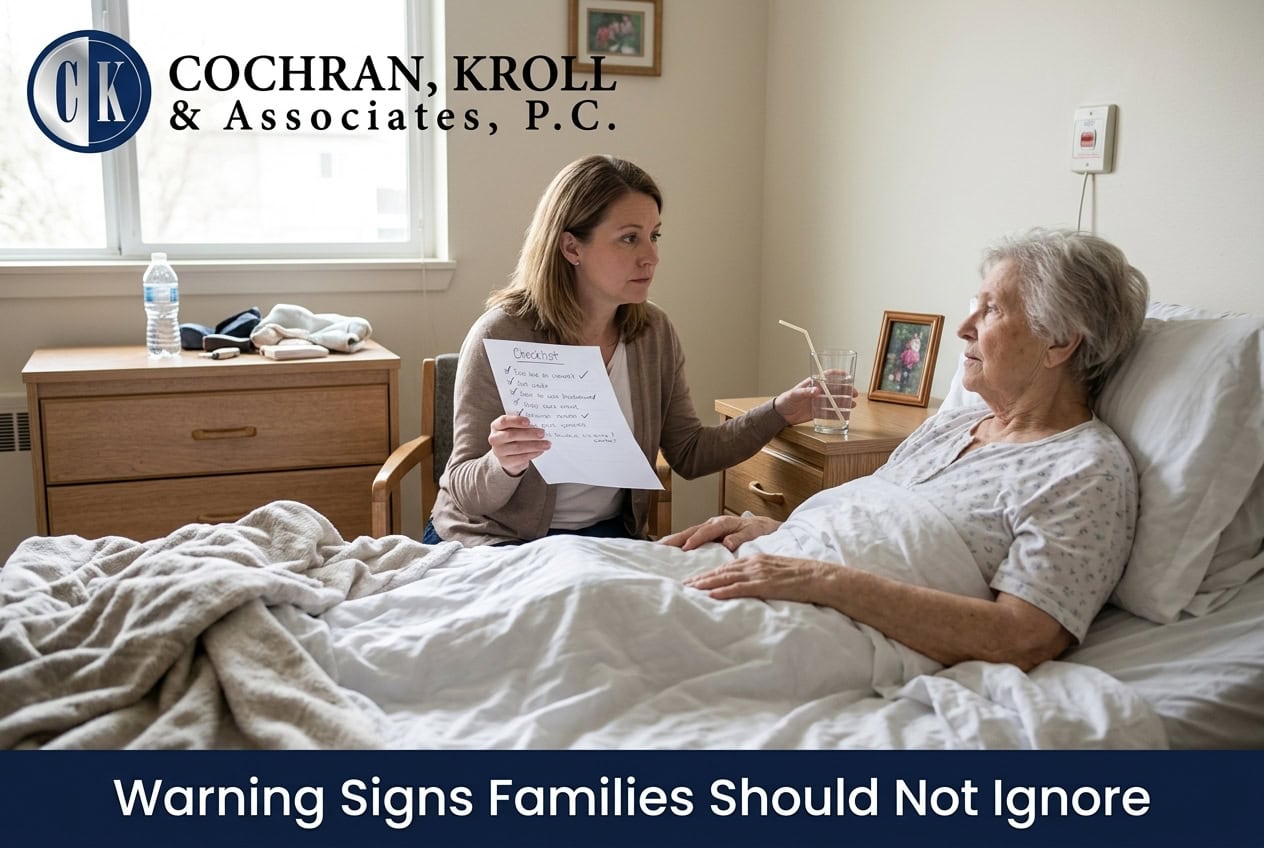
Most residents cannot explain everything that is happening. Some are afraid. Some have dementia. Some are too weak to speak clearly. That means families often become the first line of protection.
Physical warning signs
- Bruises, cuts, fractures, or black eyes with weak or changing explanations
- Bedsores, especially wounds that appear advanced or infected
- Sharp weight loss, dry mouth, sunken eyes, or signs of dehydration
- Strong odors, dirty clothing, poor grooming, or unclean bedding
- Repeated hospital visits or sudden infections without a clear explanation
Behavioral warning signs
- Sudden withdrawal, agitation, depression, or fear
- Distress when certain staff members enter the room
- Unusual silence when staff stay close during visits
- Fragmented statements such as “don’t leave me” or “they hurt me.”
Environmental warning signs
- Rooms that look dirty, unsafe, or poorly supervised
- Long call-light delays
- Missing jewelry, electronics, cash, or personal items
- Staff who avoid direct questions or cannot explain changes in condition
How Much Does it Cost to Hire a Grand Rapids Nursing Home Abuse Lawyer?
Cochran, Kroll & Associates, P.C., works on a contingency fee basis. That means no fees unless the firm wins a recovery. For families in crisis, this can remove the pressure of paying upfront just to start asking questions.
Case value depends on the harm, not a fixed chart. Factors may include:
- How serious the injury is
- Whether the neglect lasted days, weeks, or longer
- Whether the resident needed hospitalization or future care
- Whether there was lasting pain, emotional harm, or loss of dignity
- Whether the case involves wrongful death
- Whether records show repeated failures, not a one-time mistake
- Whether corporate or management-level decisions contributed to the problem
Families may seek damages tied to medical bills, future care, emotional distress, transfer costs, and wrongful death losses, while all discussions remain free of promises or guaranteed outcomes.
Why Choose Cochran, Kroll & Associates, P.C.?
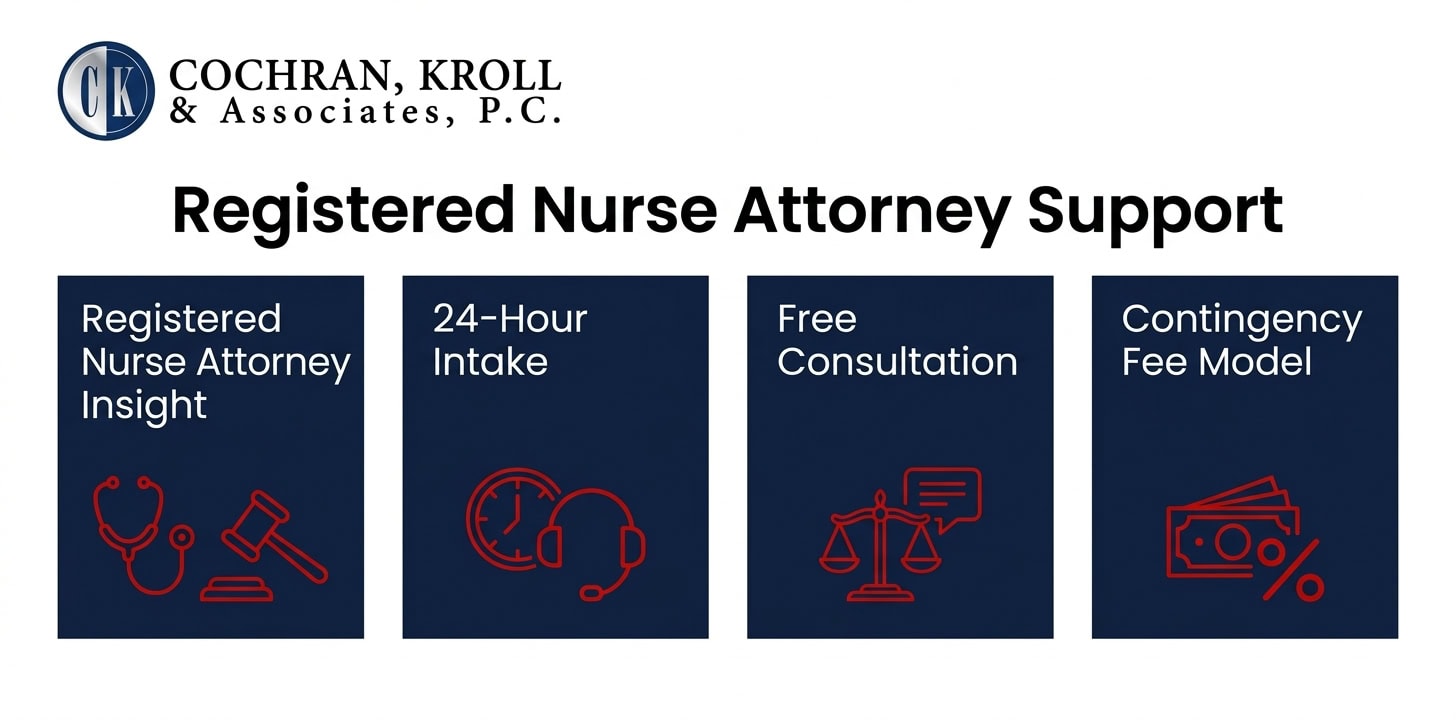
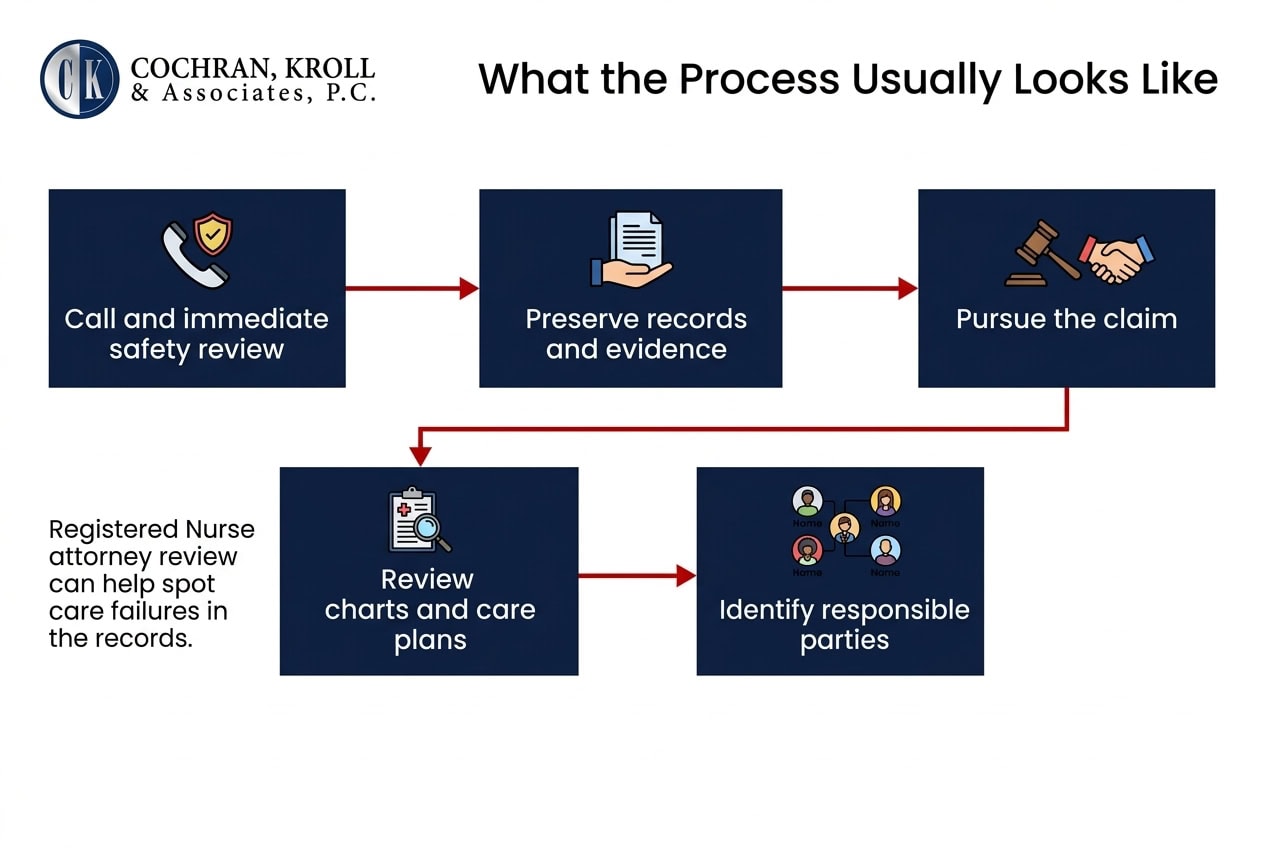
A key differentiator is Eileen Kroll, R.N., J.D. A Registered Nurse attorney can spot chart issues, wound-care failures, medication handling problems, and clinical gaps that may be harder to catch without nursing training. The firm also highlights its Michigan focus, 24-hour intake, contingency fee model, published results, recognitions, and reviews.
Families choosing counsel for this kind of case may care about:
- A Michigan-focused firm, rather than a referral-style page
- A team that can review records with medical and legal precision
- 24-hour intake availability
- A free, no-obligation consultation
- A contingency fee basis
Contact Our Grand Rapids Nursing Home Abuse Lawyer
If you suspect a loved one has suffered neglect or abuse in a nursing home, a lawyer can review care records, incident reports, and facility policies to understand what may have gone wrong. Early legal guidance can help families protect their loved ones’ rights and explore possible next steps.
Call us at 1-866-MICH-LAW anytime, 24/7, to schedule a free case evaluation.
Frequently asked questions
How can I tell if my loved one may be suffering abuse or neglect?
Look for unexplained injuries, bedsores, dehydration, poor hygiene, missing property, fear, withdrawal, or staff who cannot clearly explain a sudden decline.
Can a family member bring a claim if the resident has dementia?
Often, yes. Depending on the facts, a family member, guardian, conservator, or estate representative may be able to act.
What should I do first if I suspect abuse right now?
Focus on safety, document what you see, request records, report the concern, and seek legal guidance quickly.
Do these cases only involve physical abuse?
No. They can involve neglect, medication mistakes, falls, emotional abuse, sexual abuse, financial exploitation, and wrongful death.
What if the nursing home says the injury was unavoidable?
That is not the end of the issue. Records, staffing history, wound notes, care plans, and outside treatment records may tell a different story.
How much does it cost to hire a lawyer for this kind of case?
The firm works on a contingency fee basis, so there are no fees unless it wins a recovery.
Can a claim include the facility’s management company or chain?
Potentially, yes. In some cases, responsibility may go beyond the building itself.
What damages may be available in a nursing home abuse case?
Depending on the facts, a claim may seek compensation for medical bills, future care, pain and suffering, emotional harm, transfer costs, and wrongful death-related losses.
My loved one died after suspected neglect. Can the family still act?
A wrongful death claim may be possible, usually through the estate or personal representative, depending on the facts and timing.
If you suspect a loved one has been harmed in a nursing home, do not wait for the story to become clearer on its own. Important records can disappear, memories can shift, and dangerous conditions can continue.