Wrongful Death Lawyer in Michigan: Practical Help for Families After a Preventable Loss
A wrongful death case may apply when someone dies because of another party’s wrongful act, neglect, or fault. In Michigan, families often need quick clarity on who can bring the case, what losses can be included, and what happens next. A lawyer can investigate what happened, handle insurance communication, and guide the process while your family focuses on healing.
If you have lost a loved one due to someone else’s negligence or wrongdoing in Michigan, then please call us today at 1-866-MICH-LAW, or start a free case evaluation form. We work on a no-win, no-fee agreement, and our attorneys are specialists in helping families in Michigan claim wrongful death compensation.
Key Takeaways
- You don’t need every detail to start; basic facts and documents can be enough for an initial review.
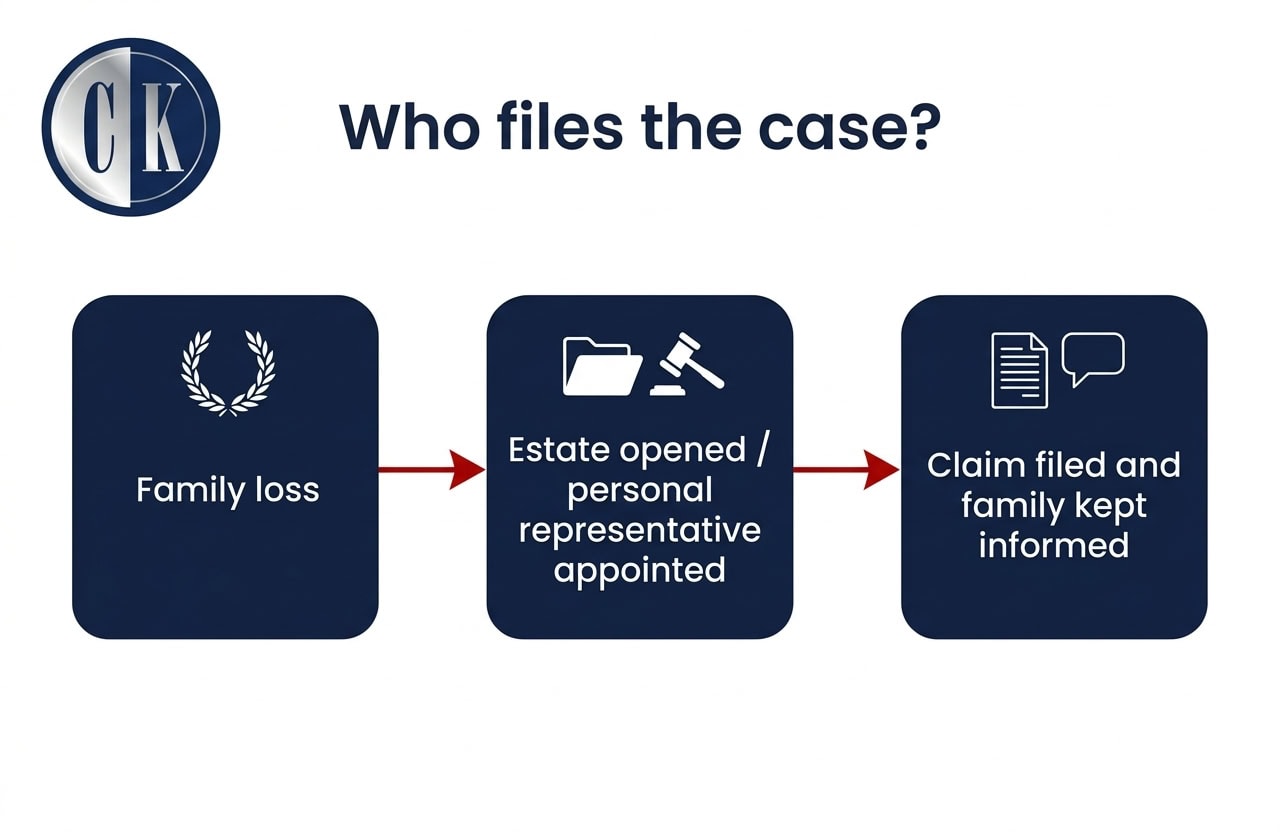
- Many families feel stuck on one question: who files the case and what the estate role means.
- Evidence can disappear fast; early preservation matters.
- Compensation can involve several types of losses, not just bills.
- Fees are often contingency-based, meaning no upfront legal fees in many cases.
Table of contents
Do you have a wrongful death case? A quick eligibility check
You may have a case if someone’s death may have been caused by negligence, unsafe conditions, a defective product, or preventable medical mistakes.
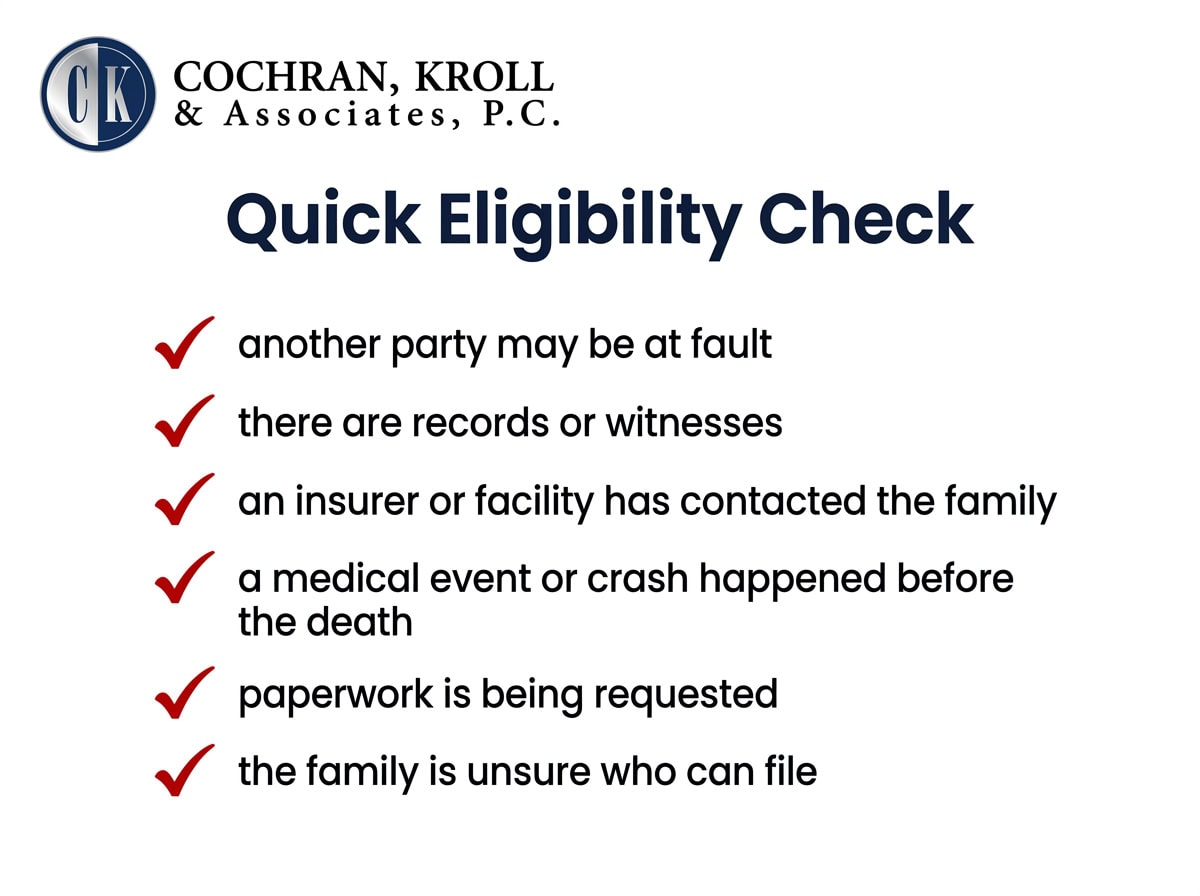
Quick check (does any of this apply?)
- There was a crash, fall, unsafe property condition, or medical event before the death
- A driver, business, property owner, caregiver, or employer may share responsibility
- You have records (reports, charts, bills), or there were witnesses
- An insurer, hospital, facility, or company has already contacted your family
- Someone is asking for a recorded statement or paperwork
- Your family is unsure who can “file”.
If that sounds like your situation, don’t wait until you feel “fully organized.” Most families aren’t. That’s okay.
Call 1-866-MICH-LAW or use the contact form to request a free case evaluation.
What information helps us screen a case fast?
If you have it, bring or send:
- Date and location of the incident, plus the date of death
- Names of involved parties (driver/company/facility, if known)
- Any report numbers (police or incident report)
- Where care happened (hospital/clinic/facility)
- Witness names and any photos or videos you already have
What does “wrongful death” mean?
If the person who died could have brought an injury claim had they lived, the law may allow a wrongful death claim after their death.
Most cases come down to negligence. Someone had a responsibility to act with appropriate care. They didn’t. That failure contributed to the death.
What kinds of incidents commonly lead to these cases?
Every case is different. These are common starting points:
Who can get a wrongful death claim in Michigan?
This is where many families get stuck.
In Michigan, the claim is typically brought by a personal representative for the estate. That doesn’t mean one person “controls” everything. It means the case has a legal role for filings and communication.
What is a personal representative, and why does it matter?
A personal representative is the person authorized to act for the estate. Often it’s a family member. The right choice depends on your family situation and whether an estate has already been opened.
Here’s a simple example: a spouse and adult children may all be involved, but one person is usually appointed to handle the official case steps. The goal is structure, not exclusion.
What happens with family notice and communication early on?
Families worry about confusion. They worry about conflict, too.
A steady process keeps communication organized and expectations clear, especially when more than one relative may be affected. You should not have to figure this out alone.
What losses can be included in a Michigan wrongful death claim?
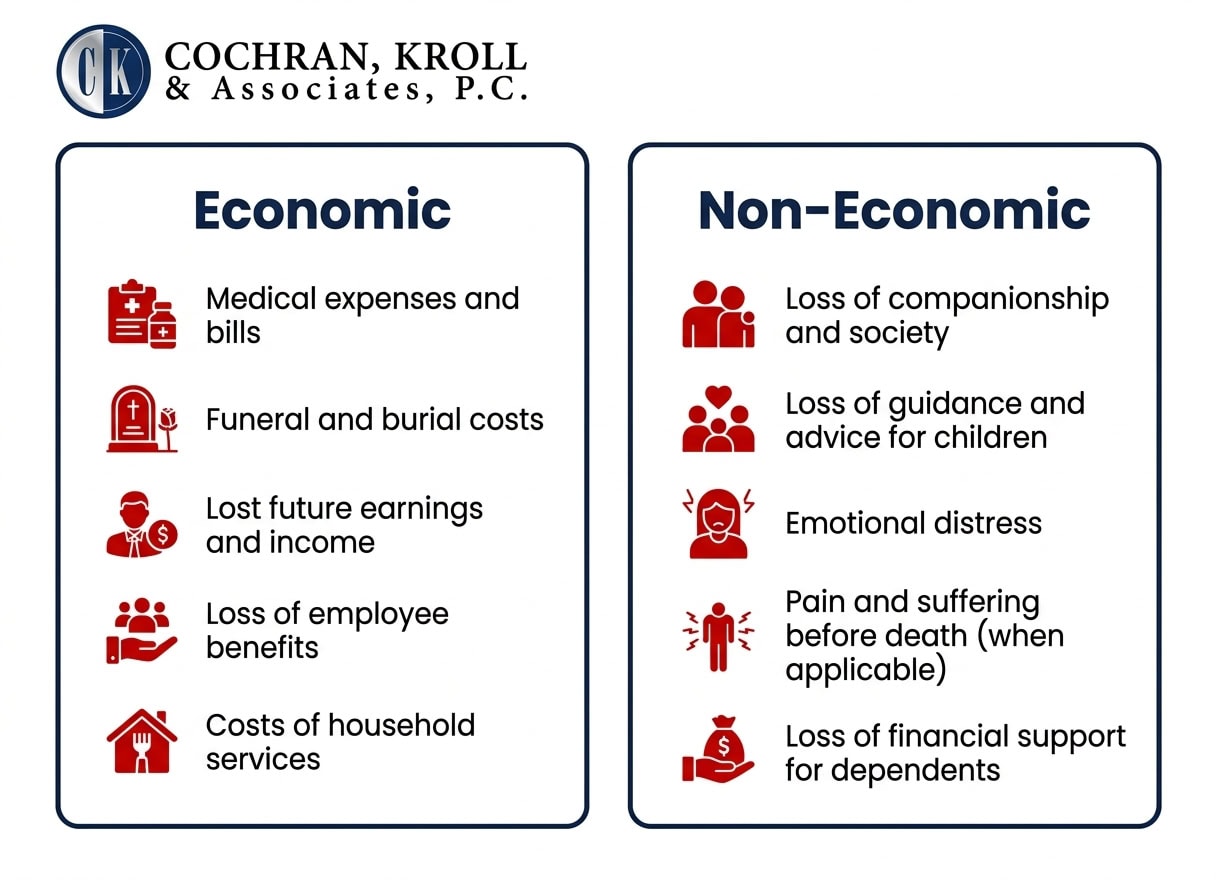
These cases can involve more than immediate bills. The facts decide what applies, but losses often fall into two buckets.
Common categories (examples)
| Category |
Examples (may apply depending on the case) |
| Economic losses |
medical bills, funeral and burial costs, lost income/benefits, value of services the person provided |
| Non-economic losses |
loss of companionship/support, grief-related impacts, pain and suffering before death (when applicable) |
How does settlement distribution work (so there are no surprises)?
Families often assume a settlement gets split automatically. It’s usually more structured than that.
If your family is worried about how this works, we explain the general process early. That way, nobody gets blindsided later.
How long do you have to act, and why families shouldn’t self-calculate deadlines
Deadlines can be tighter than people expect. Different fact patterns can change what applies.
Don’t guess. Don’t rely on what someone “heard.” A quick review can prevent avoidable mistakes.
Warning: If an insurer asks for a recorded statement or pushes paperwork, treat that as a red flag. One conversation can shape the case.
Call 1-866-MICH-LAW for a free, no-obligation consultation.
What happens after you call us? A step-by-step case roadmap
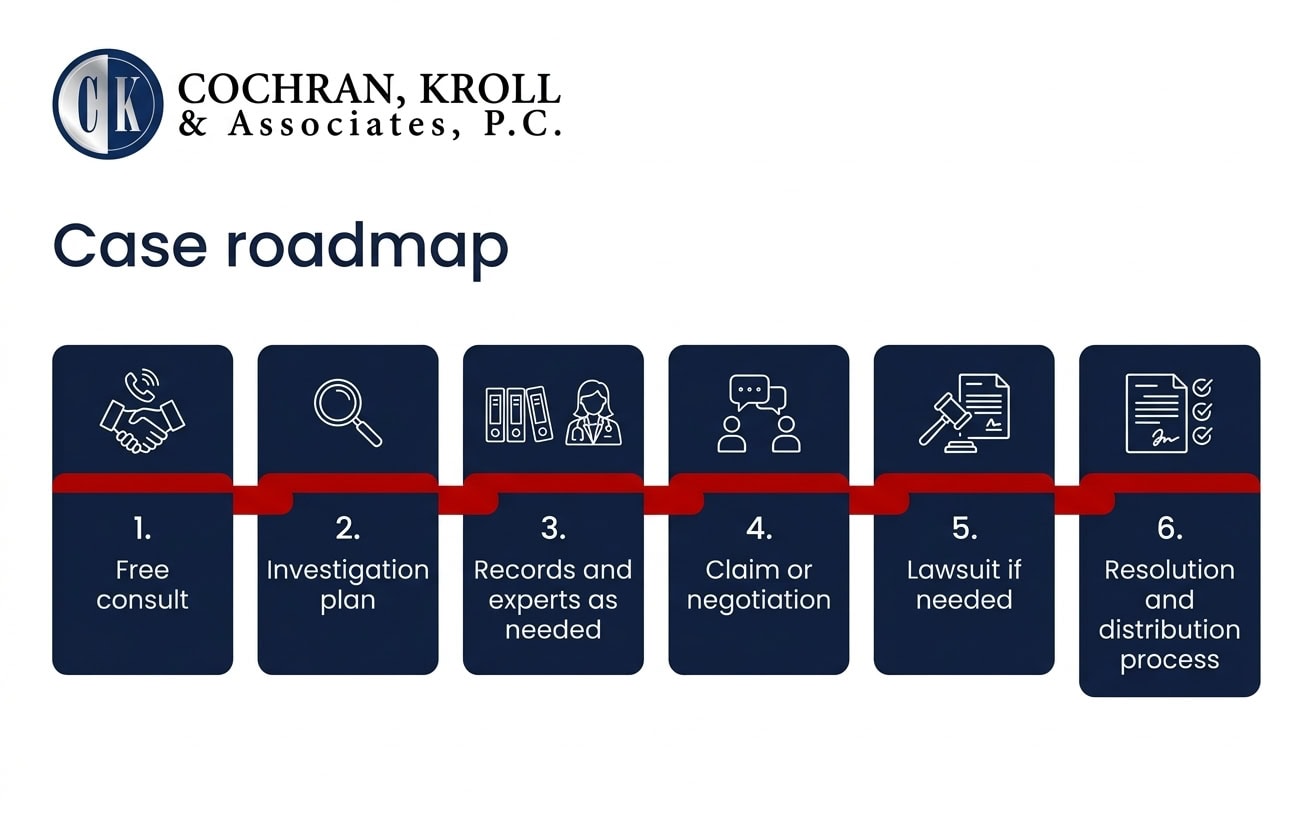
You deserve a process that feels steady. Not chaotic.
Here’s what it typically looks like.
| Step |
What you do |
What we do |
| 1) Free case evaluation |
Share what you know (even if it’s incomplete) |
Ask key questions and explain options in plain English |
| 2) Early protection plan |
Save documents and photos; pause new paperwork |
Preserve evidence and take over insurer communication when appropriate |
| 3) Investigation |
Point us to reports, care locations, and witnesses |
Gather records, evaluate responsibility, and use experts when needed |
| 4) Damages story |
Tell us how the loss changed your family |
Build the loss picture and support it with documentation |
| 5) Negotiation or litigation |
Stay informed and approve major decisions |
Pursue compensation and prepare the case as if it could go to court |
| 6) Resolution + wrap-up |
Ask questions-no pressure |
Explain the next steps and keep the closing process organized |
How long do these cases usually take?
Some cases resolve sooner. Others take longer.
The timeline depends on investigation needs, disputes about responsibility, and whether litigation steps are required. If you want more general answers, you can review other legal FAQs.
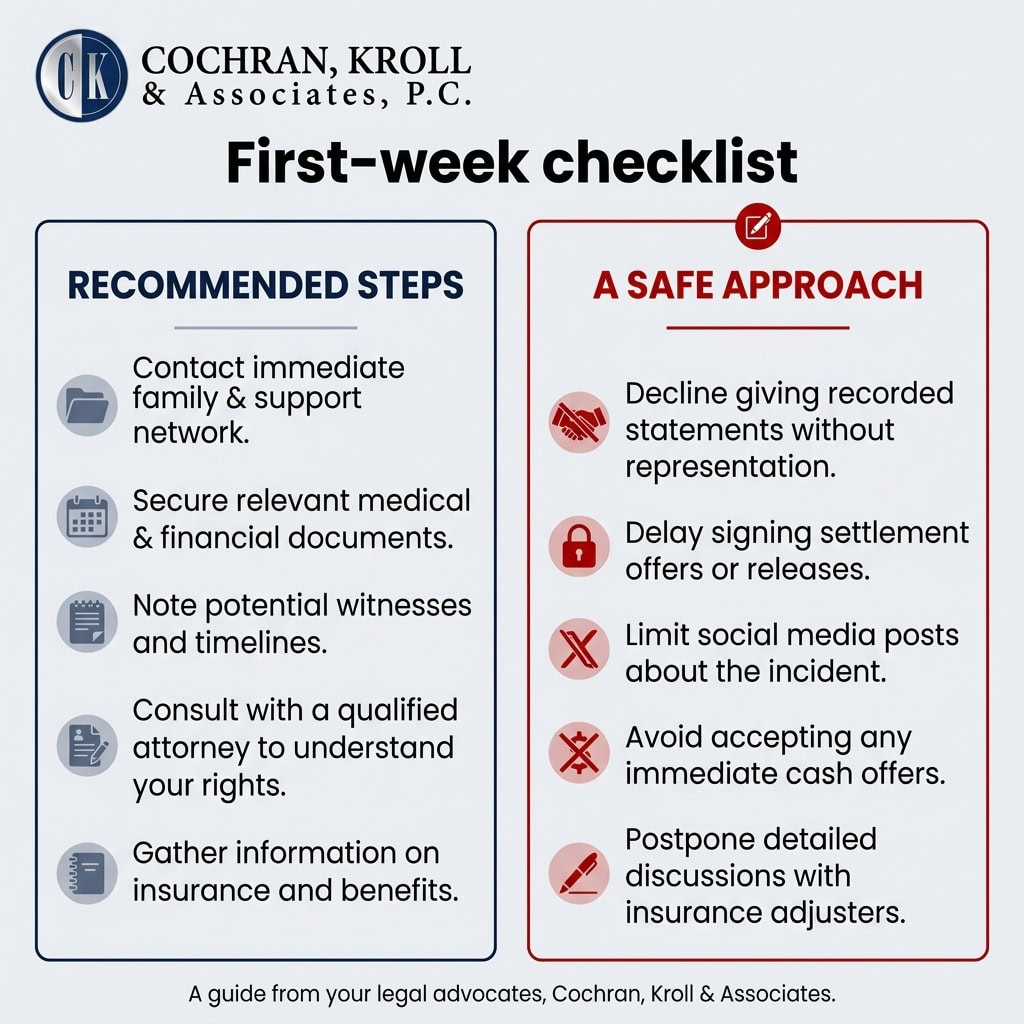
What should you do right now (and what should you avoid)?
Small choices early can protect your family later.
Do this (simple, practical steps)
- Keep one folder for reports, bills, discharge papers, and insurer messages
- Write a basic timeline while details are fresh (dates, names, locations)
- Save photos, videos, and relevant messages
- If there was medical care, list facility names and approximate dates
- Route insurer calls through counsel when possible
Avoid this (common pitfalls)
- Giving a recorded statement without guidance
- Signing broad releases “to move things along.”
- Assuming “it was an accident” means nobody is accountable
- Waiting too long to gather names, records, and footage
- Sharing sensitive details through unsecured channels
If you’re sorting through options across injury-related matters, this may help: personal injury practice across Michigan.
Why choose Cochran, Kroll & Associates, P.C. for a wrongful death case?
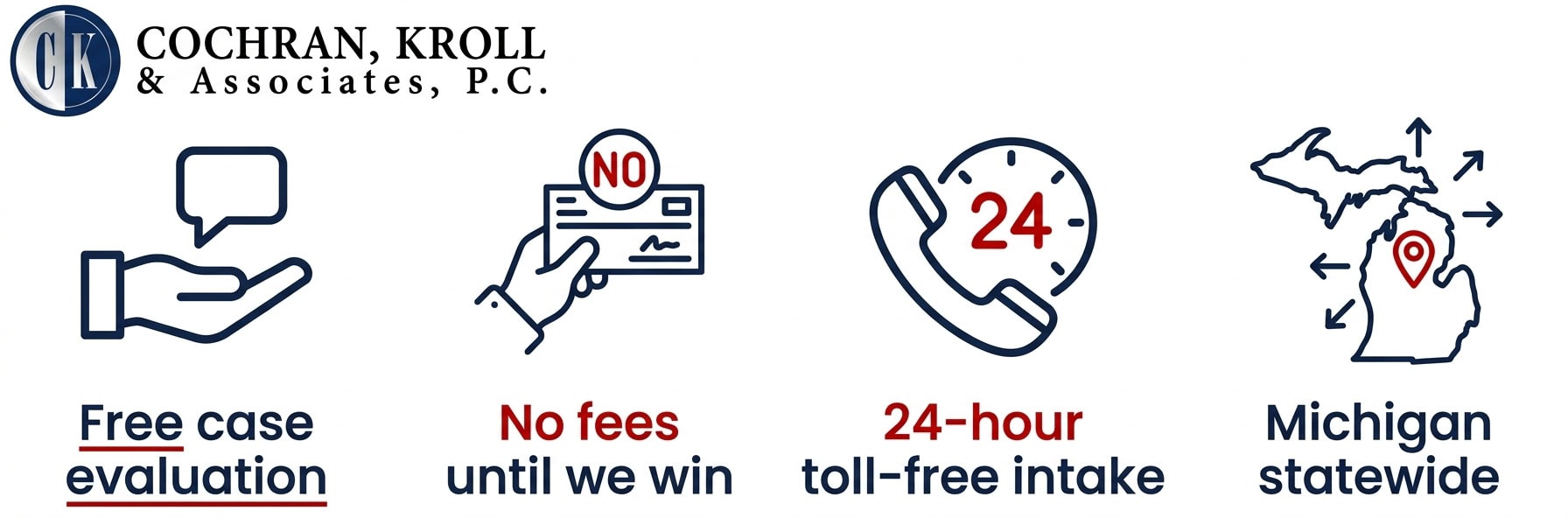
Families usually want three things: responsiveness, credibility, and a plan.
Our firm offers:
Contact Our Wrongful Death Lawyer in Michigan
A wrongful death claim can involve sensitive details and specific legal requirements. A consultation can help you understand the general process, what information may be needed, and what options your family can consider.
Contact us at Cochran, Kroll & Associates, P.C. for a free consultation. We’ll review your case, explain your options, and map out the strongest path forward. Remember, we don’t get paid unless you win.
Call us at 1-866-MICH-LAW anytime, 24/7, to schedule a free case evaluation
Wrongful death FAQs
Who can file a wrongful death claim in Michigan?
Many cases are brought by a personal representative for the estate. If you’re unsure who that should be in your family, we can explain common options during a free case evaluation.
What situations can qualify as wrongful death?
Common scenarios include fatal crashes, unsafe property conditions, preventable medical mistakes, unsafe workplaces, and dangerous products. The key question is whether another party’s wrongful act, neglect, or fault may have contributed.
What losses can a family claim after a death?
Depending on the facts, losses can include medical and funeral costs, lost income and benefits, and non-economic impacts such as loss of companionship and support.
How does a settlement get divided among family members?
Distribution can involve steps that account for different family relationships and impacts. We explain expectations early so there are fewer surprises.
How long do these cases usually take?
Some resolve faster than others. The timeline depends on the investigation needs, disputes about responsibility, and whether the case requires litigation steps.
How do legal fees work for a wrongful death case?
Many firms handle these matters on a contingency fee basis. That typically means no upfront legal fees, and payment is tied to recovery.
Do we have to go to court?
Not always. Some cases resolve without trial, but it’s important to prepare every case carefully in case court becomes necessary.
What if the death involved medical care or a hospital stay?
Medical cases can require deeper record review and qualified support. If you suspect preventable medical errors, it helps to speak with a firm that handles complex medical malpractice matters.
What should we do (and avoid) in the first week?
Preserve documents and photos, write down a timeline, and be cautious with insurer communications and paperwork. If you want, we can take over communications and evidence preservation early.