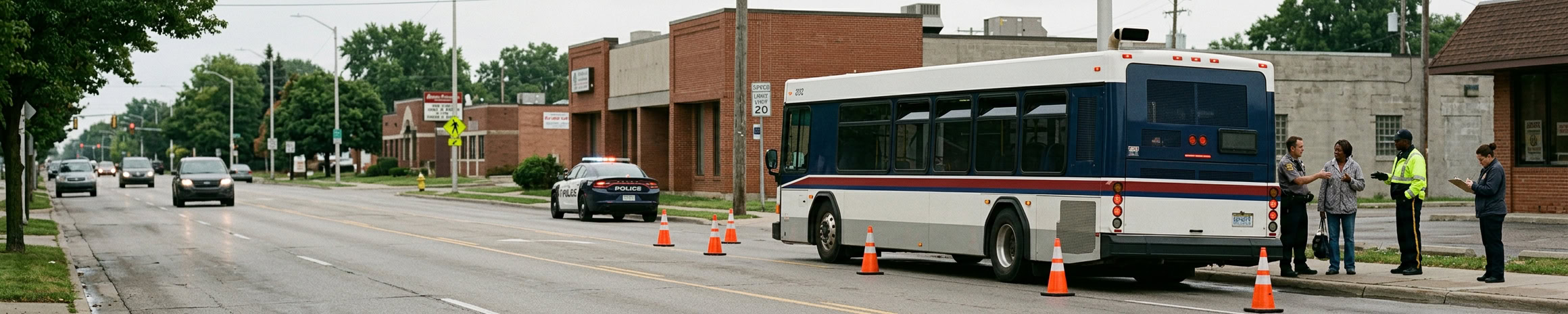
Bus Accident Lawyer in Michigan
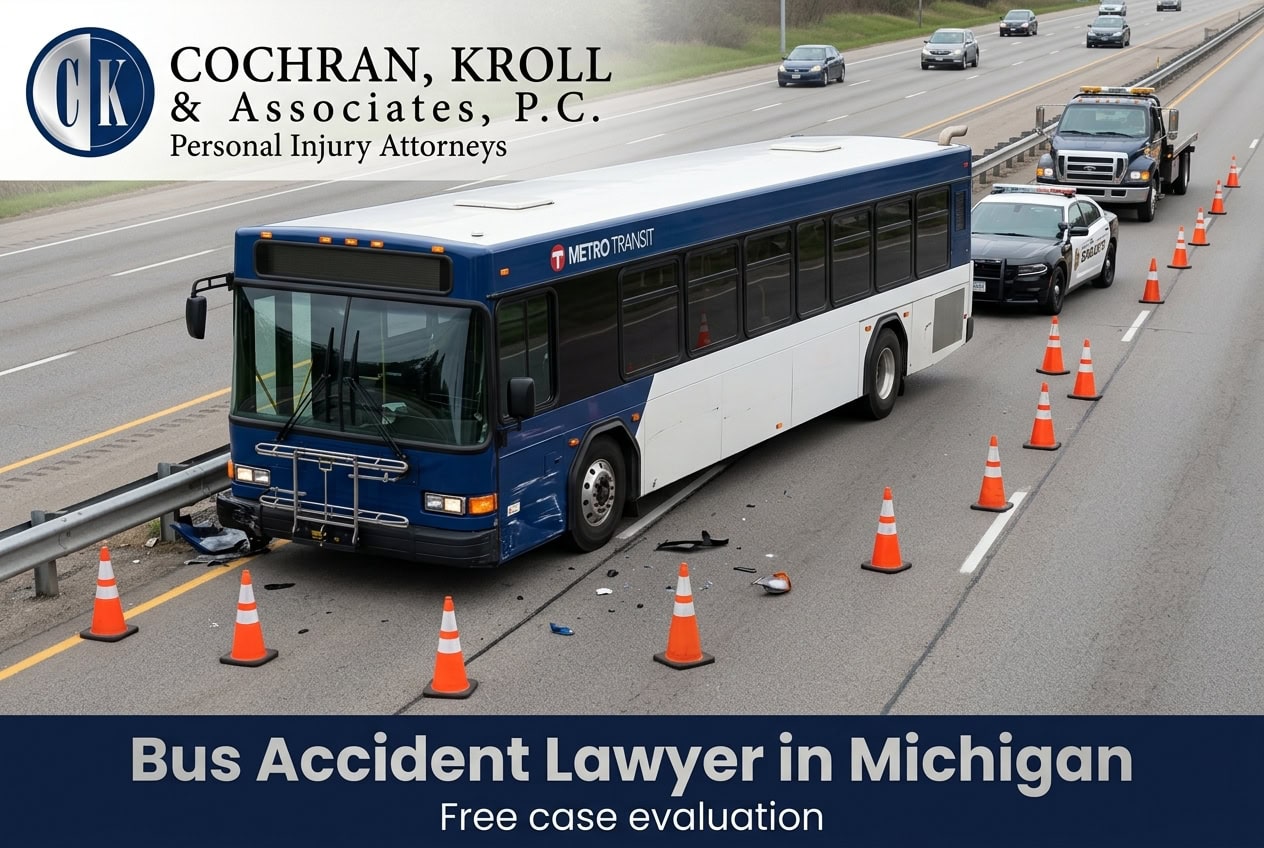
If you were hurt in a Michigan bus crash, focus on medical care, reporting the incident, and preserving evidence that can disappear quickly (video, witness info, incident reports). Bus cases often involve multiple responsible parties and different claim paths, including No-Fault benefits and, sometimes, additional claims. An attorney can help you identify the right track and protect deadlines.
If you were a passenger on a bus or were hurt when hit by a bus in Michigan, then please call us today at 1-866-MICH-LAW, or start a free case evaluation form. We work on a no-win, no-fee basis, and our lawyers specialize in helping people in Michigan claim bus accident compensation.
Key Takeaways
- Get medical care first—even “minor” symptoms can matter later.
- Report the crash to the police and the bus operator, and request an incident report.
- Save evidence early: photos, witness contacts, and any video sources you can identify.
- Michigan bus cases may involve No-Fault benefits plus other claims, depending on the facts.
- Public or school buses can involve extra rules—act quickly to protect your options.
Call 1-866-MICH-LAW for a free, no-obligation case evaluation.
Prefer online? Start your case evaluation online with Cochran, Kroll & Associates, P.C..
What should you do right after a bus accident in Michigan?
Start here. Keep it simple.
- Get checked out as soon as you can. Follow up if symptoms change.
- Report it to the police (when appropriate) and to the bus operator or transit authority. Ask how to request an incident report.
- Take photos/video, collect witness contact info, and write down the route number, bus number, and location.
- Do not guess or minimize injuries. Get guidance before giving a recorded statement.
- A lawyer can help identify the right claim path, preserve key evidence, and protect deadlines.
What medical steps protect your health and your claim?
- Get checked out on the exact day if you can. Head, neck, and back symptoms can show up later.
- Keep discharge papers, referrals, and prescriptions.
- If pain ramps up, go back in. Gaps in care can cause problems.
What should you report, and who should you report it to?
- If police respond, request how to get the report number.
- Report the incident to the bus operator or transit authority. Ask how to request the incident report.
- If a child was involved, note the school district, route details, and who responded at the scene.
What evidence is easiest to lose in the first 48 hours?
Bus cases often turn on things that vanish fast:
- Onboard and nearby video (bus cameras, station cameras, business cameras)
- Passenger and bystander contact info
- Route number, bus/vehicle number, stop location, and time
- Photos of the scene, visible injuries, and damage
Quick save checklist (copy/paste into Notes):
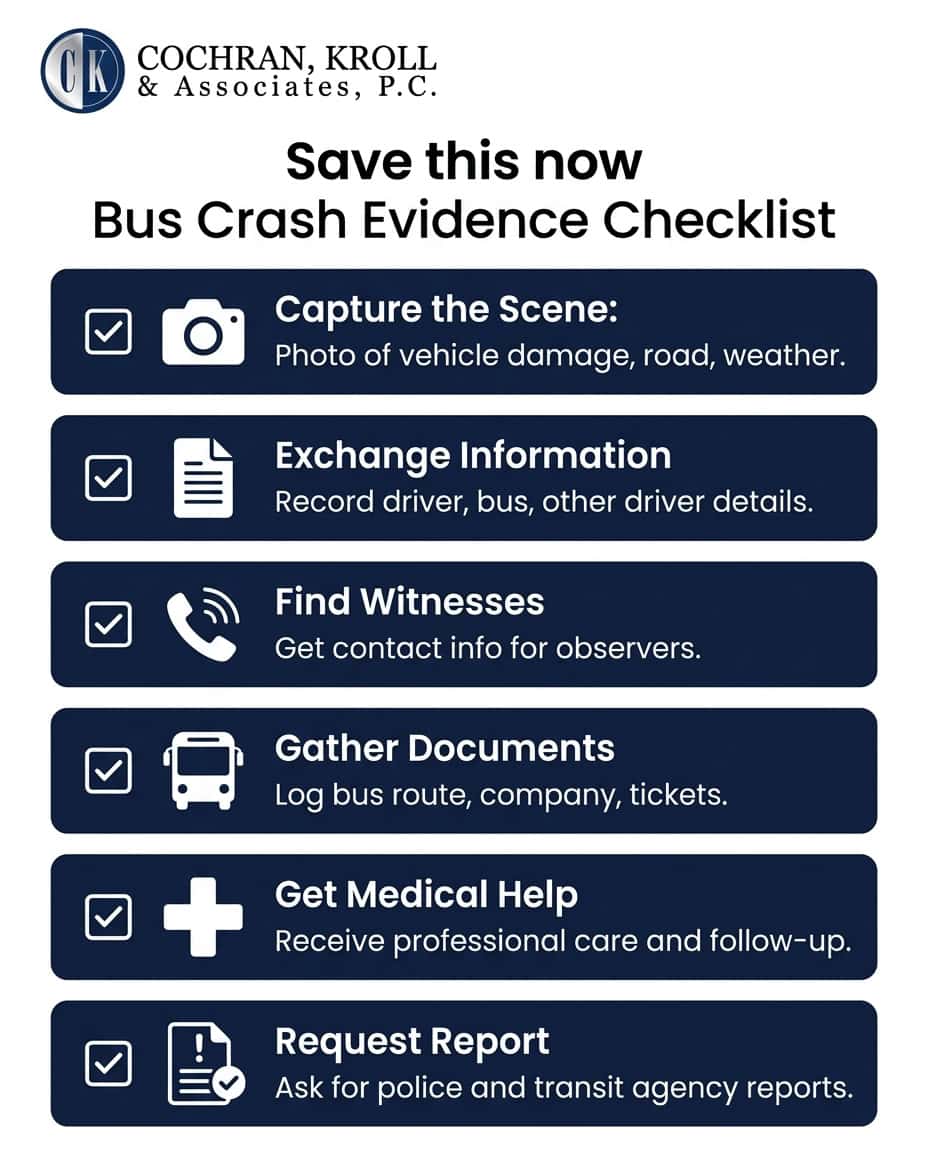
- Photos/video of scene + vehicle positions
- Route number + bus number + stop/intersection
- Witness names + phone numbers
- How to request the incident report
- Medical visit summary + follow-ups
When should you talk to an attorney?
If you have real injuries, missed work, or a public/school bus is involved, talk sooner rather than later. Evidence and deadlines do not wait.
Call 1-866-MICH-LAW for a free, no-obligation case evaluation.
Who pays medical bills and lost wages after a bus crash in Michigan?
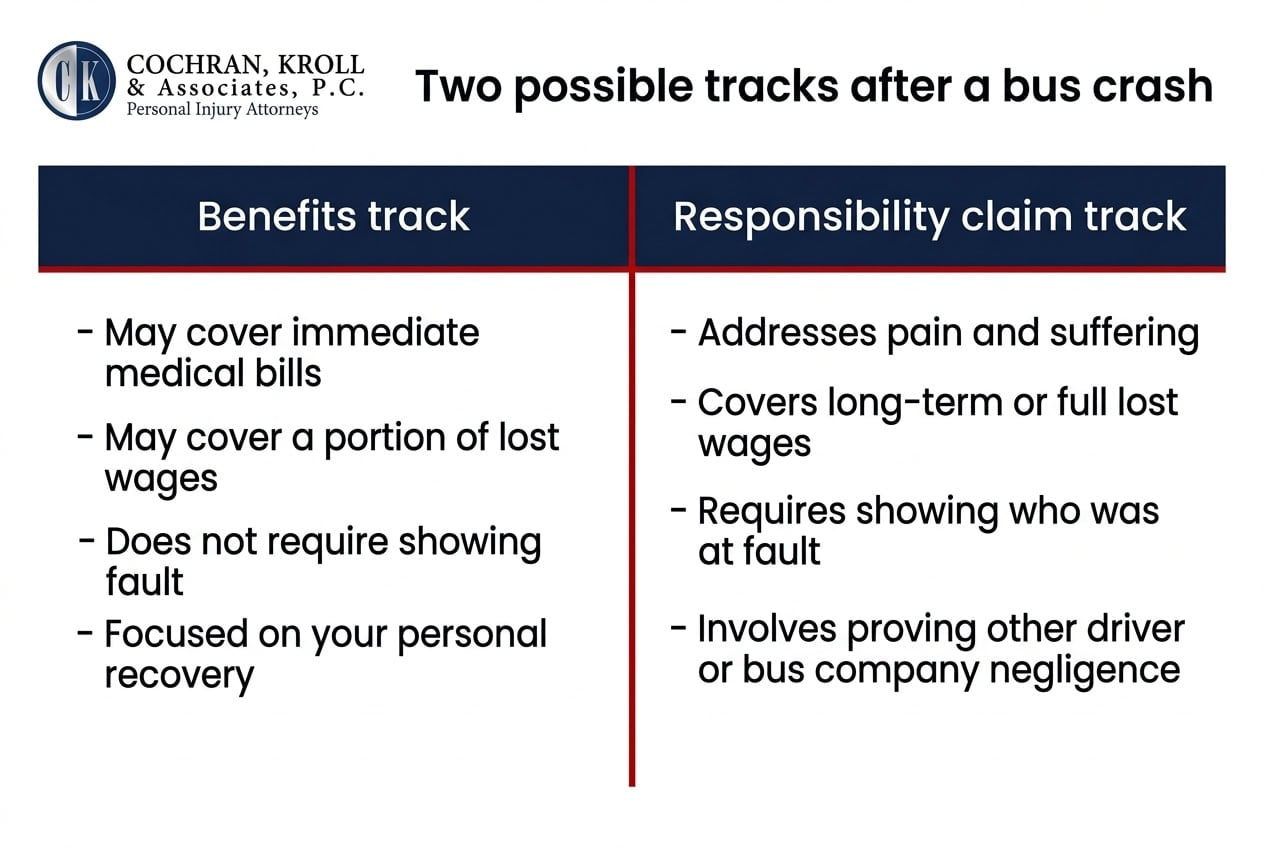
Most bus cases raise the same question: “Where does help come from first?” The answer depends on your situation and available coverage.
Here is the cleanest way to look at it:
| Claim path |
What it usually covers |
What you still need to prove |
| Benefits track |
Medical bills and wage loss may be available through insurance benefits |
Your eligibility and the order of coverage depend on your facts |
| Responsibility claim track |
In some cases, a separate claim may be made against responsible parties |
Who caused the crash, and whether the legal standard is met |
For broader context, see our vehicle accident practice.
How do No-Fault benefits usually apply to bus passengers?
In Michigan, some people start with benefits that can help with medical expenses and wage loss. The order of coverage can change based on your role in the crash and what policies are available.
Plain-language example:
If you were riding a city bus and you have your own auto insurance, that policy may be the first place benefits are pursued. If you do not have coverage available, other options may apply. A case evaluation can confirm the likely order based on your facts.
What if you don’t have your own auto insurance?
Do not assume that means “no options.” Coverage can be complicated in bus cases. A lawyer can help you figure out the best next step and avoid dead ends.
What changes when a government-owned bus is involved?
When a public entity (such as a school district) is involved, the process may differ.
Important: Public and school bus cases can involve special procedures and time-sensitive notice requirements. Get guidance early to protect deadlines and preserve key evidence.
For general Michigan questions, you can also review Michigan injury FAQs.
Can you sue a city, transit authority, or school district after a bus crash?
Possibly. These cases are not the same as a typical car crash claim. The details depend on who owns or operates the bus, how the crash happened, and what rules apply.
Why “special notice rules” can change your timeline
Some public-entity claims require extra steps. If you miss one, your options can shrink. That is why early help matters.
What evidence matters most in public-bus cases
- Incident reports and internal documentation
- Onboard and nearby video sources
- Passenger and bystander witness lists
- Operator and maintenance details (when available)
If another vehicle helped cause the crash, the investigation can overlap with car crash claims in Michigan.
What causes bus accidents most often, and what does that mean for liability?
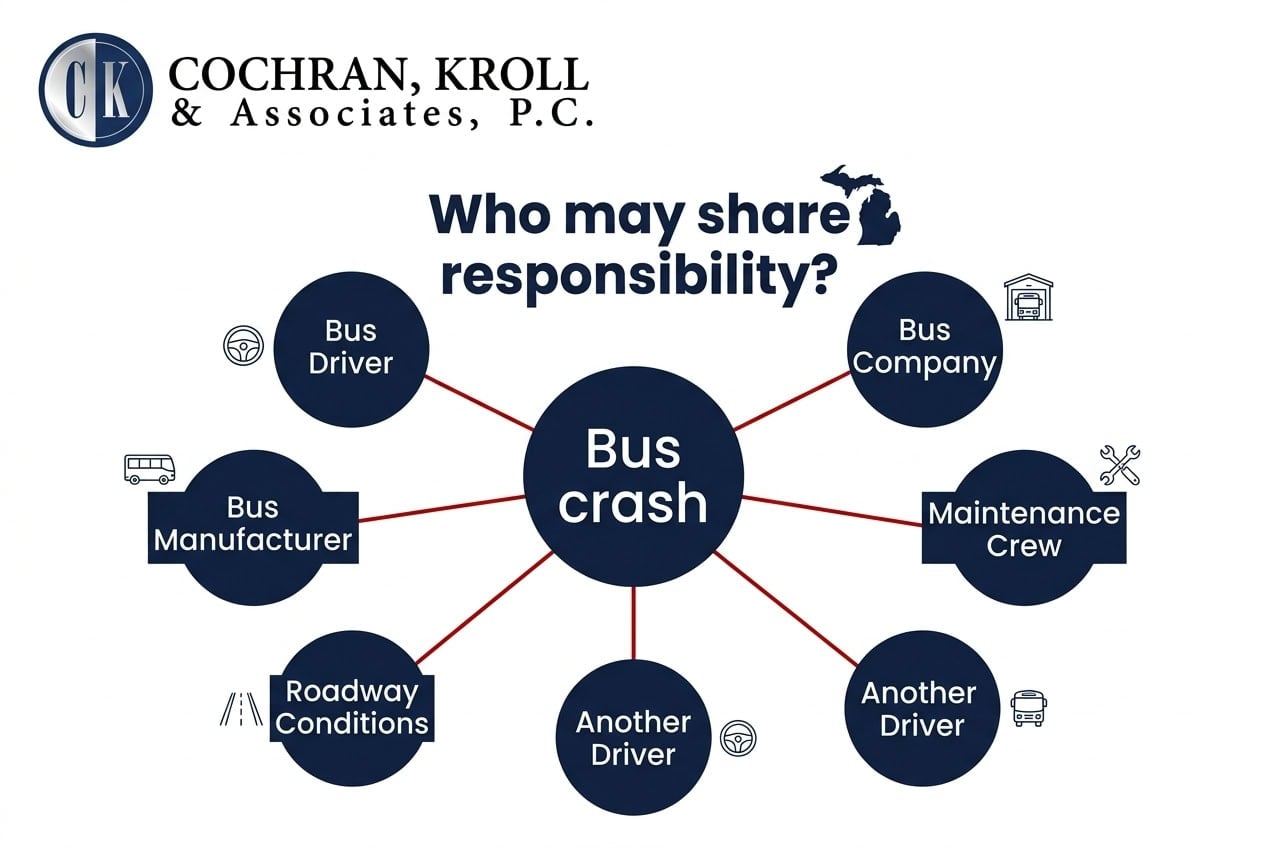
Bus crashes are rarely simple. More than one party may share responsibility. The cause also tells you what evidence matters.
Driver error, distraction, or fatigue
Witness statements and video can be crucial here.
Maintenance failures
Maintenance issues can point to the operator, vendors, or others involved in upkeep.
Road/weather conditions
Michigan roads and weather can play a role. Photos and timing details help.
Another vehicle’s negligence
Some bus crashes start with another driver. In those situations, the investigation can look closer to truck collision cases than a basic fender-bender.
What types of bus accident cases do we handle?
City bus crashes (DDOT, SMART, and other systems)
Public transit cases can add procedural layers. Acting quickly helps preserve records and video.
School bus injuries
These can involve children as passengers, pedestrians at bus stops, or other motorists. The claim path depends on how the incident happened and who was responsible.
Charter and tour bus crashes
These cases can involve multiple insurers and out-of-state operators. Documentation matters.
Shuttle and airport bus collisions
Shuttles often operate as commercial services. Route details and witness info help.
Pedestrians and bicyclists hit by buses
If you were outside a vehicle, coverage and claim paths can look different. A case evaluation can clarify your next step.
For the broader category, see Michigan personal injury cases.
What injuries are common in bus accidents?
Brain and concussion injuries
Symptoms can show up later. Do not ignore headaches, dizziness, or confusion.
Neck/back and spine injuries
Even “soft tissue” injuries can disrupt work and daily life.
Broken bones and soft tissue injuries
Keep records of treatment, restrictions, and missed time.
Internal injuries
If you have severe pain, dizziness, or worsening symptoms, get urgent care.
When a crash becomes a wrongful death case
Families may have additional options depending on the facts. You deserve a clear explanation of what the evidence can support.
What compensation can a bus accident claim include in Michigan?
Every case is different. Still, most compensation discussions fall into two buckets: financial losses and non-financial harm.
Economic losses
- Medical expenses and related care needs
- Wage loss and reduced earning ability
- Out-of-pocket costs tied to the injury
Non-economic losses
- Pain and suffering (when the legal standard is met)
- Emotional impact and loss of normal life
What makes a case “catastrophic”?
Long-term disability, major surgery, or permanent limits can change the stakes. These cases need careful documentation and planning.
If your injury affects work, these resources may help: a workplace accident lawyer and disability lawyer in Michigan.
How much does a bus accident lawyer cost?
Many injury cases use contingency fees. That usually means no attorney fees up front, and the fee is tied to a recovery. Ask for a clear explanation of fees and case costs during your consultation.
Call 1-866-MICH-LAW for a free, no-obligation case evaluation.
Or use the online case evaluation form.
Why choose Cochran, Kroll & Associates, P.C.?
You do not need a sales pitch. You need a plan, preserved evidence, and straight answers.
Contact our bus accident lawyer in Michigan
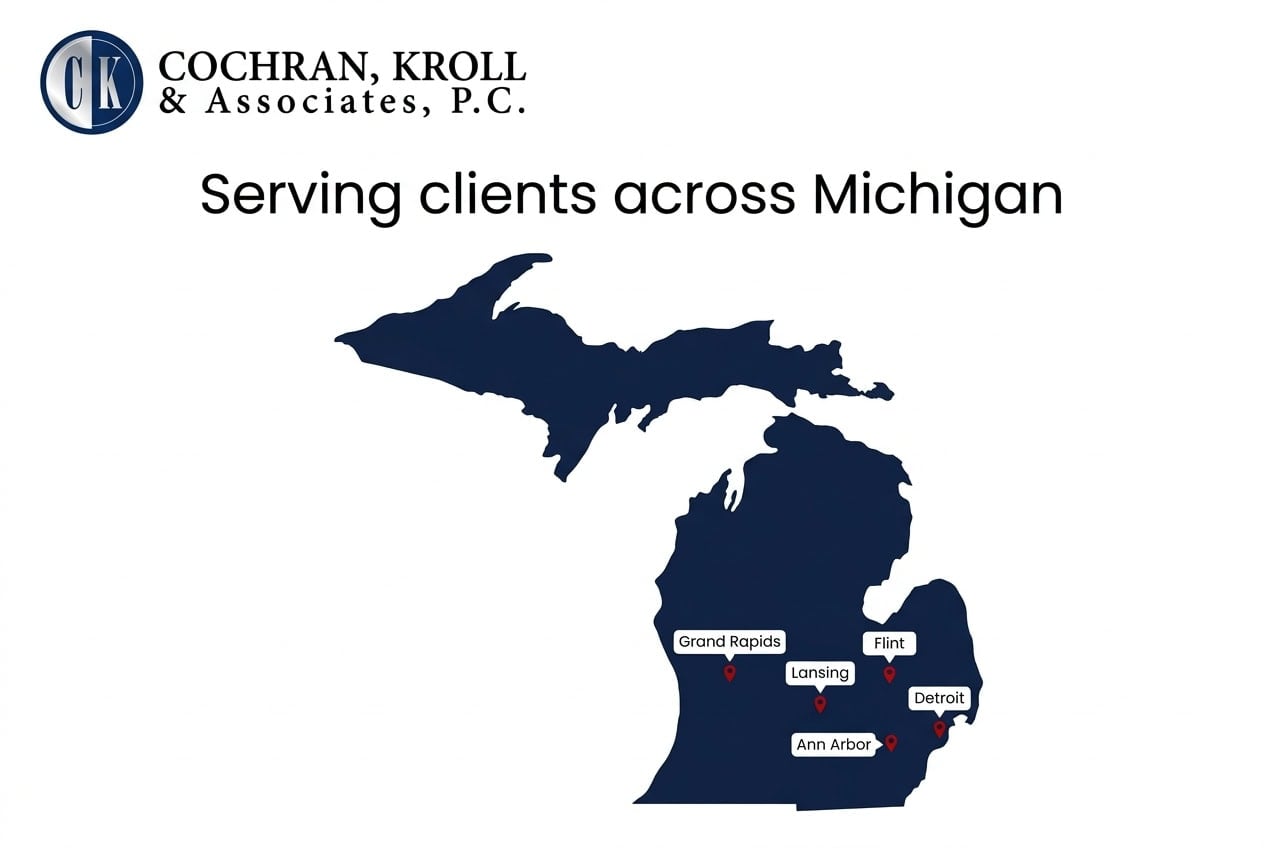
Bus accidents can involve additional reporting steps and different responsible parties depending on who owns or operates the vehicle. A lawyer can help sort the facts and identify the best next steps.
Contact us at Cochran, Kroll & Associates, P.C. for a free consultation. We’ll review your case, explain your options, and map out the strongest path forward. Remember, we don’t get paid unless you win.
Call us at 1-866-MICH-LAW anytime, 24/7, to schedule a free case evaluation.
What happens after you contact our firm?
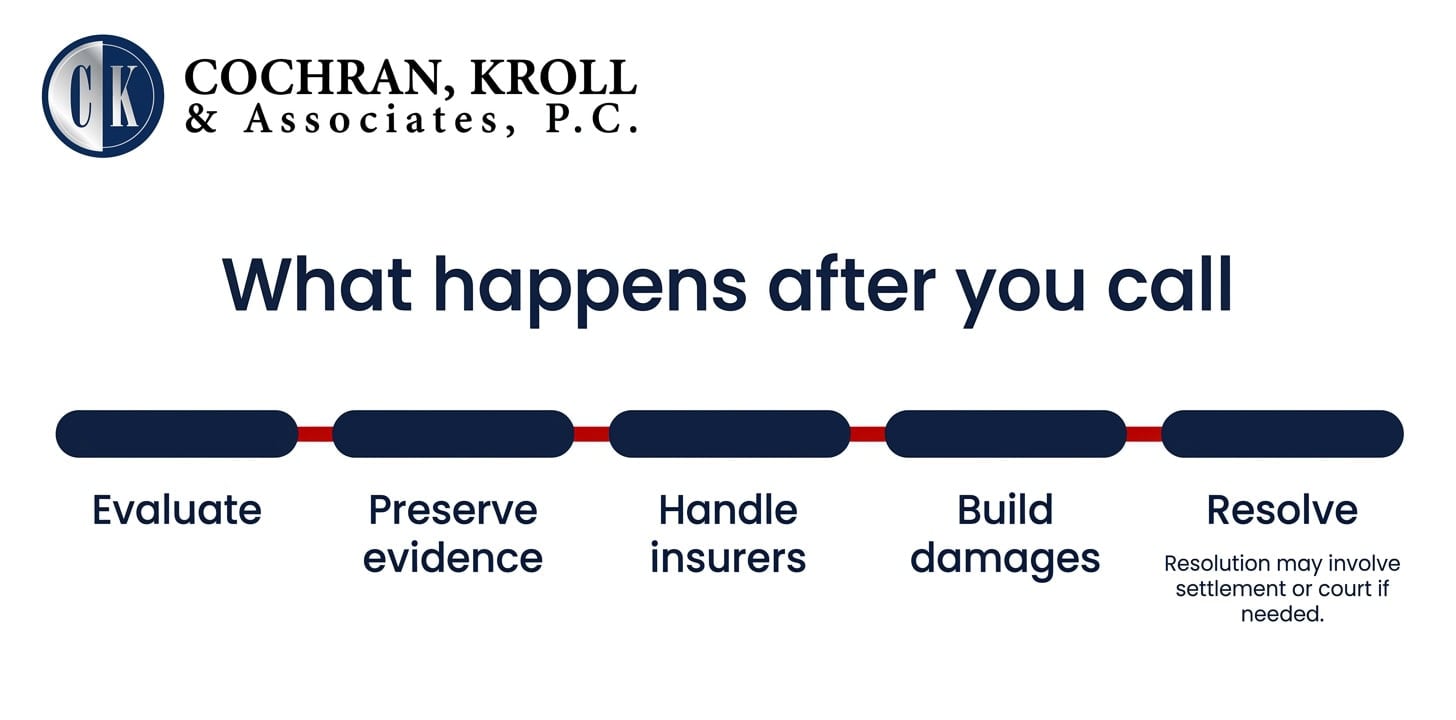
Here is what the process often looks like:
- Case evaluation to understand what happened and what coverage may apply
- Evidence plan to preserve video, reports, witnesses, and medical records
- Claim handling so you are not fielding adjuster calls alone
- Damage documentation to show the real impact on work and daily life
- Resolution path through negotiation, or litigation if needed
FAQs about Michigan bus accident claims
Do I have a case if I was a passenger on a bus?
Possibly. Bus crashes can involve more than one claim path. Some people start with benefits that may be available regardless of fault, and some situations may allow additional claims depending on injuries and responsibility. The right approach depends on the facts and the parties involved.
Who pays medical bills after a bus accident in Michigan?
It depends on your situation and available insurance coverage. Many cases involve benefits that can help with medical expenses and wage loss, and some cases may also involve claims against responsible parties. An attorney can help you identify the likely order of coverage based on your facts.
What if the crash involved a city bus or a government entity?
Public buses and government entities can involve special procedures and time-sensitive notice requirements. Because these rules can affect your options, it is smart to get legal guidance quickly so evidence is preserved and deadlines are protected.
Can I sue a school district if my child was hurt on a school bus?
Possibly, but claims involving schools or public entities can be more complicated than standard crashes. The key issues often include how the incident happened, who was responsible, and whether special rules apply. A case review can clarify what the evidence supports.
What evidence matters most in a bus accident case?
Bus cases often turn on evidence that can disappear quickly, such as onboard video, witness details, incident reports, and documentation of injuries. Photos, route and vehicle details, and prompt medical records can also be important.
How much is a Michigan bus accident case worth?
Case value depends on the severity of injuries, the impact on work and daily life, available coverage, and what the evidence shows about responsibility. A lawyer can estimate the range after reviewing medical records, wage loss, and the facts of the crash.
How long do I have to take action after a bus accident?
Deadlines can vary based on the type of claim and who is involved. Cases involving public entities can have shorter notice rules. The safest approach is to get guidance quickly so you do not miss a deadline.
Will I have to go to court?
Not always. Many cases resolve without trial, but some require litigation if liability is disputed or the offer does not match the harm. A lawyer can explain likely paths after reviewing the facts.
How do attorney fees work for bus accident cases?
Many injury firms handle cases on a contingency fee basis, meaning you do not pay attorney fees up front, and the fee is typically tied to a recovery. Ask for a clear explanation during your consultation so you understand how fees and costs are handled.
What happens after you contact your firm?
You can expect an initial case evaluation, a review of what happened and what coverage may apply, and an investigation plan to preserve evidence. If you choose to move forward, your attorney can handle insurer communications and pursue the claim path that fits your facts.