Michigan Brain Injury Lawyer
If you or a loved one has suffered a brain injury due to someone else’s negligence in Michigan, then please call us today on 1-866-MICH-LAW. We work on a no win, no fee agreement, and our attorneys are specialists in helping people in Michigan claim brain injury compensation.
Key Takeaways
- Get medical care first, then keep a simple symptom-and-function timeline.
- Save evidence early: photos, reports, witnesses, and any available video.
- Brain injuries can be “invisible,” so documentation matters as much as diagnoses.
- More than one claim path may apply, depending on how the injury happened.
- Ask about fees and costs up front; m
 any cases are handled on a contingency basis.
Need help now? Call 1-866-MICH-LAW any time, or start a free case evaluation form.
What should you do after a head or brain injury in Michigan?
When should you get emergency care (red flags to take seriously)?
If you notice any of the following, treat it as urgent and get emergency care:
- Worsening headache, repeated vomiting, or new confusion
- Seizure, fainting, or loss of consciousness (even briefly)
- Weakness, numbness, slurred speech, or trouble walking
- Unequal pupils, unusual drowsiness, or you can’t stay awake
- Clear fluid from the nose or ears after a head impact
If a child is involved, take sudden behavior changes seriously and seek care.
How do you document symptoms and day-to-day changes?
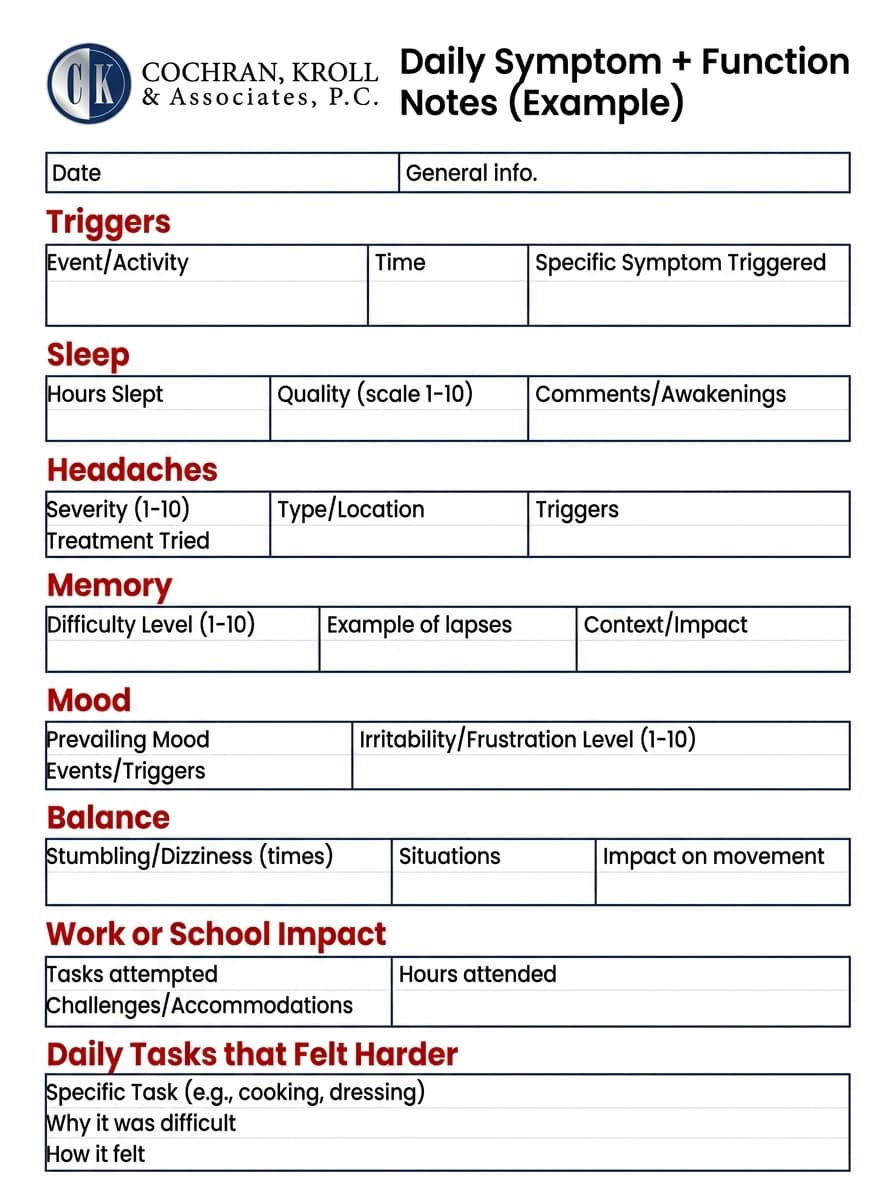
Symptoms don’t always show up right away. Start a simple daily note:
- What changed (memory, focus, mood, sleep, balance, headaches)?
- When did you first notice it?
- What tasks got harder (work, driving, screens, conversations, chores)?
- What makes it worse or better?
Keep it plain and factual. This isn’t medical advice. It’s a timeline.
What evidence should you preserve early?
When it’s safe, try to save:
- Photos of the scene, hazards, vehicles, and visible injuries
- Names and contact info for witnesses
- Incident reports (police, workplace, or business report number)
- Any video leads (dash cam, doorbell, store cameras)
What should you avoid saying to insurers right away?
Don’t guess. Don’t minimize symptoms. And don’t rush into a recorded statement if you’re unsure what it will be used for. It’s okay to pause until you’ve been evaluated and you have your notes in order.
What are the common signs and longer-term effects of a traumatic brain injury?
What can mild TBI or concussion symptoms look like?
A traumatic brain injury (TBI) can affect your body, thinking, and mood. Common signs include:
- Headaches, dizziness, and light or noise sensitivity
- Brain fog, slower thinking, and trouble concentrating
- Irritability, anxiety, or mood swings
- Sleep changes and fatigue
- Trouble with screens, reading, or multitasking
What changes are more common in moderate or severe cases?
Some injuries cause more serious neurological problems and bigger limits at home and work. Care may include rehabilitation, depending on what your providers recommend.
Why do symptoms get missed or show up later?
People can look “fine” while struggling with focus, memory, or mood. Symptoms can also show up once you return to normal routines. A clean medical timeline plus your day-to-day notes can help make the picture clearer.
What causes brain injuries in Michigan, and who may be responsible?
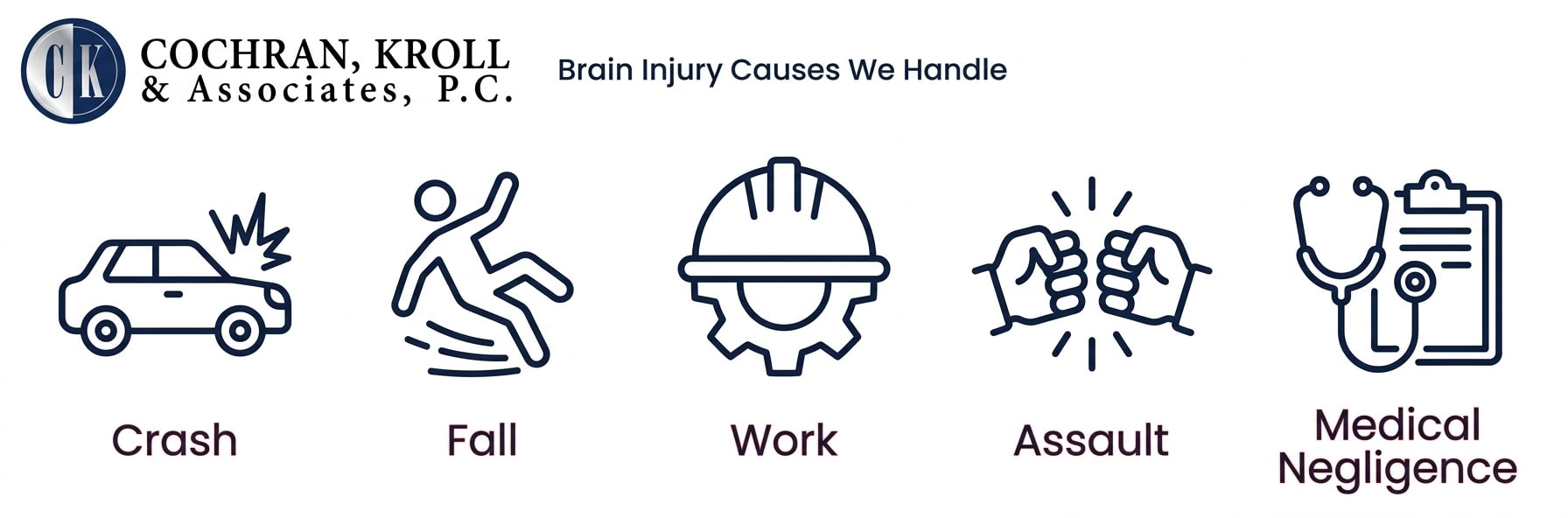
How do car and pedestrian crashes usually get evaluated?
Crash injuries often come with heavy insurance paperwork. Depending on the facts, benefits may run through auto coverage, and some situations may also support a separate injury claim.
For related help, see our vehicle accident practice. You may also want to review car crash injury claims and commercial truck collision cases.
What matters in falls on property (stores, rentals, workplaces)?
Falls often turn on what the hazard was and what proof exists. Take photos if you can. Ask for an incident report number. Get witness info.
Our broader practice area is here: personal injury representation across Michigan.
What’s different about workplace and construction injuries?
Work injuries may involve workers’ compensation and sometimes other claims, depending on how the injury happened. Save any reports, safety paperwork, and witness names you can.
Learn more: workplace accident cases. If work limits last, you may also need disability claim support.
How do assault and violence-related injuries get handled?
These cases often require careful documentation and witness information. Your civil options depend on the facts, including whether security failures or another party’s actions played a role.
When can medical negligence play a role?
Some brain injuries involve delayed diagnosis, medication errors, surgical complications, or missed warning signs. These cases can require different records and steps.
Start here: medical malpractice team and, when relevant, ER malpractice claims.
Do you have a brain injury case – and what has to be proven?
What are the basic building blocks of a claim (in plain language)?
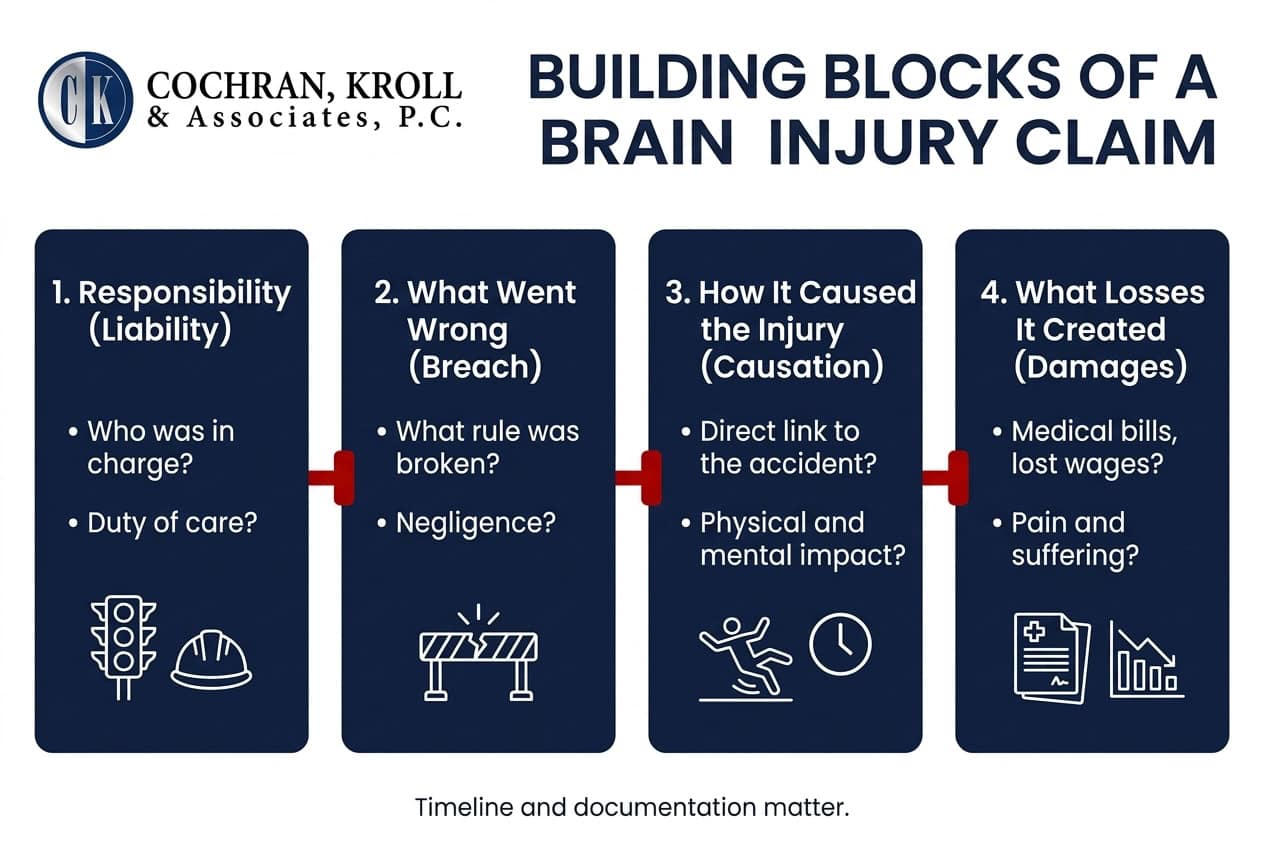
Most injury claims come down to a few questions:
- Did someone have a responsibility to act safely?
- Did they fail to do that?
- Did that failure cause the injury?
- What losses did the injury create?
Why are brain injury claims harder to prove than many people expect?
These injuries can be “invisible.” Symptoms can shift. Daily limits are hard to show without a clean record. The details matter, but the timeline matters more.
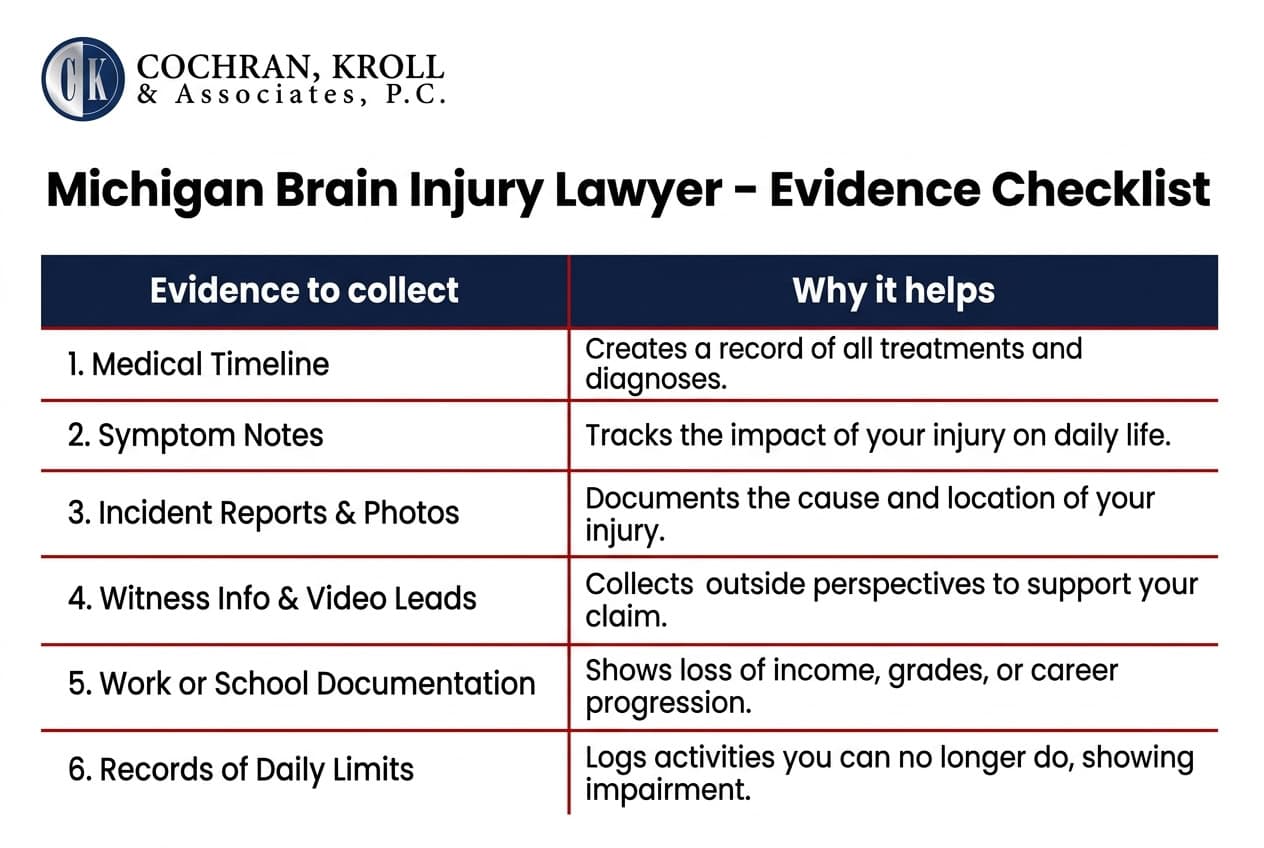
What types of records and proof usually matter most?
Here’s a quick reference:
| What helps |
Why it matters |
| Medical timeline (visits, referrals, follow-ups) |
Shows consistency over time |
| Symptom + function notes |
Connects the injury to real-life impact |
| Incident reports and photos |
Preserves facts before they change |
| Witness info and video leads |
Supports how the incident happened |
| Work/school documentation |
Shows missed time and limitations |
What if you share some blame for what happened?
Shared fault doesn’t always end a case, but it can affect what you may be able to recover. A review can help you understand how fault arguments may be raised in your situation.
What compensation may be available in Michigan brain injury claims?
What are “economic” losses?
Economic losses often include medical bills, rehabilitation, future care needs, wage loss, reduced earning ability, transportation needs, caregiving, and home or vehicle modifications.
What are “non-economic” losses (when allowed)?
Depending on the claim type and facts, non-economic losses can include pain and suffering, loss of enjoyment of life, and the impact the injury has on day-to-day independence and relationships.
What factors tend to drive the value of a case?
Severity and duration of symptoms, the consistency of medical documentation, credibility of the timeline, functional limits, and clarity of liability are common drivers.
How does a Michigan traumatic brain injury lawyer build and prove the case?
What happens during the investigation and records collection?
A strong case usually starts with:
- Identifying potentially responsible parties
- Securing reports, photos, and any available video leads
- Gathering medical records and building a timeline
- Organizing proof of work and daily-life impact
How do lawyers show an “invisible” injury without overstating medical conclusions?
The goal is not to diagnose online. It’s to document a consistent story: symptoms, care, and how your daily function changed, supported by records and appropriate evaluations when needed.
How do insurance communications and benefit disputes get handled?
Insurance paperwork can be intense early on. Your legal team can handle communications, keep documentation consistent, and respond to disputes as they come up.
What should you expect in the first 14 days after the injury?
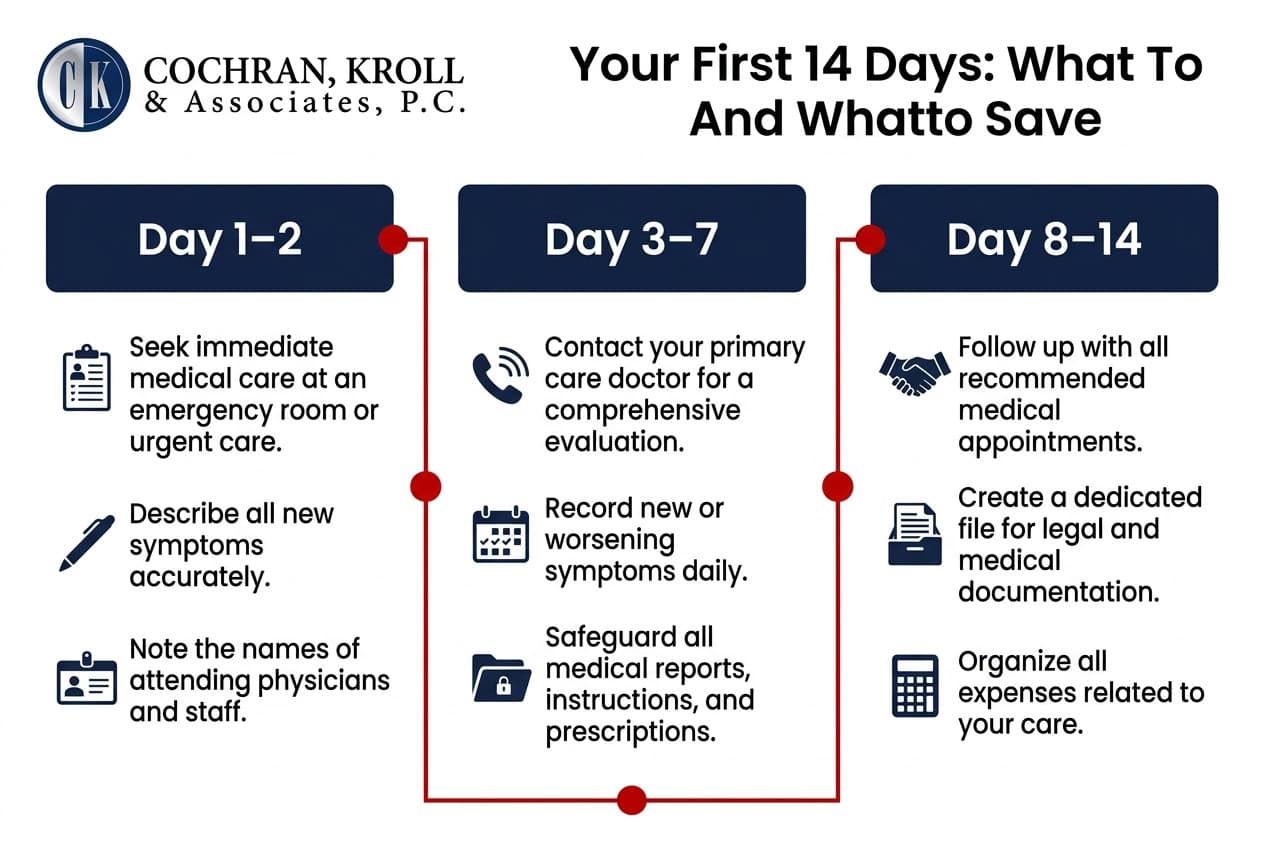
Use this as a practical guide.
Day 1–2
- Get medical care and follow discharge instructions
- Start symptom notes (date/time + what changed)
- Save photos, reports, and witness info
Day 3–7
- Schedule follow-ups if symptoms persist or change
- Write down the incident report number (if one exists)
- Track missed work/school time and task limits
Day 8–14
- Keep notes on sleep, mood, focus, balance, and headaches
- Save receipts and appointment summaries in one place
- Consider a case evaluation before the evidence gets harder to find
How much does it cost to hire a lawyer for a brain injury case in Michigan?
What does “contingency fee basis” usually means
Many injury cases are handled on a contingency fee basis, meaning attorney fees are paid only if a recovery is made. Ask what percentage applies and when.
What case costs are—and how they’re different from attorney fees
Case costs can include medical records fees, filing fees, and expert-related costs. Ask how costs are handled before you sign anything.
Why choose Cochran, Kroll & Associates, P.C. for brain injury cases?
What proof of experience can you review before hiring?
You should be able to verify experience. Review our verdicts and settlements, client reviews and testimonials.
How does clinical familiarity help in injury and malpractice cases?
When cases involve complex medical records, clinical familiarity can help a legal team ask better questions and organize records more clearly. This is not medical care or medical advice.
What does “we represent people, not insurers” mean in practice?
Our firm states it represents individuals and families—not insurance companies or corporations. That can shape how we approach evaluation, proof, and negotiations.
How do you choose the right brain injury attorney (quick checklist)?
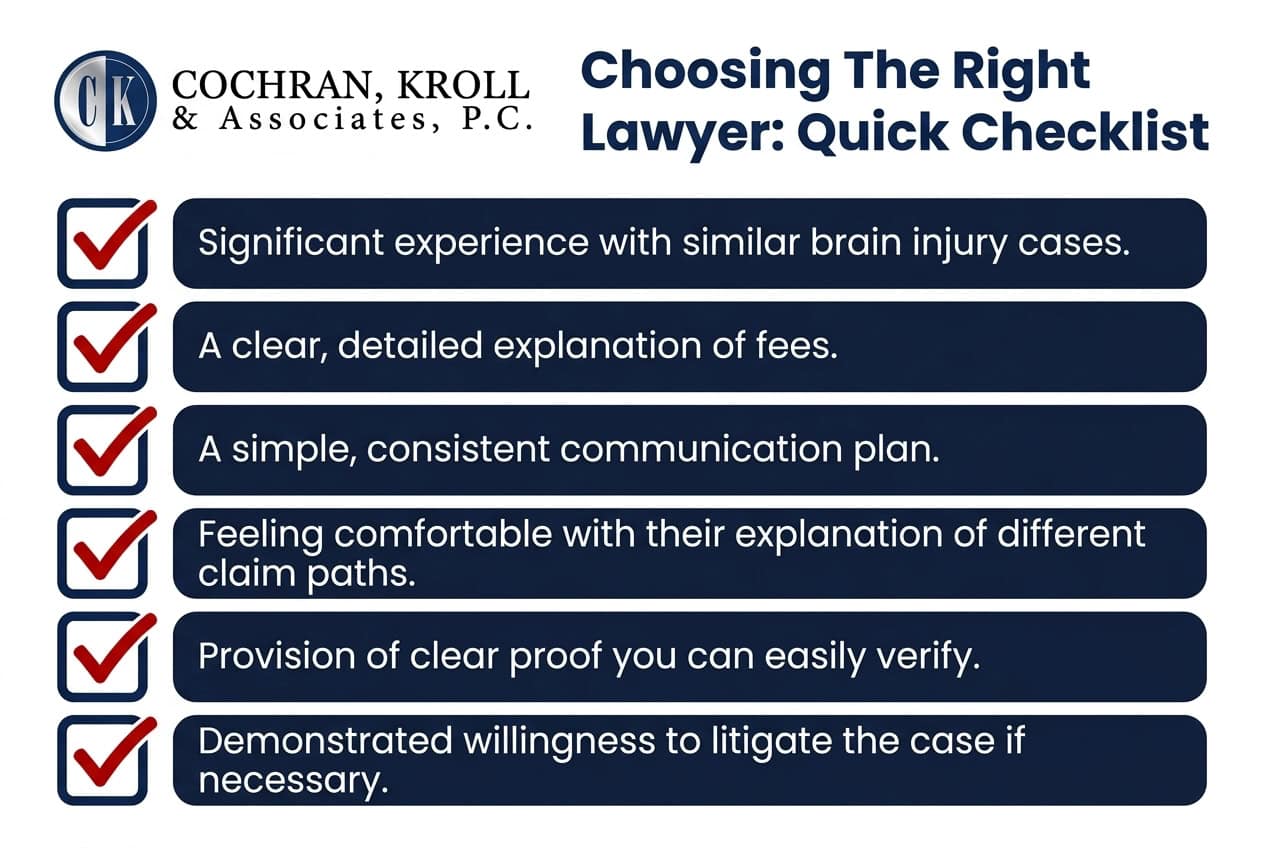
Use this when you’re comparing firms:
- Can they explain your options without rushing you?
- Will they tell you what proof matters most in your situation?
- Are fees and case costs explained clearly in writing?
- Do they have a communication plan and update schedule?
- Can you verify experience through reviews and public case results?
For more resources, visit our legal FAQs library. If you prefer help in Arabic, see our Arabic-speaking personal injury attorney in Michigan.
Contact Our Brain Injury Lawyer in Michigan
Brain injuries can affect work, memory, and daily life in ways that aren’t always obvious at first. A lawyer can help document the full impact and pursue the appropriate claim route based on the facts.
Contact us at Cochran, Kroll & Associates, P.C. for a free consultation. We’ll review your case, explain your options, and map out the strongest path forward. Remember, we don’t get paid unless you win.
Call us at 1-866-MICH-LAW anytime, 24/7, to schedule a free case evaluation.
FAQs about brain injury and TBI claims in Michigan
What if my brain injury happened in a car crash?
A crash can trigger more than one claim path in Michigan. Some benefits may run through auto insurance, and some situations may also support a separate injury claim depending on the facts. A legal team can help you sort out the paperwork and the proof without guessing.
What if my brain injury was caused by a fall at a business or rental property?
Falls often turn on the hazard and the paper trail. Save photos, the incident report number, and witness info if you can. Details like where the hazard was and how long it was there can matter.
What if symptoms started days later?
That happens more than people expect. Get medical care, then write down when you first noticed changes and how they affect daily tasks. That timeline can help your treatment records and any claim.
How can a lawyer prove a brain injury when imaging is unclear?
Not every brain injury shows clearly on scans. Proof often comes from a consistent medical timeline, appropriate evaluations, and clear documentation of changes in work, concentration, mood, sleep, balance, and daily function.
How long do I have to take legal action in Michigan?
Deadlines can depend on the type of case and who is involved. Evidence like footage and records can be lost quickly, so it usually helps to get a case evaluation early.
What if I were partly at fault?
Shared fault does not always end a case, but it can affect what you may be able to recover. A lawyer can review the facts and explain how fault arguments may apply to your situation.
How much does it cost to hire a brain injury attorney?
Many injury cases are handled on a contingency fee basis, meaning attorney fees are paid only if a recovery is made. Case costs are separate, and you should ask how those costs are handled before you sign anything.
What should I avoid doing after a suspected brain injury?
Avoid minimizing symptoms, skipping follow-ups, or giving a detailed recorded statement to an insurer before you understand what is being asked. Also, avoid posting about the incident or your symptoms online while things are still being evaluated.
Can you help determine if the brain injury may involve medical negligence?
Yes. When a brain injury may involve delayed diagnosis or other medical errors, the records and required steps can be different than a typical injury claim. Our team can review the situation and explain what documentation is needed to evaluate next steps.