Brain Injury Lawyer in Flint

A traumatic brain injury lawyer in Flint helps protect key evidence. They also review medical records and document how the injury affects work and daily life. So, they can pursue compensation when another party caused the harm. For many families, the next step is getting clear guidance early. This helps before records, witness details, and insurance communication start working against the claim.
Need help now? Call 1-866-MICH-LAW for a free, no-obligation consultation.
What to Know Before Looking For a Brain Injury Lawyer in Flint?
A traumatic brain injury claim is not just about the day of the accident. It is also about what the injury changes after that day.
That can include treatment, time away from work, memory problems, mood changes, future support, and the strain on family life. In many cases, the full impact is not obvious in the first hours or even the first weeks.
This page is built for people who need a practical next step. It is for someone hurt in a crash, fall, workplace incident, or other serious event in Flint or Genesee County. It is also for spouses, parents, and adult children trying to help.
What Counts As a Traumatic Brain Injury?
A traumatic brain injury, or TBI, is brain damage caused by an outside influence. That can happen in a car crash, a fall, a workplace incident, a struck-by event, or another serious accident.
Some injuries are called “mild,” such as certain concussions, but the label does not always match the real effect on daily life. A person can still deal with headaches, concentration problems, sleep issues, sensory changes, or lasting emotional shifts.
What Type of Brain Injuries Can Happen in Accidents?
A Flint brain injury claim may involve:
- concussion or post-concussive symptoms
- brain bruising or bleeding
- acceleration-deceleration trauma
- diffuse injury that does not show clearly on early scans
- severe injuries tied to surgery, ICU care, or long rehabilitation
The legal side of the claim often turns on good documentation. That is one reason careful record review matters so much in these cases.
What Are the Warning Signs for Families After a Head Injury?
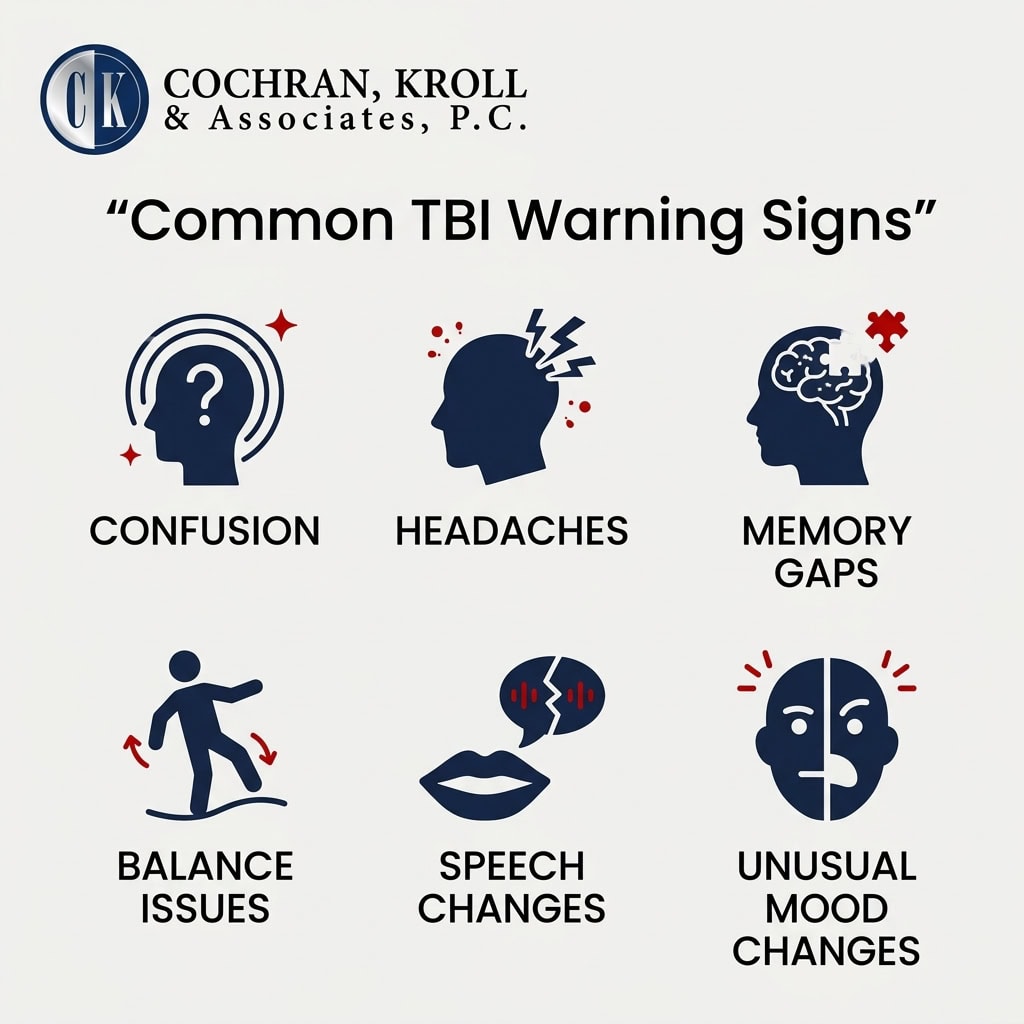
Common warning signs can include:
- headaches that do not settle down
- confusion or trouble focusing
- memory gaps
- nausea or vomiting
- speech changes
- mood or behavior changes
- balance trouble
- unusual fatigue or sleep changes
A person can also seem “mostly fine” at first and still need more care later. That gap between the first impression and the long-term effect is part of what makes TBI cases harder than many other injury claims.
How Do Traumatic Brain Injury Cases Happen?
These cases can start in many ways, but the most common pattern is still a serious accident followed by a lot of questions. What happened? What records exist? Who is responsible? What does recovery really look like?
Flint-area cases often involve both local conditions and bigger legal issues.
Which Types of Accidents Lead to a TBI Claims?
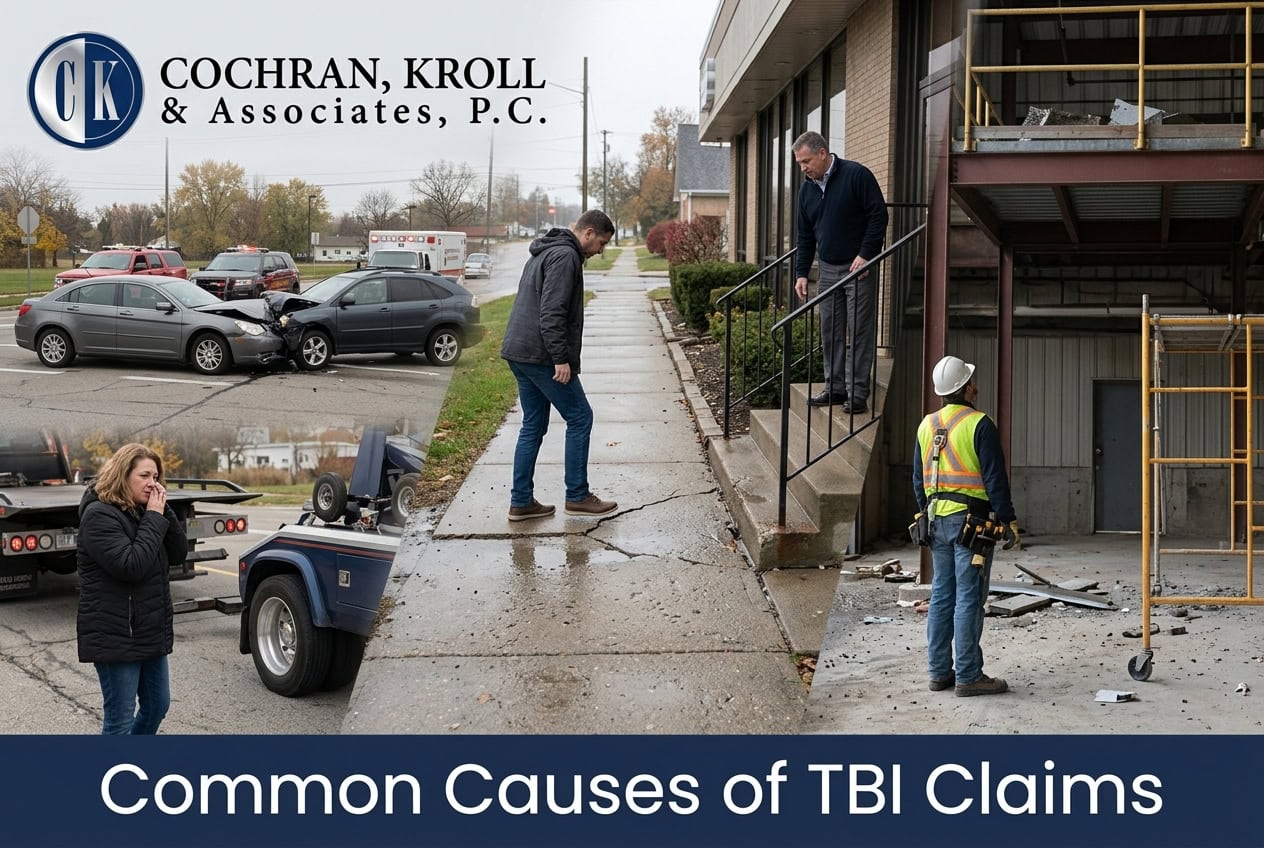
Common causes include:
- motor vehicle crashes
- truck collisions
- motorcycle accidents
- pedestrian impacts
- falls on dangerous property
- workplace and construction incidents
- struck-by events
- other serious negligence-based injuries
What Damages Can Be Recovered in a Flint Brain Injury Case?
Every case is different. The right value depends on the injury, the available proof, how the injury changes daily life, and what future support may be needed.
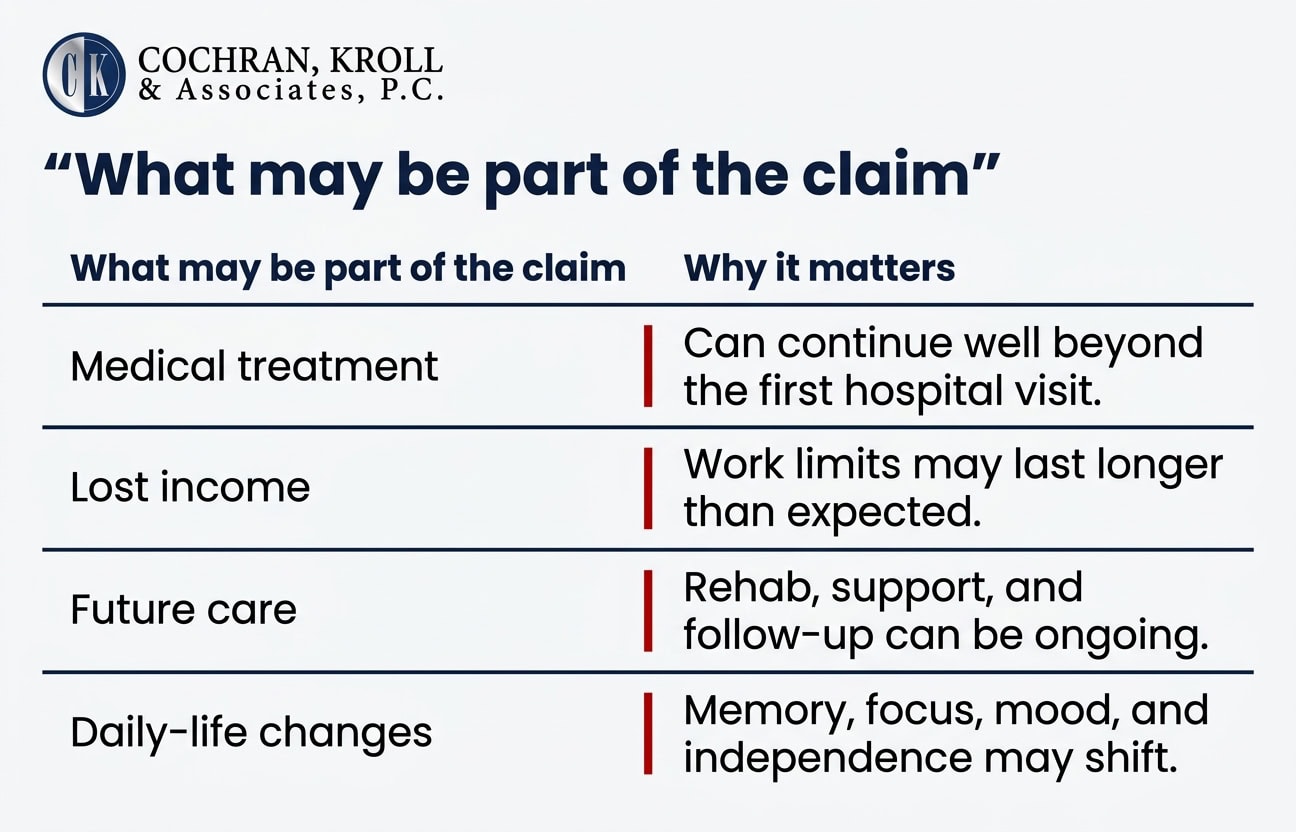
A brain injury claim is rarely just about the first bill.
What losses usually matter most in a TBI claim?
A claim may include damages tied to:
- emergency care and follow-up treatment
- rehab and therapy
- lost wages
- reduced earning ability
- out-of-pocket costs
- future medical needs
- pain and suffering
- emotional strain
- changes in independence and daily routine
How Do Future Care and Earning Limits Affect Case Value?
Long-term effects can drive the case. A person may need more therapy, more appointments, more support at home, or a different work path than before.
That is why early “quick value” conversations from insurers can be risky. The claim may not be ready to value until the records show how the injury is actually affecting the person over time.
Do You Have a Strong Traumatic Brain Injury Claim?
The strongest TBI claims are built carefully. They do not rely on one record or one symptom list.
They usually depend on timing, documentation, and consistency.
What evidence matters most?
Useful evidence can include:
- emergency and hospital records
- imaging and diagnostic records
- specialist notes
- rehab records
- witness statements
- incident reports
- job and wage records
- photos or scene evidence
- Family observations about changes after the injury
A serious claim often gets stronger when the timeline is clear. What was normal before the injury? What changed after? What do the records show? What do the people closest to the injured person notice now?
How does medical record review affect the case?
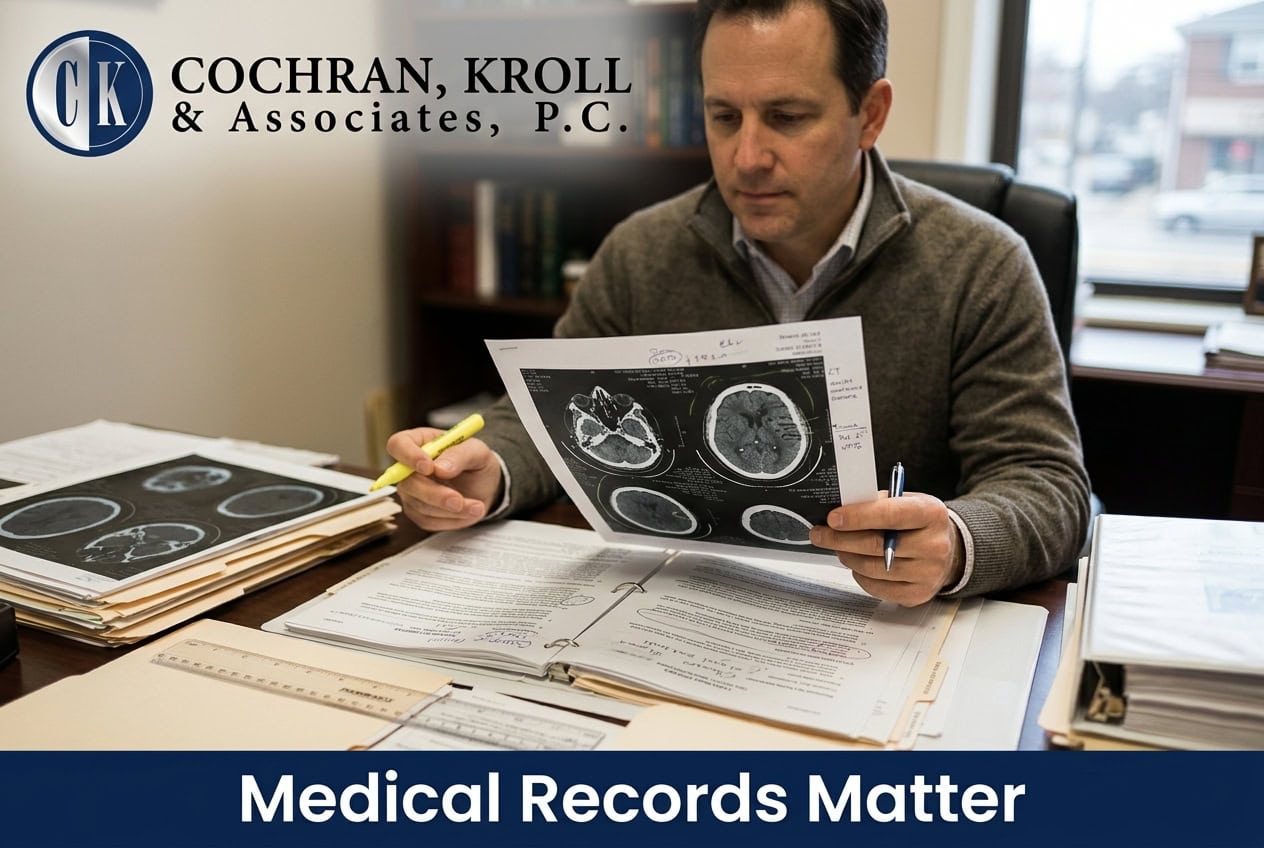
Brain injury cases are often won or lost in the records. The problem is that the first record does not always tell the full story.
Cochran, Kroll & Associates, P.C. highlights a registered nurse attorney advantage in medical record review and serious injury work. That can be especially important in a TBI case, where the claim may involve symptoms, treatment patterns, and long-term changes that deserve a closer look.
For clients dealing with treatment questions tied to medical errors or delayed care, the firm also provides a medical malpractice lawyer in Michigan.
What Should You Do After a Traumatic Brain Injury in Flint?
The first days matter. The goal is not to do everything perfectly. It is to avoid the common mistakes that make these cases harder later.
What Steps Should You Take in the First Hours and Days?
- Get medical care right away.
Follow the advice of the treating providers and keep records from the start.
- Report the incident when needed.
That may mean a crash report, workplace report, or business incident report.
- Keep what you have.
Save photos, discharge papers, appointment details, wage information, and names of witnesses.
- Be careful with insurer communications.
You do not want a rushed statement to define the case before the records are fully understood.
- Watch for changes over time.
Write down symptoms, behavior changes, memory problems, and missed work or activity limits.
- Get legal guidance early.
Early help can protect evidence and reduce avoidable mistakes.
Why Choose Cochran, Kroll & Associates, P.C. for a Flint TBI case?
The right page should explain what makes the firm different in a way that is useful, not flashy.
Here, the strongest points are local presence, serious-injury focus, record-review strength, and a clear next step.
In a brain injury case, details matter. Medical language matters. The difference between an early note and the long-term picture matters.
That is why the firm’s registered nurse attorney positioning stands out. In a TBI claim, a deeper medical record review can help connect treatment, symptoms, future care, and daily-life impact in a more complete way.
Contact Our Brain Injury Lawyer in Flint
If you or a loved one suffered a traumatic brain injury due to someone else’s negligence, a Flint brain injury lawyer can review medical records, accident reports, and other evidence to understand what happened. Early legal guidance can help you explore your options and the next steps for pursuing compensation.
Contact us at Cochran, Kroll & Associates, P.C. for a free consultation. We’ll review your case, explain your options, and map out the strongest path forward. Remember, we don’t get paid unless you win.
Call us at 1-866-MICH-LAW anytime, 24/7, to schedule a free case evaluation.
What questions do people ask about Flint brain injury cases?
What is the statute of limitations for a brain injury lawsuit in Michigan?
Deadlines depend on the kind of claim and the facts. Because time limits can be strict, it is smart to get case-specific guidance early instead of relying on assumptions.
Can I still have a case if the brain injury did not seem serious at first?
Yes, that can happen. Brain injury symptoms are not always fully clear in the first hours or days. Later records, specialist visits, and documented changes may matter a lot.
What damages are usually part of a traumatic brain injury claim?
These claims may involve treatment costs, lost wages, future care, reduced earning ability, pain and suffering, and other major life changes tied to the injury.
Do brain injury cases from car accidents work differently in Michigan?
They can. Vehicle cases often have their own insurance and claim structure. That is one reason early guidance matters when a crash causes the injury.
What evidence helps prove a traumatic brain injury claim?
Medical records, imaging, specialist notes, witness statements, reports, wage records, and clear proof of life changes after the injury can all help.
Can a family member call if the injured person cannot handle the process?
Yes. Families often make the first contact when the injured person is overwhelmed, hospitalized, or unable to manage the process well.
Does Cochran, Kroll & Associates, P.C. handle workplace-related brain injury claims?