Workers Compensation Lawyer in Michigan
A workers’ compensation lawyer helps injured workers protect their benefits after a job injury or illness. In Michigan, they can help with claim filing, denials, hearings, benefit cutoffs, retaliation concerns, and settlement review. So, the goal is to protect your medical care, wage-loss benefits, and your rights. This also helps avoid mistakes that could make the case harder to win.
Key Takeaways
- Workers’ compensation claims can become legal cases quickly when benefits are denied, delayed, or cut off.
- Early documentation matters: report the injury, seek medical care, and keep records.
- Michigan deadlines and hearings can affect whether benefits continue. You can review official rules and claim information through the Michigan Workers’ Disability Compensation Agency (WDCA) for accurate state guidelines.
- Settlement and return-to-work decisions should be reviewed carefully.
- Speaking with an attorney early can help prevent mistakes that weaken a claim.
Get a free, no-obligation case evaluation by calling 1-866-MICH-LAW or starting online through the firm’s contact page.
When Should You Speak With a Workers’ Compensation Attorney in Michigan?
You may want legal help if your benefits were denied, delayed, cut off, disputed, or tied to pressure to return to work before your restrictions are clear.
This page is often helpful for people dealing with:
- a denied or delayed claim
- medical treatment disputes
- wage-loss problems
- An Independent Medical Exam (IME) request
- permanent restrictions or disability issues
- retaliation or pressure after filing
- a settlement offer you do not fully understand
You may not need a lawyer yet if:
- The injury was reported
- treatment is being approved
- Wage-loss benefits are being paid correctly
- No one disputes that the injury is work-related
Even then, keeping organized records is important. If the claim later turns into a dispute, early details can make a big difference.
A lawyer can help gather records, communicate with the insurance carrier, prepare for hearings, review settlement papers, and identify related claims that may fall outside the workers’ compensation system.
What Does Workers’ Compensation Usually Cover in Michigan?
Workers’ compensation is generally meant to cover work-related injuries and illnesses without requiring you to prove your employer caused the harm.
What Medical and Wage-loss Advantages May Apply?

Common benefit categories may include:
- medical therapy related to the work injury
- wage-loss benefits when restrictions affect your ability to work
- Vocational rehabilitation or retraining aids in some situations
- death benefits for qualifying family members in fatal cases
| Benefit Type |
What It May Cover |
Common Dispute |
| Medical Care |
Treatment, surgery, therapy, and follow-up care |
Insurer claims treatment is unnecessary |
| Wage Loss |
Partial replacement of lost earnings |
Carrier says you can return to work |
| Rehab Support |
Help with retraining or job transition |
Dispute over restrictions or job capacity |
| Death Benefits |
Financial support for qualifying dependents |
Dispute over cause of death |
Who Can Qualify For the Benefits
Coverage questions often depend on employment status and whether the injury occurred during work duties.
Full-time, part-time, seasonal, and even some remote work activities may still qualify if the injury occurred in the course of employment.
Travel situations, occupational illness, and repetitive stress injuries can create more complex claims.
What Types of Work Injuries and Illnesses Can Count
A claim does not always involve one dramatic accident. Job-related injuries may include:
- falls or machinery accidents
- back, shoulder, knee, or hand injuries
- repetitive stress injuries
- occupational illnesses
- aggravation of a pre-existing condition
- certain mental health conditions related to workplace events
If another person or company may also be responsible, there may be a separate claim outside the workers’ compensation system. In those situations, speaking with a personal injury lawyer in Michigan may help identify additional legal options.
What may not qualify
Not every injury automatically qualifies. Disputes often arise over:
- whether the injury occurred at work
- whether the condition was primarily pre-existing
- whether the injury was reported too late
- whether there is sufficient medical evidence
These details often become the focus of a denied claim.
What to Do Exactly After a Work Injury in Michigan?
Taking the right steps early can protect both your health and your claim.
Step 1 — Report the injury and document what happened
Tell your supervisor or employer as soon as possible.
Write down:
- what happened
- where it happened
- when it happened
- who witnessed the incident
Keep copies of incident reports, photos, and communications.
Step 2 — Acquire medical care and keep records
Prompt medical care is important for both treatment and documentation.
Keep copies of:
- treatment notes
- diagnosis reports
- prescriptions
- work restrictions
- medical imaging or tests
These records may later support your claim if benefits are disputed.
Step 3 — Watch important deadlines
Two timing issues commonly matter in Michigan claims:
- 90 days to notify the employer
- 2 years to formally file a claim
Missing deadlines can weaken or prevent a claim.
Step 4 — Get guidance before signing paperwork
Early paperwork can affect the case.
Settlement documents, recorded statements, or medical authorizations can change your legal position.
A quick legal review can help you avoid giving up rights too soon.
To-do Checklist for Work Injury
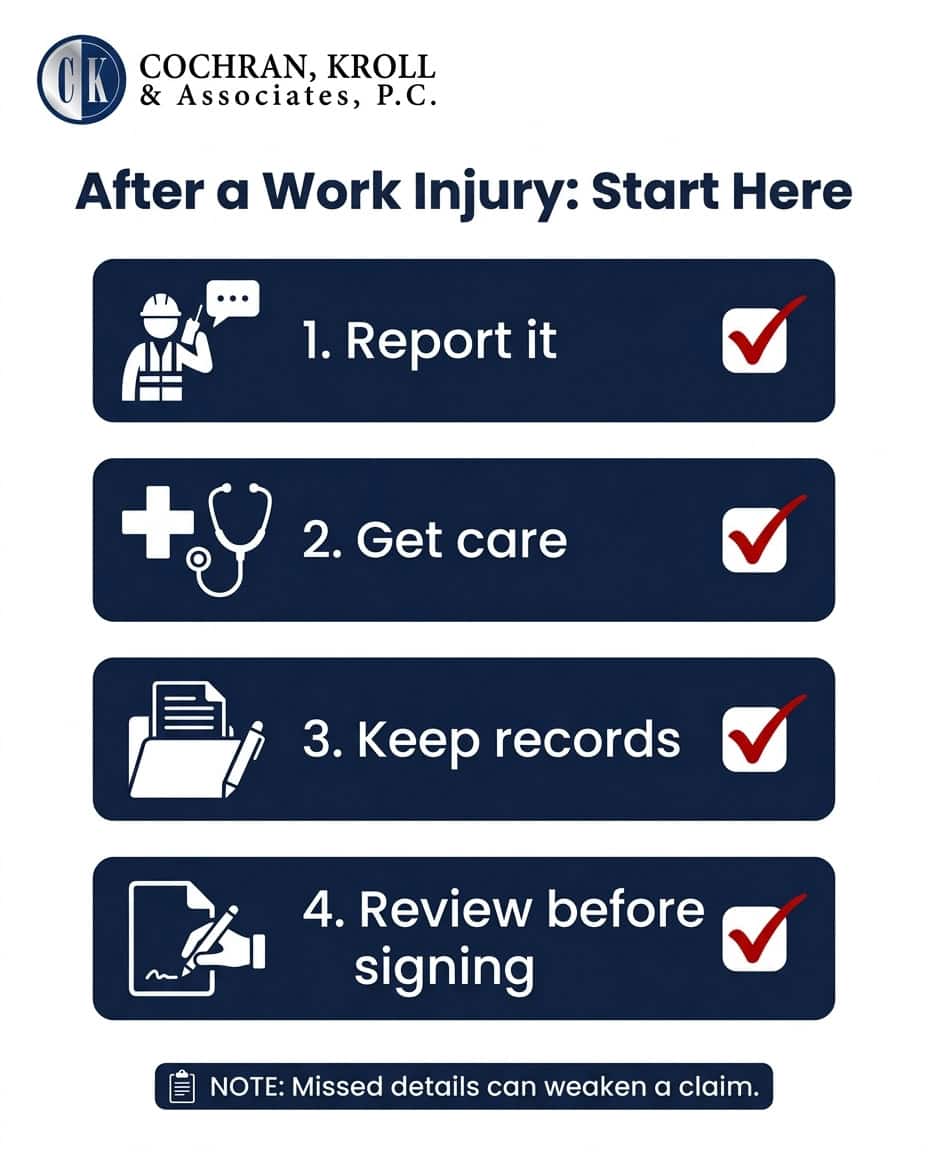
After a workplace injury:
- Report the injury immediately
- Request a copy of the incident report
- Get medical treatment
- Keep every document and medical record
- follow your doctor’s work restrictions
- avoid guessing or filling gaps in your timeline
- Review legal documents before signing them
If your injury involved unsafe working conditions or negligence, speaking with a workplace accident lawyer may also help clarify your legal options.
Why Are Workers’ Compensation Claims Denied or Cut Off?
A denial does not necessarily mean the injury is minor. It often means the insurer believes it has a legal or factual argument against the claim.
What Are the Common Reasons for Denied Claims
Typical denial arguments include:
- The injury was not work-related
- The injury was reported too late
- The condition was pre-existing
- Medical proof is insufficient
- The worker can return to work
Sometimes benefits begin but are later cut off following a medical review.
What is the strong evidence to claim Workplace Injury Compensation?
Strong documentation may include:
- incident reports
- witness statements
- medical records
- job descriptions
- wage records
- medical restrictions
A clear timeline of events can significantly strengthen a claim.
What does IME mean?

An Independent Medical Exam (IME) is usually requested by the insurance carrier.
The exam may affect:
- treatment approval
- wage-loss benefits
- return-to-work decisions
Before an IME, it helps to review your medical history and understand your current restrictions.
What Happens If your Claim Is Denied?
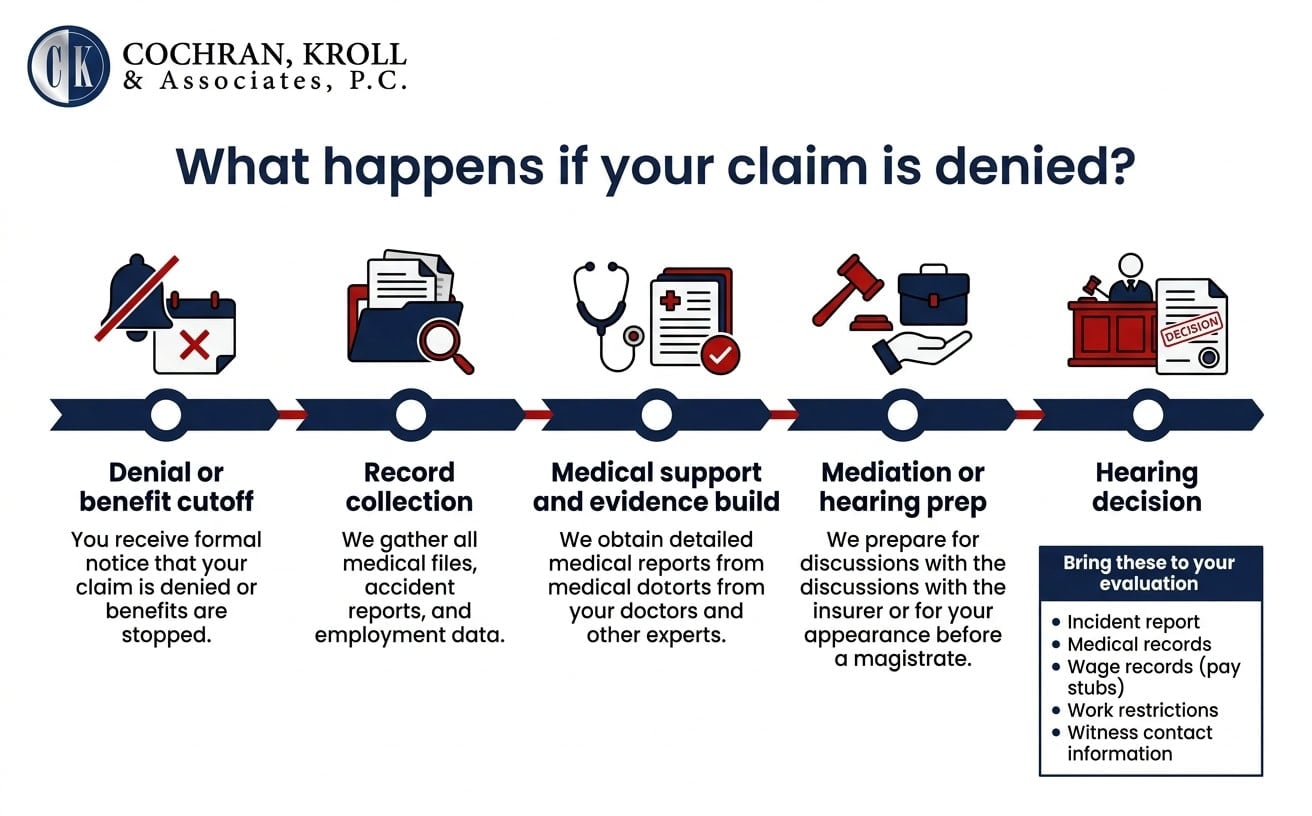
A denial does not always end the case. It may shift the process into a dispute resolution stage.
Mediation and Hearing Stages
Disputed claims may move toward mediation or hearings before a decision-maker.
These proceedings often focus on:
- whether the injury was work-related
- whether benefits should continue
- The strength of the medical evidence
What to Bring to a Hearing
Helpful documents often include:
- incident reports
- medical records
- wage documentation
- work restrictions
- witness statements
- communication with the employer
A clear and organized record is often the strongest part of a case.
What Rights Do You Have On Treatment, Light Duty, and Retaliation?

Workers often face pressure while their claim is ongoing.
This pressure can involve treatment decisions, return-to-work issues, or fear of losing employment.
Employer Responsibilities
Employers generally must maintain workers’ compensation coverage and follow claim procedures when a workplace injury occurs.
Medical Treatment and Return-to-work Issues
Treatment disputes often lead to return-to-work disagreements.
If a doctor places restrictions on your work activities, those restrictions should be documented carefully.
Retaliation Concerns
Workers sometimes worry about retaliation after filing a claim.
Examples can include:
- sudden discipline
- schedule changes
- pressure not to report injuries
- pressure to return before recovery
Documenting changes in workplace behavior can help protect your rights.
How Do Settlements and Attorney Fees Work?
Settlement decisions should be approached carefully.
Once a claim is settled, reopening the case may not always be possible.
When Settlement May Make Sense
Settlement discussions may occur when:
- Medical treatment has stabilized
- Work restrictions are clear
- Both sides want to resolve the dispute
What Can Affect Settlement Value?
Many factors influence settlement discussions, including:
- wage-loss history
- Ongoing medical needs
- permanent restrictions
- credibility of medical evidence
Every case is unique.
How Attorney Fees Are Usually Handled
Cochran, Kroll & Associates, P.C. handles cases on a contingency fee basis, meaning attorney fees are only paid if recovery is obtained.
Why choose Cochran, Kroll & Associates, P.C.?
Cochran, Kroll & Associates, P.C. is a Michigan-based injury law firm offering free, no-obligation consultations and 24-hour toll-free intake.
What the firm can help with
Legal support may include:
- reviewing the facts of the injury
- organizing medical records
- handling communication with insurers
- addressing claim denials or benefit cutoffs
- preparing the case for hearings
- reviewing settlement options
Michigan experience and support
The firm highlights:
What happens next
If you contact the firm, the process typically begins with:
- a brief case review
- discussion of the current claim status
- gathering key documents
- guidance on possible next steps
Contact Our Workers’ Compensation Lawyer in Michigan
If you were hurt at work, you may have options for medical coverage and wage-loss benefits through workers’ compensation. A lawyer can help you understand the process, protect your rights, and respond to delays or denials.
Contact us at Cochran, Kroll & Associates, P.C. for a free consultation. We’ll review your case, explain your options, and map out the strongest path forward. Remember, we don’t get paid unless you win.
Call us at 866-939-4594 anytime, 24/7, to schedule a free case evaluation.
Frequently Asked Questions
What does a workers’ compensation attorney do?
A workers’ compensation attorney helps protect benefits connected to a work injury, including claim filing, disputes, hearings, and settlement review.
Do I need a lawyer if my claim has not been denied yet?
Not always. However, early legal guidance may help if the injury is serious or if the employer or insurer begins disputing the claim.
How long do I have to report a work injury in Michigan?
Workers typically must notify their employer within 90 days, and formal claim filing can extend up to two years.
How long can a workers’ compensation settlement take?
Settlement timing varies depending on medical treatment, benefit disputes, and case complexity.
What is an Independent Medical Exam (IME)?
An IME is an exam requested by the insurer that may affect treatment approval and benefit decisions.
Can I be fired for filing a workers’ compensation claim?
Retaliation concerns sometimes arise after a claim is filed. If your job situation changes unexpectedly after reporting an injury, documentation can be important.
Can repetitive stress injuries qualify?
Yes. Repetitive strain injuries and occupational illnesses may qualify if they are connected to work duties.
Can I sue outside workers’ compensation?
In some situations, another person or company may be responsible for the injury. In those cases, a separate claim may exist. Learn more in the firm’s legal FAQs.