Grand Rapids Traumatic Brain Injury Lawyer
A traumatic brain injury from a car crash, fall, or workplace accident in Grand Rapids can cause lasting cognitive, physical, and emotional changes. Michigan law allows TBI victims to seek compensation for medical treatment, lost income, and long-term rehabilitation costs.
Call 1-866-MICH-LAW any time, 24 hours a day, or submit a free case evaluation online.
How Does a TBI Happen in Grand Rapids?
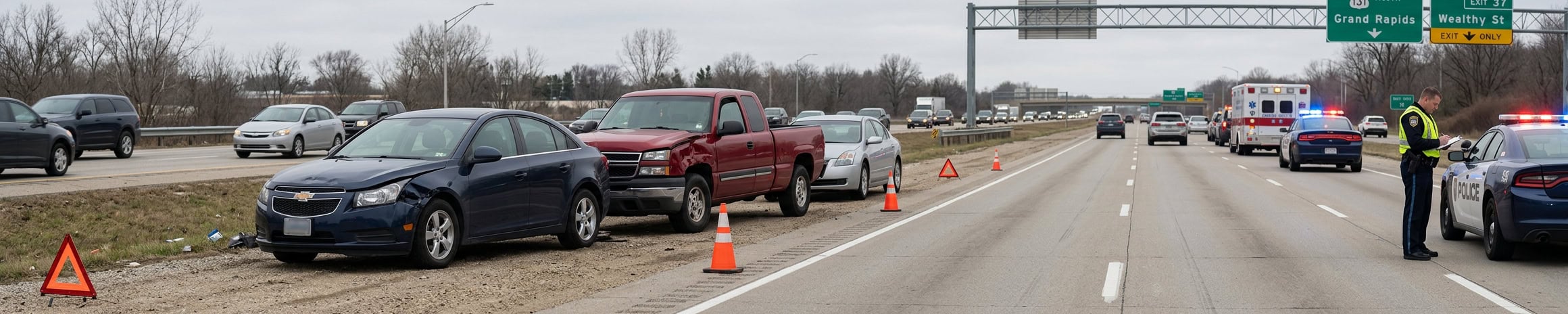
Traumatic brain injuries happen when a sudden blow, jolt, or penetrating wound damages brain tissue. In Grand Rapids and the surrounding Kent County area, the most common scenarios involve:
- Motor vehicle collisions: Crashes on US-131, I-96, and I-196 are a frequent source of serious head trauma. Even a rear-end accident at moderate speeds can cause the brain to strike the inside of the skull.
- Falls on unsafe property: Wet floors in retail stores, cracked sidewalks near downtown Grand Rapids, and unlit stairwells in older apartment buildings lead to head-first impacts.
- Workplace accidents: Construction sites, manufacturing facilities, and warehouse operations across West Michigan expose workers to falling objects, equipment failures, and elevated falls.
- Pedestrian and bicycle accidents: Grand Rapids’ growing cycling infrastructure and pedestrian foot traffic near neighborhoods like Eastown and Wealthy Street increase exposure to distracted drivers.
- Violent assaults: Intentional acts of violence resulting in blunt force trauma to the head also qualify as TBI cases under Michigan personal injury law.
If your brain injury resulted from a car accident in Michigan, the legal process involves both no-fault insurance benefits and potential third-party liability claims.
Common Warning Signs After Head Injury
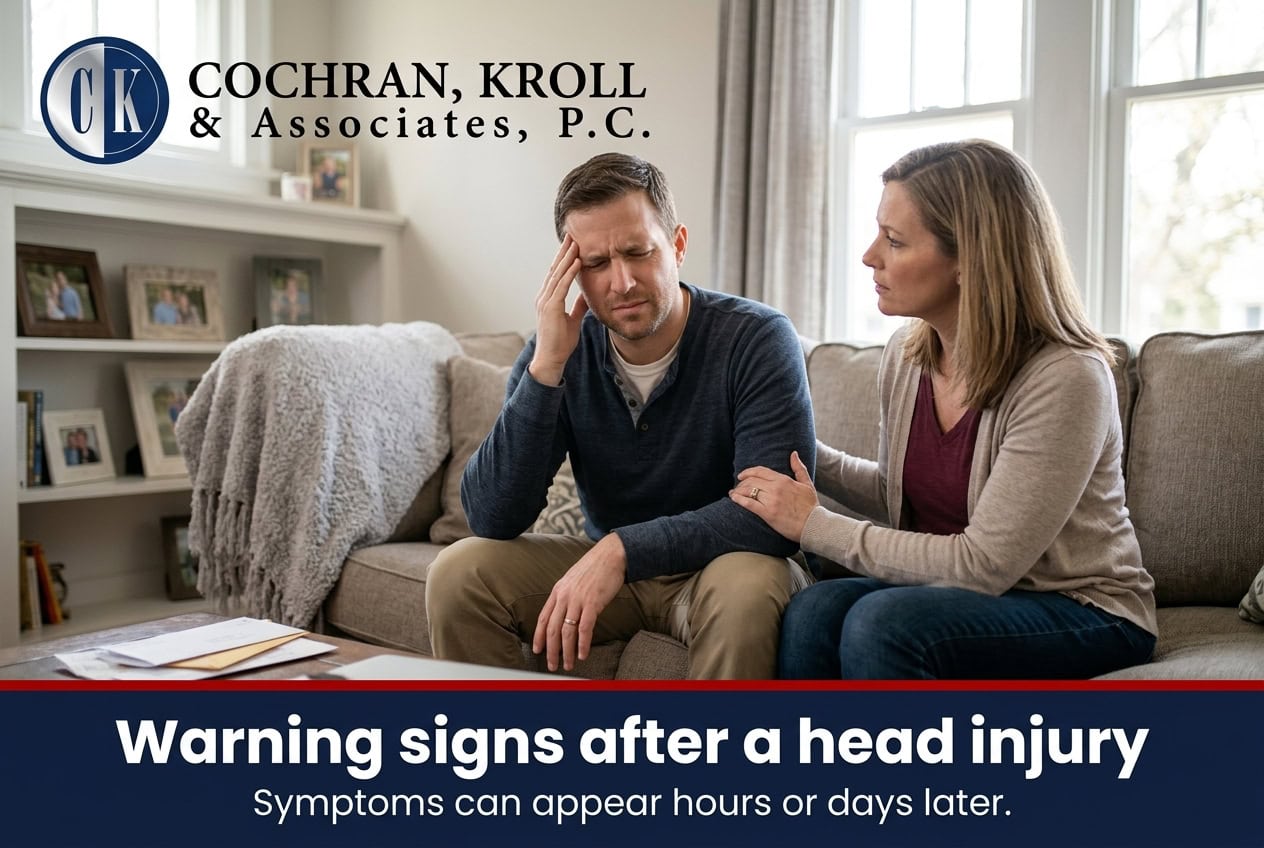
Brain Injury symptoms do not always appear right away. Some people feel fine for hours or even days before problems surface. That delay is one reason brain injuries are underdiagnosed after accidents.
Watch for these signs in adults:
- Persistent or worsening headaches
- Difficulty concentrating or remembering recent events
- Dizziness, nausea, or balance problems
- Sensitivity to light and noise
- Mood changes, irritability, or unusual anxiety
- Slurred speech or confusion
- Loss of consciousness (even briefly)
In children, symptoms may show up differently. Look for changes in eating or sleeping patterns, increased crying, loss of interest in activities, or trouble with balance and coordination.
Here is the thing: even a “mild” concussion is still a brain injury. If you or someone you care about experienced any of these symptoms after an accident in Grand Rapids, get to a hospital. That medical documentation becomes the foundation of your legal case later.
How Michigan’s No-Fault System Affects Your TBI Claim
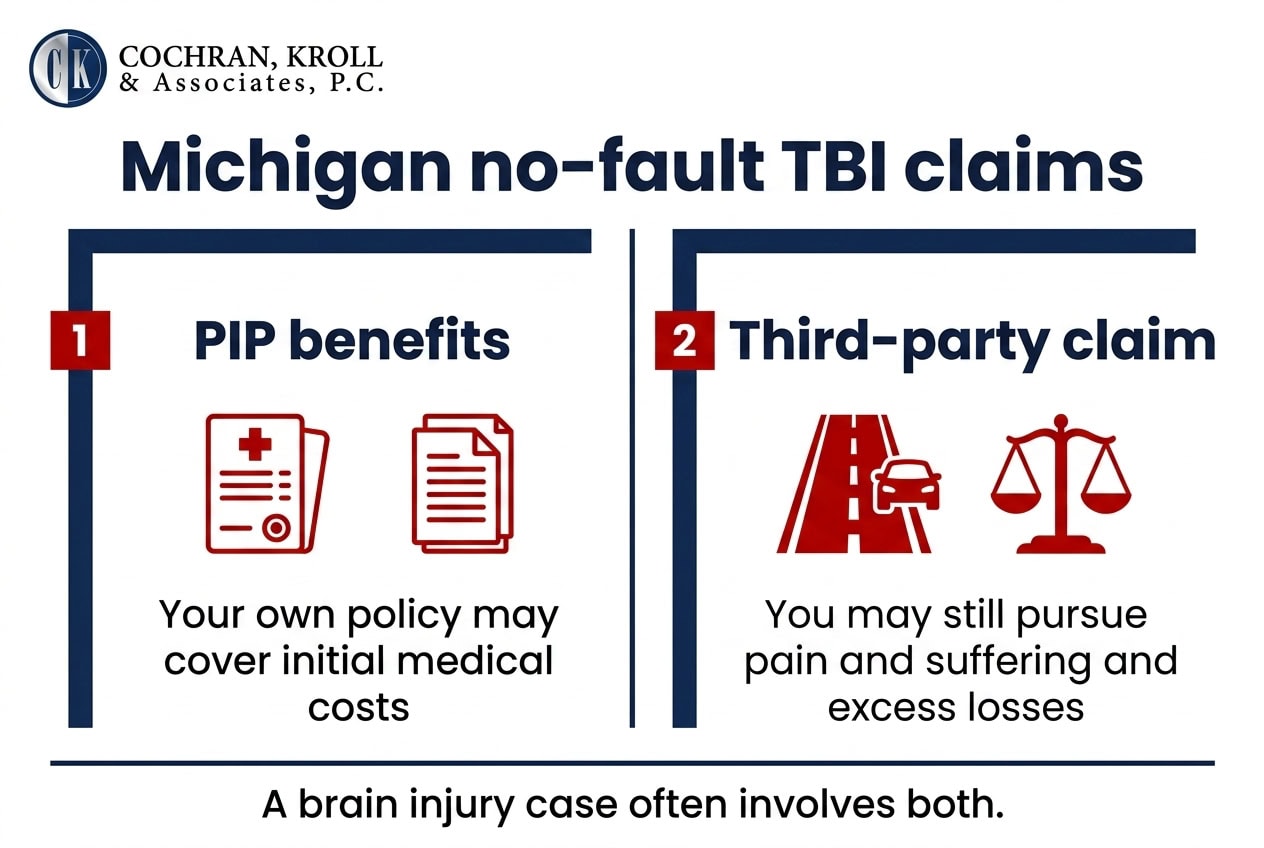
Michigan’s no-fault auto insurance system is complicated, and brain injury claims add another layer of complexity. Here is how it works in practice:
Personal Injury Protection (PIP) Benefits
If your TBI resulted from a motor vehicle accident, your own auto insurance policy’s PIP coverage pays for medical expenses, regardless of who caused the crash. The extent of that coverage depends on the PIP option you selected when you purchased your policy.
Third-Party Liability Claims
To recover damages beyond what PIP covers (pain and suffering, excess medical bills, lost earning capacity), you must file a separate claim against the at-fault driver. Michigan requires you to prove that your injury meets the “serious impairment of body function” threshold. A traumatic brain injury almost always qualifies, but the at-fault party’s insurer will fight that determination.
Understanding Michigan’s vehicle accident laws is essential when a TBI is involved. The interplay between PIP benefits and third-party claims can determine whether you receive enough to cover years of rehabilitation and care.
Call us at 1-866-MICH-LAW anytime, 24/7, to schedule a free case evaluation.
What Compensation Can You Recover for a Grand Rapids Brain Injury?

The financial toll of a TBI extends far beyond the initial emergency room visit. Long-term costs are often staggering, and Michigan law allows you to seek compensation for all of them.
| Damage Category |
What It Covers |
| Medical expenses |
ER visits, hospital stays, surgeries, prescription medications, brain imaging, specialist consultations |
| Rehabilitation costs |
Occupational therapy, physical therapy, speech therapy, and cognitive rehabilitation programs |
| Lost wages and earning capacity |
Income lost during recovery and reduced ability to earn in the future due to lasting impairment |
| Home modifications |
Wheelchair ramps, bathroom modifications, assistive technology for daily living |
| Pain and suffering |
Physical pain, emotional distress, loss of enjoyment of life, and relationship strain |
| Caregiver costs |
Professional or family caregiving expenses for daily assistance needs |
Every TBI case is different. A concussion with a full recovery carries a different value than a severe brain injury requiring lifelong care. Factors like your age, occupation, pre-existing conditions, and the severity of cognitive impairment all affect the final number.
View our verdicts and case results to see how we have recovered compensation in serious injury cases across Michigan.
How Do You Prove a Traumatic Brain Injury in Court?
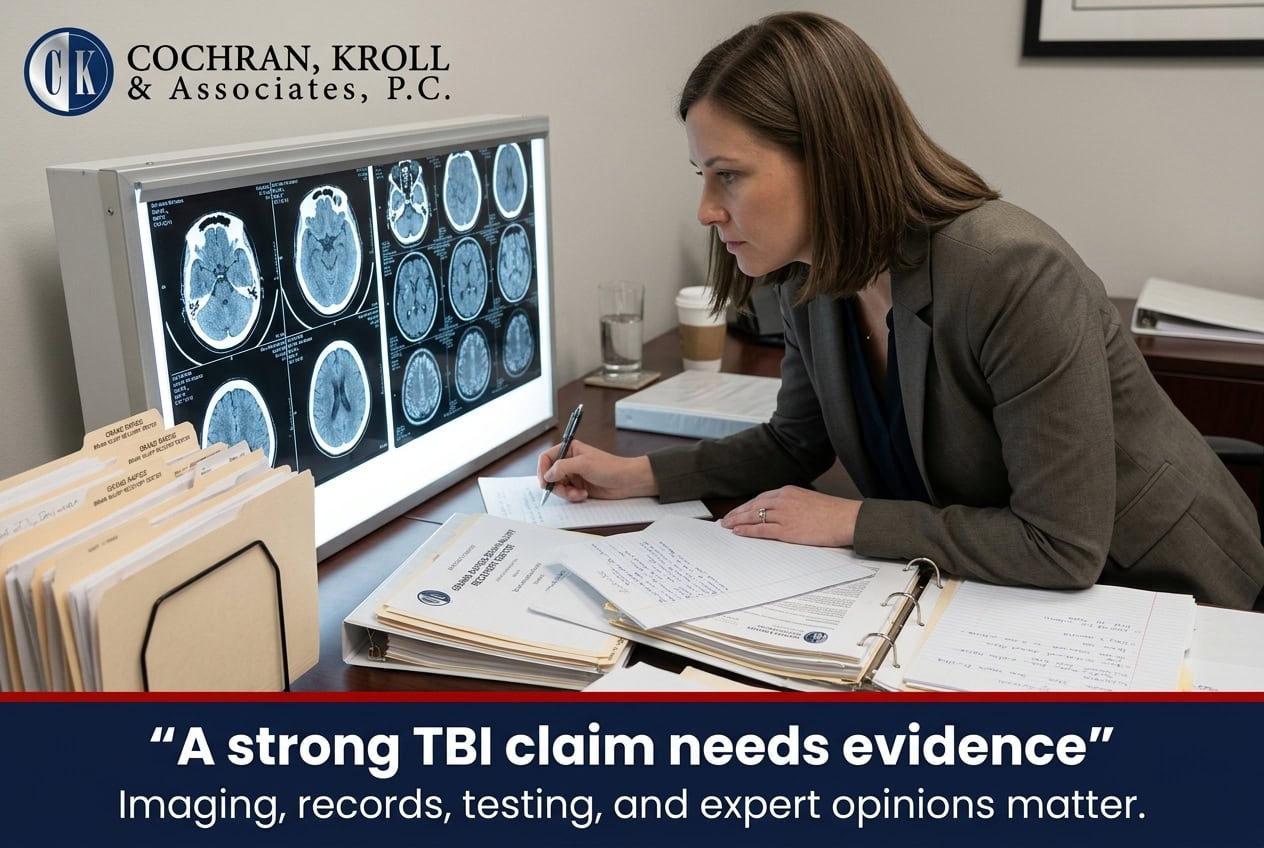
Brain injuries are invisible in ways that a broken bone or laceration is not. That makes proving them in court one of the biggest challenges in TBI litigation. Insurance companies regularly downplay or deny brain injury claims because they can.
Building a strong TBI case requires:
- Medical imaging: MRI scans, CT scans, and sometimes PET scans can reveal structural damage, bleeding, or inflammation in the brain.
- Neuropsychological testing: Standardized cognitive tests measure memory, attention, processing speed, and executive function. These results provide objective data that the court can evaluate.
- Expert medical testimony: Neurologists, neuropsychologists, and rehabilitation specialists explain how the injury affects your daily life and long-term prognosis.
- Accident reconstruction: In vehicle crash cases, experts can demonstrate the forces involved and how they caused the brain injury.
- Documentation of daily impact: Personal journals, statements from family members, employment records, and school performance data show real-world consequences.
Our firm works with trusted medical professionals across Michigan to build the evidence needed to prove your TBI claim. Eileen E. Kroll, a partner at our firm, worked as a registered nurse before becoming an attorney, which gives our team a distinct advantage when interpreting medical records and communicating with healthcare providers.
What Steps Should You Take After a Brain Injury in Grand Rapids?
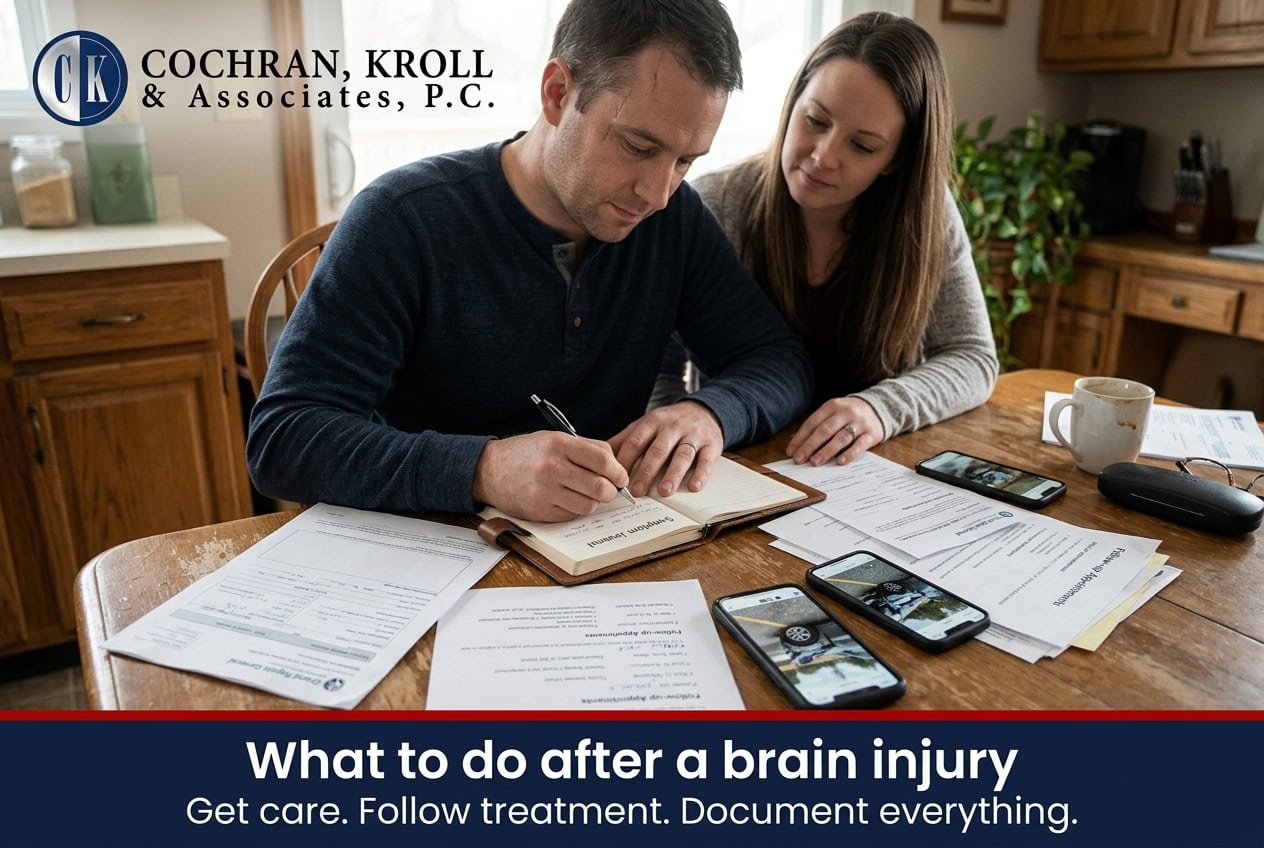
The actions you take in the first days and weeks after a head injury have a direct impact on both your health and your legal claim. Do not wait on any of these:
- Get emergency medical care immediately. Even if symptoms seem minor, go to a hospital or urgent care facility. Request a neurological evaluation and brain imaging. Spectrum Health Butterworth Hospital and Metro Health are two Grand Rapids-area options with trauma capabilities.
- Follow all medical instructions. Attend every follow-up appointment. Missing appointments gives the insurance company ammunition to argue your injury is not serious.
- Document everything. Take photos of the accident scene, your injuries, and any property damage. Keep a daily journal of symptoms, pain levels, and how the injury affects your routine.
- Report the incident. File a police report for vehicle accidents. Report workplace injuries to your employer immediately. These records create an official timeline.
- Do not give recorded statements to insurance adjusters. Anything you say can be used to minimize or deny your claim. Let your attorney handle those conversations.
- Contact a brain injury attorney. The sooner legal representation is involved, the better your chances of preserving evidence and meeting filing deadlines.
Does the Timing of Your TBI Claim Matter?
Michigan law sets strict deadlines for filing injury claims, and missing those deadlines can permanently bar your case.
- Statute of limitations: You generally have three years from the date of injury to file a personal injury lawsuit in Michigan. Some exceptions apply (such as for minors), but waiting close to that deadline is risky.
- No-fault PIP benefits: For auto accident-related TBIs, you must file your PIP claim within one year of the accident to receive medical expense coverage.
- Evidence deterioration: Surveillance footage gets overwritten. Witness memories fade. Medical records from the first days after injury carry the most weight.
The clock starts the day of the accident, not the day you decide to call a lawyer. Contact our personal injury team in Michigan before time runs out.
Why Choose Cochran, Kroll & Associates for Your Grand Rapids TBI Case?
Plenty of law firms will take a brain injury case. Here is what sets Cochran, Kroll & Associates, P.C. apart:
- Decades of proven results in serious Michigan injury cases. Our attorneys have recovered more than $44.1 million in verdicts and settlements for clients across the state.
- Medical knowledge is built into our legal team. Eileen E. Kroll, a partner and former registered nurse, brings frontline healthcare experience to every case involving medical records, treatment plans, and expert testimony.
- No fee unless we win. We work on a contingency fee basis. You pay nothing upfront, and we only collect a fee if we recover compensation for you.
- Free, no-obligation consultations available 24 hours. Call 1-866-MICH-LAW any time. We answer around the clock.
- We represent people, not insurance companies. Our firm fights for individuals and families. That is the only side we have ever been on.
- Recognized attorneys. Terry L. Cochran has been named a Super Lawyer and holds Avvo and Preeminent designations. Eileen E. Kroll is a Preeminent-rated attorney and Client Champion. Our attorneys have been featured in The Detroit News, Detroit Free Press, WDIV-TV, and Fox-2.
Read reviews from our Michigan clients to hear firsthand what working with our team looks like.
Contact Our Traumatic Brain Injury Lawyers in Grand Rapids
If you or a loved one has suffered a traumatic brain injury due to someone else’s negligence, the impact on your life can be life-altering. You need an attorney who understands the full weight of what you’re facing.
Contact us at Cochran, Kroll & Associates, P.C. for a free consultation. We’ll review your case, explain your options, and map out the strongest path forward. Remember, we don’t get paid unless you win.
Call us at 1-866-MICH-LAW anytime, 24/7, to schedule a free case evaluation.
Frequently Asked Questions About Grand Rapids TBI Claims
Can I file a TBI claim if the accident was partly my fault?
Yes. Michigan follows a modified comparative fault rule. You can recover compensation as long as you are less than 50% responsible for the accident. Your award will be reduced by your percentage of fault. For example, if you are found 20% at fault and your damages total $500,000, your recovery would be reduced to $400,000.
How long do I have to file a brain injury lawsuit in Michigan?
The general statute of limitations for personal injury cases in Michigan is three years from the date of the injury. For auto accident-related TBIs, the PIP benefits claim deadline is one year. Certain exceptions can extend or shorten these deadlines, so it is best to speak with an attorney as early as possible.
What if my TBI symptoms did not appear until days after the accident?
Delayed symptoms are common with traumatic brain injuries. The statute of limitations clock typically starts from the date of the accident, not the date symptoms appear. However, Michigan’s discovery rule may apply in some situations. Either way, get medical attention immediately and contact a lawyer to protect your rights.
How much is a traumatic brain injury case worth in Michigan?
There is no fixed amount. TBI settlements and verdicts depend on the severity of the injury, the cost of treatment and rehabilitation, lost earning capacity, and the degree of permanent impairment. Moderate to severe TBI cases in Michigan can result in significant compensation, but every case depends on its specific facts.
Do I need a specialized attorney for a brain injury case?
Brain injury cases involve complex medical evidence, expert testimony, and specialized legal strategies that general practice attorneys may not be equipped to handle. Working with a firm that has specific experience in TBI litigation can make a meaningful difference in the outcome of your claim.
What medical evidence supports a TBI claim?
Key evidence includes brain imaging (MRI, CT scans), neuropsychological test results, medical records documenting your treatment history, and expert opinions from neurologists or rehabilitation specialists. Your attorney should work closely with your medical team to assemble this evidence.
Can family members file a claim related to a loved one’s brain injury?
In some cases, yes. If a TBI victim is incapacitated, a family member or legal guardian can file a claim on their behalf. Michigan also allows loss of consortium claims, where a spouse can seek compensation for the impact the injury has had on their relationship and quality of life.
Will my TBI case go to trial or settle out of court?
Most TBI cases settle before trial, but not all. The decision depends on whether the insurance company offers fair compensation. Our attorneys prepare every case as if it is going to trial, which puts pressure on insurers to negotiate seriously. If a fair settlement is not offered, we are fully prepared to present your case in court.