Lansing Nursing Home Abuse Lawyer
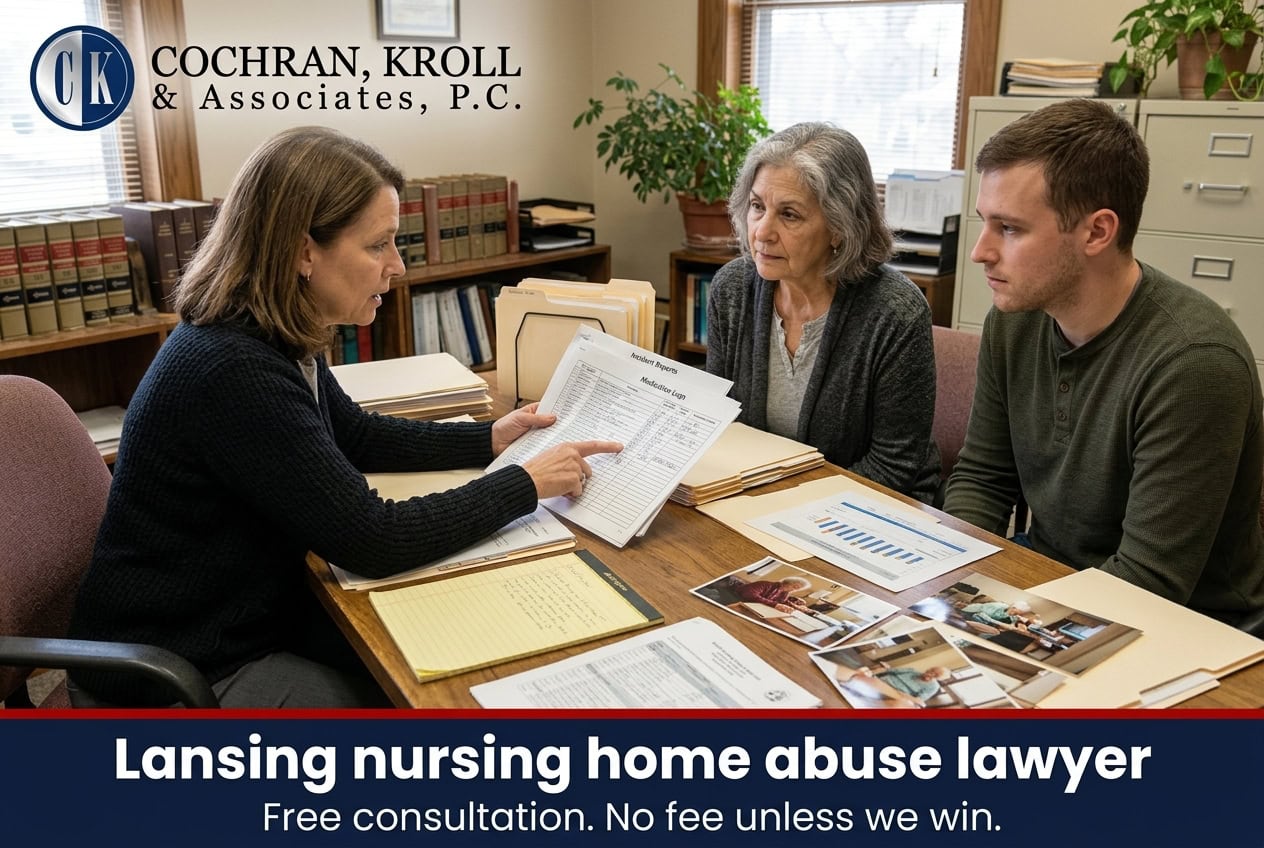
A Lansing nursing home abuse lawyer represents families whose loved ones were harmed by neglect, physical abuse, or substandard care in a nursing facility. At Cochran, Kroll & Associates, our team includes a registered nurse who personally reviews every resident’s chart to identify where the standard of care failed. We handle cases on a contingency fee basis, meaning you pay nothing unless we recover compensation for your family.
How to Tell if Your Loved One Is Being Mistreated in a Lansing Nursing Home
You trusted a nursing facility to keep your parent or grandparent safe. When something feels wrong during a visit, that instinct matters. Recognizing the warning signs early can mean the difference between stopping ongoing harm and discovering years of hidden neglect.
Here is the reality: most nursing home residents cannot advocate for themselves. Cognitive decline, physical limitations, and fear of retaliation keep many from speaking up. That makes it your responsibility, and ours, to pay attention.
Physical Warning Signs That Point to Abuse
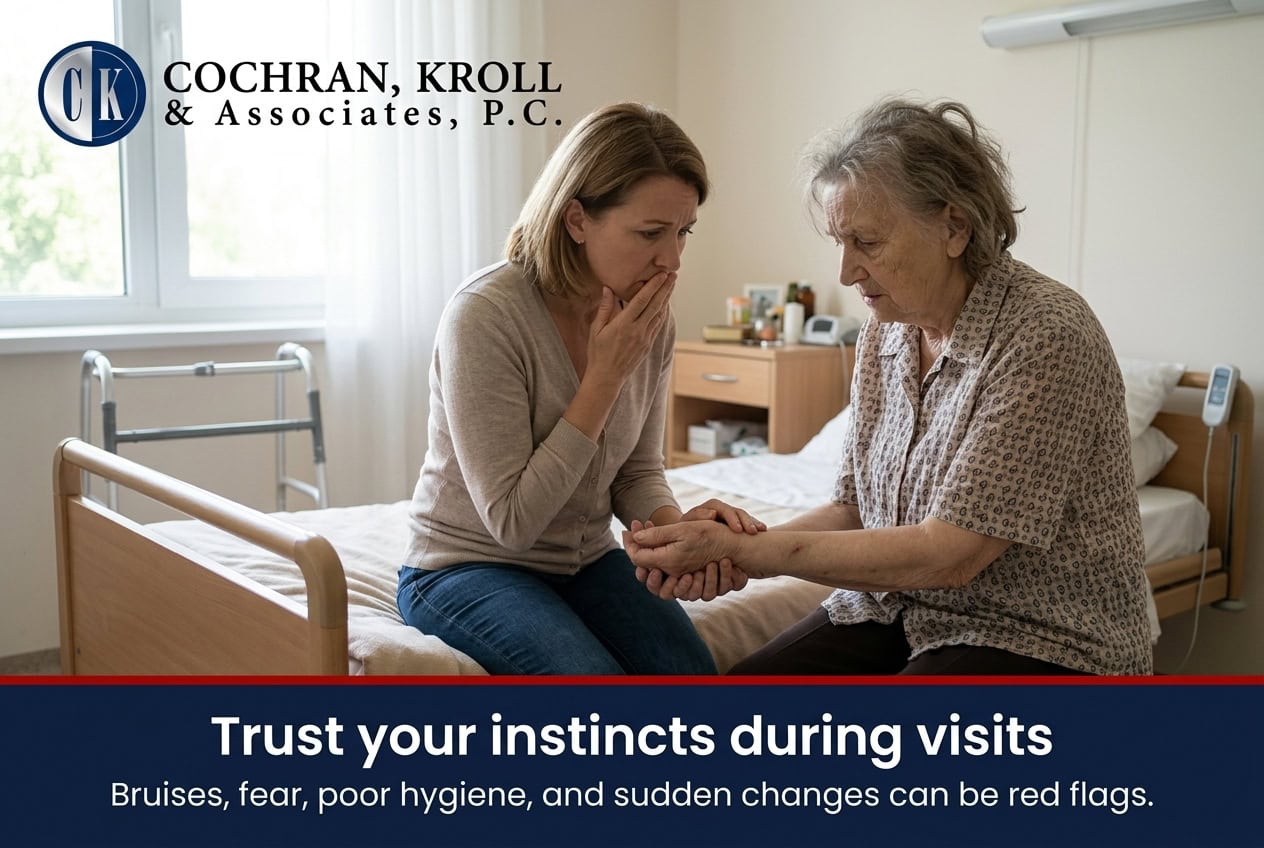
Physical abuse leaves evidence, but nursing home staff often have explanations ready. Watch for patterns, not isolated incidents.
- Unexplained bruises, welts, or cuts, especially in areas typically covered by clothing
- Fractures or sprains that staff attribute to falls with vague or shifting details
- Restraint marks on wrists, ankles, or around the torso
- Your loved one flinching, cowering, or becoming visibly tense when certain staff members approach
- Burns in unusual patterns, including cigarette-sized circular marks
Neglect: The Quiet Form of Abuse
Neglect is the most common form of nursing home mistreatment, and it is often the hardest to detect without medical training. Eileen Kroll, a registered nurse and attorney at our firm, has identified neglect in cases where families had no idea how serious the situation was.
- Bedsores (pressure ulcers), particularly Stage 3 or Stage 4 wounds that penetrate deep tissue or expose bone, are a direct result of a facility failing to reposition residents on schedule
- Sudden or unexplained weight loss, cracked lips, dry skin, and dark urine, which indicate dehydration and malnutrition
- Soiled clothing or bedding, unwashed hair, long and untrimmed nails, and foul body odor
- Untreated infections, including urinary tract infections and respiratory illnesses, that progress because staff did not monitor symptoms
- Medication errors: missed doses, wrong medications, or over-sedation used to keep residents quiet
Emotional, Financial, and Sexual Abuse
Not all abuse leaves visible marks. Emotional abuse can cause withdrawal, sudden anxiety, refusal to speak during visits, or dramatic behavioral changes. Financial exploitation shows up as unexplained bank withdrawals, changes to legal documents, or missing personal belongings.
Sexual abuse in nursing homes is underreported and devastating. Warning signs include unexplained genital injuries, torn undergarments, new STD diagnoses, and sudden fear of being alone with specific staff.
Nursing Home Abuse Cases Our Lansing Attorneys Handle
Bedsore and Pressure Injury Cases
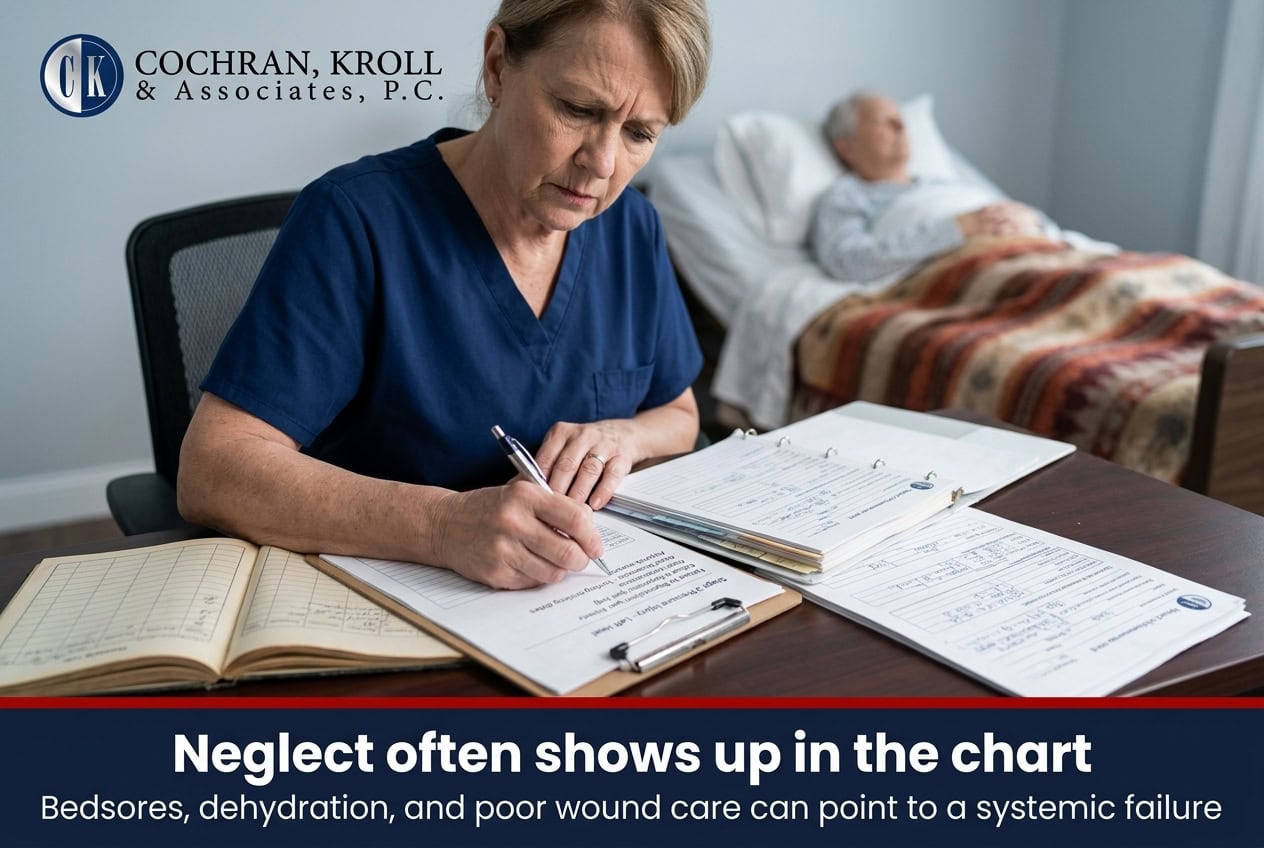
Advanced pressure ulcers, Stage 3 and Stage 4, are among the clearest indicators that a nursing home failed to provide basic care. These wounds develop when residents are not turned and repositioned on a regular schedule, a fundamental standard that every facility is required to meet.
Fall Injuries from Inadequate Staffing
Falls are the leading cause of injury-related death among elderly Americans. In a nursing facility, a fall usually means someone was not watching. Common causes include understaffing, failure to implement an individualized fall prevention plan, broken or missing bed rails, wet floors without signage, and poor lighting. When a fall results in a hip fracture, traumatic brain injury, or broken bones, the facility may be liable. Our personal injury attorneys investigate every contributing factor.
Malnutrition, Dehydration, and Medication Mistakes
When a nursing home fails to provide adequate food, water, and proper medication management, it is not a minor oversight. These are basic care obligations. Facilities that use chemical restraints, meaning sedation to make residents easier to manage, are committing a form of abuse that Michigan law takes seriously.
Wrongful Death Caused by Nursing Home Negligence
When neglect or abuse results in the death of a nursing home resident, the family may file a wrongful death lawsuit under the Michigan Wrongful Death Act. These cases often involve overlapping medical malpractice claims and require careful handling under Michigan’s damages framework (MCL 600.1483). Our wrongful death attorneys understand how to pursue maximum recovery within these boundaries.
Elopement and Wandering Incidents
Residents with dementia or cognitive impairment can wander out of a facility if doors are left unsecured, alarm systems malfunction, or staff are simply not paying attention. When a resident elopes and suffers injury or death, the facility’s failure to supervise constitutes negligence under Michigan law.
Why Does Nursing Home Abuse Keep Happening in Michigan?
This is not about one bad nurse or one failing facility. Nursing home abuse is a systemic problem driven by economics, staffing shortages, and weak enforcement.
- 91% of U.S. nursing homes have insufficient staffing levels, according to federal data
- 39% of Michigan nursing homes have below-average overall CMS ratings
- 45% of Michigan facilities fail health inspections
- High employee turnover means undertrained staff handling vulnerable residents
- Profit pressure pushes corporate operators to cut costs at the expense of resident safety
- Background check failures allow individuals with prior offenses to work in care settings
When families understand that this problem is structural, not accidental, it becomes clear why legal action matters. A lawsuit does more than recover money. It forces a facility to change practices that put every resident at risk.
Nursing Home Abuse in the Lansing Area: What Local Families Should Know
Lansing and the surrounding Ingham County communities, including East Lansing, Okemos, Mason, and Williamston, are home to dozens of long-term care facilities. Families choosing a nursing home for a loved one can check facility ratings on Medicare’s Care Compare tool before making a decision.
When abuse or neglect occurs in the Lansing area, lawsuits are typically filed in the Ingham County Circuit Court (30th Circuit Court). The Michigan Long-Term Care Ombudsman Program covers the Lansing tri-county region and serves as an independent resource for families who suspect mistreatment but are not yet ready to pursue legal action.
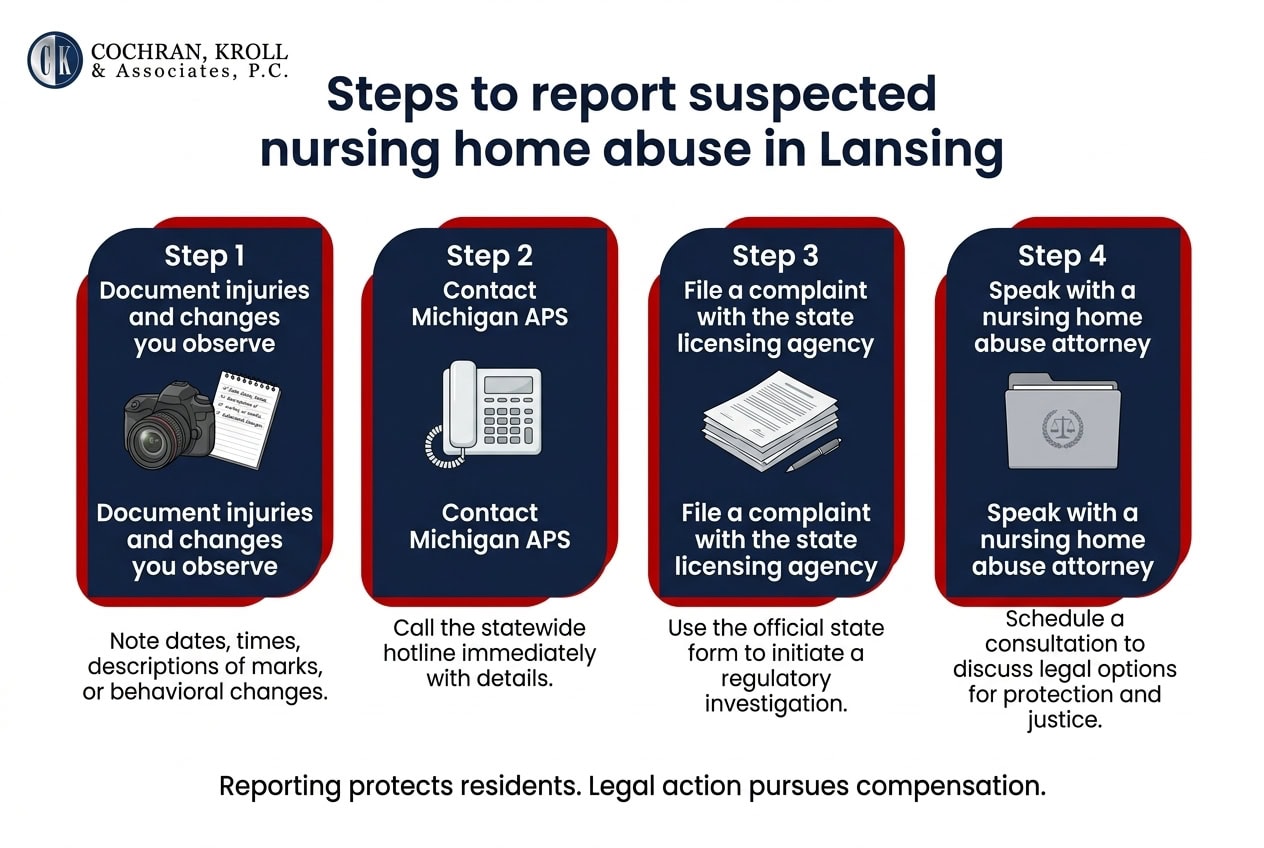
Complaints about facility conditions can also be directed to Michigan’s Bureau of Community and Health Systems (BCHS), which is the state licensing and inspection agency for nursing homes. Inspection reports and violation histories for any licensed facility in the Lansing area are available as public records.
What Financial Recovery Is Available in a Lansing Nursing Home Abuse Case?
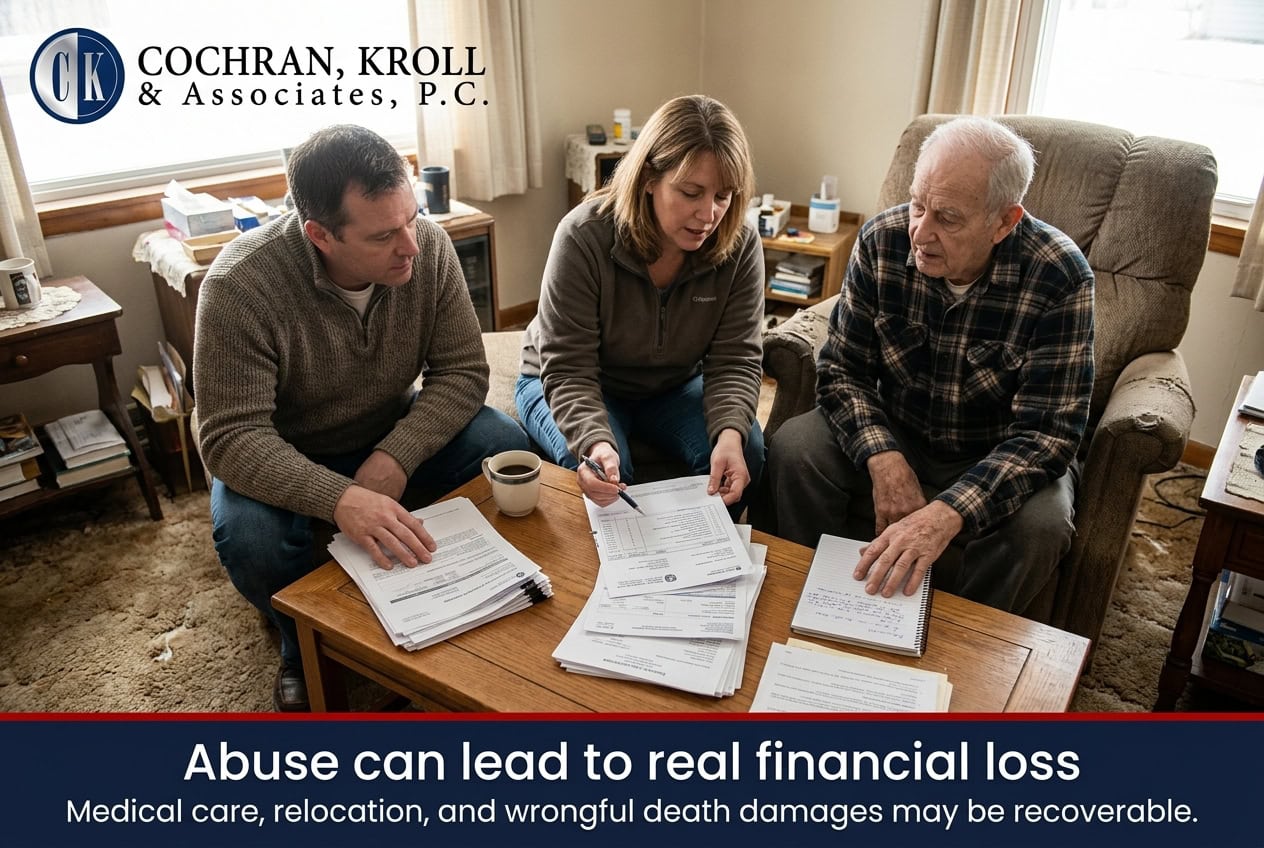
Michigan law allows families to pursue several categories of damages in a nursing home abuse or neglect case.
- Medical expenses for treating injuries caused by abuse or neglect, including hospitalizations, surgeries, wound care, and rehabilitation
- Pain and suffering experienced by the resident, both physical and emotional
- Emotional distress damages for family members who witnessed or discovered the abuse
- Relocation costs when a family needs to move their loved one to a safe facility
- Wrongful death damages, including funeral expenses and loss of companionship, when abuse results in death
- Punitive damages in cases involving extreme negligence or intentional misconduct
According to Health Affairs, the average nursing home abuse settlement is approximately $406,000, with most cases settling between $150,000 and $400,000. Michigan’s medical malpractice damages cap under MCL 600.1483 may apply depending on how the case is classified, though catastrophic injuries may qualify for the higher cap.
Important: Every case is different. Past results do not guarantee a specific outcome. The value of your claim depends on the severity of injuries, the strength of evidence, and the specific facts of your situation.
Why Lansing Families Choose Cochran, Kroll & Associates for Nursing Home Abuse Cases
Eileen Kroll: A Registered Nurse Who Builds Legal Cases
Here is what makes our firm different from every other nursing home abuse practice in the Lansing area. Eileen Kroll is both a registered nurse and a licensed attorney. Before she went to law school, she worked as a nurse. That means she does not rely on outside experts to understand what went wrong. She reads medical charts herself, identifies clinical signs of neglect that other attorneys would walk right past, and communicates medical evidence to juries in plain language.
Decades of Results for Michigan Families
Cochran, Kroll & Associates has recovered over $44.1 million in total verdicts for Michigan clients. The firm has been recognized by Super Lawyers and holds Preeminent ratings from Martindale-Hubbell. You can review our case results and verdicts to see examples of outcomes we have achieved for families across the state.
How Much Does It Cost to Hire a Lansing Nursing Home Abuse Lawyer?

Nothing upfront. Cochran, Kroll & Associates works on a contingency fee basis. That means we only get paid if we win your case. There is no retainer, no hourly billing, and no invoice at the end of the month.
We cover all case expenses out of our own pocket, including medical record retrieval, expert witness fees, court filing costs, and deposition expenses. If we do not recover compensation for your family, you owe us nothing.
This arrangement exists because we believe that access to justice should not depend on your bank account. Call 1-866-MICH-LAW for a free, no-obligation case evaluation.
Contact Our Nursing Home Abuse Lawyers in Lansing
If you suspect a loved one is being abused or neglected in a nursing home, don’t wait to take action. Facilities that fail to protect their residents must be held accountable for the harm they cause.
Contact us at Cochran, Kroll & Associates, P.C. for a free consultation. We’ll review your case, explain your options, and map out the strongest path forward. Remember, we don’t get paid unless you win.
Call us at 1-866-MICH-LAW anytime, 24/7, to schedule a free case evaluation.
Frequently Asked Questions
What are the first steps if I suspect abuse in a Lansing nursing home?
Document everything you observe, including photographs of injuries, written notes about changes in behavior, and the names of staff members on duty. Report your concerns to Michigan Adult Protective Services at 1-855-444-3911. Then contact a nursing home abuse attorney who can evaluate whether you have grounds for a legal claim.
Does Michigan law treat nursing home abuse as medical malpractice?
In many cases, yes. When the abuse or neglect involves a failure to provide adequate medical care, including medication errors, untreated infections, and bedsores, the claim often qualifies as medical malpractice under Michigan law. This means an Affidavit of Merit and a 182-day Notice of Intent are required before filing suit.
How long do I have to file a nursing home abuse lawsuit in Michigan?
The statute of limitations for most nursing home abuse cases in Michigan is two years from the date of injury. In wrongful death cases, the deadline can extend to two years from the date of death, and in some circumstances up to five years. Missing the deadline can bar your claim entirely, so early consultation with an attorney is critical.
Can my loved one stay in the nursing home while a lawsuit is pending?
Yes. Federal and Michigan law prohibit nursing homes from retaliating against residents or their families for filing complaints or lawsuits. If you have concerns about retaliation, your attorney can take steps to protect your loved one, including contacting the state licensing agency.
What determines the value of a nursing home abuse claim?
The value depends on the severity and duration of the abuse, the extent of physical and psychological injuries, the resident’s age and life expectancy, the facility’s history of violations, and the quality of evidence. According to Health Affairs, settlements average around $406,000, though each case is unique.
Can individual staff members be held personally liable?
Yes, in certain situations. If a specific employee committed assault, engaged in financial exploitation, or acted with intentional disregard for a resident’s safety, that individual can be named as a defendant alongside the facility and its corporate operators.
What if I am unsure whether what happened qualifies as abuse?
You do not need to be certain before reaching out. Many families contact us with concerns they cannot fully explain. A red flag during a visit, an injury that does not match the staff’s explanation, or a sudden decline in health can all be starting points. We evaluate the facts and the medical records to determine whether the facility failed your loved one.
Do I need to prove the nursing home intended to cause harm?
No. Most nursing home abuse cases are based on negligence, not intent. You need to show that the facility failed to meet the accepted standard of care and that this failure caused harm to your loved one. Our firm builds this evidence through medical record analysis, expert testimony, and facility inspection records.