Slip and Fall Lawyer in Lansing, Michigan
A slip and fall in Lansing rarely feels like an accident in the moment. The ice was there. The grocery store floor was wet. The stairs at the apartment complex were unlit. Someone made the choice not to fix it, and now you are the one paying for it in medical bills and missed work. Cochran, Kroll & Associates, P.C. represents Lansing-area residents in premises liability claims that range from a single fractured wrist to a life-changing traumatic brain injury. Our Slip and Fall Lawyer Lansing practice is built on decades of personal injury trial experience, the clinical insight of nurse-attorney Eileen E. Kroll, and a contingency fee model that means no fees until we win. Call 1-866-MICH-LAW for a free conversation.
Key Takeaways
- Michigan generally gives you three years from the date of a slip and fall injury to file a personal injury lawsuit.
- Lansing winters create some of the highest-volume premises liability seasons in the state, but ice alone is not enough; the property owner’s conduct is what matters.
- Michigan’s modified comparative negligence rule reduces your recovery by your share of fault and bars recovery entirely if you are found more than 50% responsible.
- Compensation can include medical bills, lost wages, future care, pain and suffering, and permanent disability damages.
- Free consultations are available statewide, and we charge no attorney fees unless we recover money for you.
What Counts as a Valid Slip and Fall Claim in Lansing?
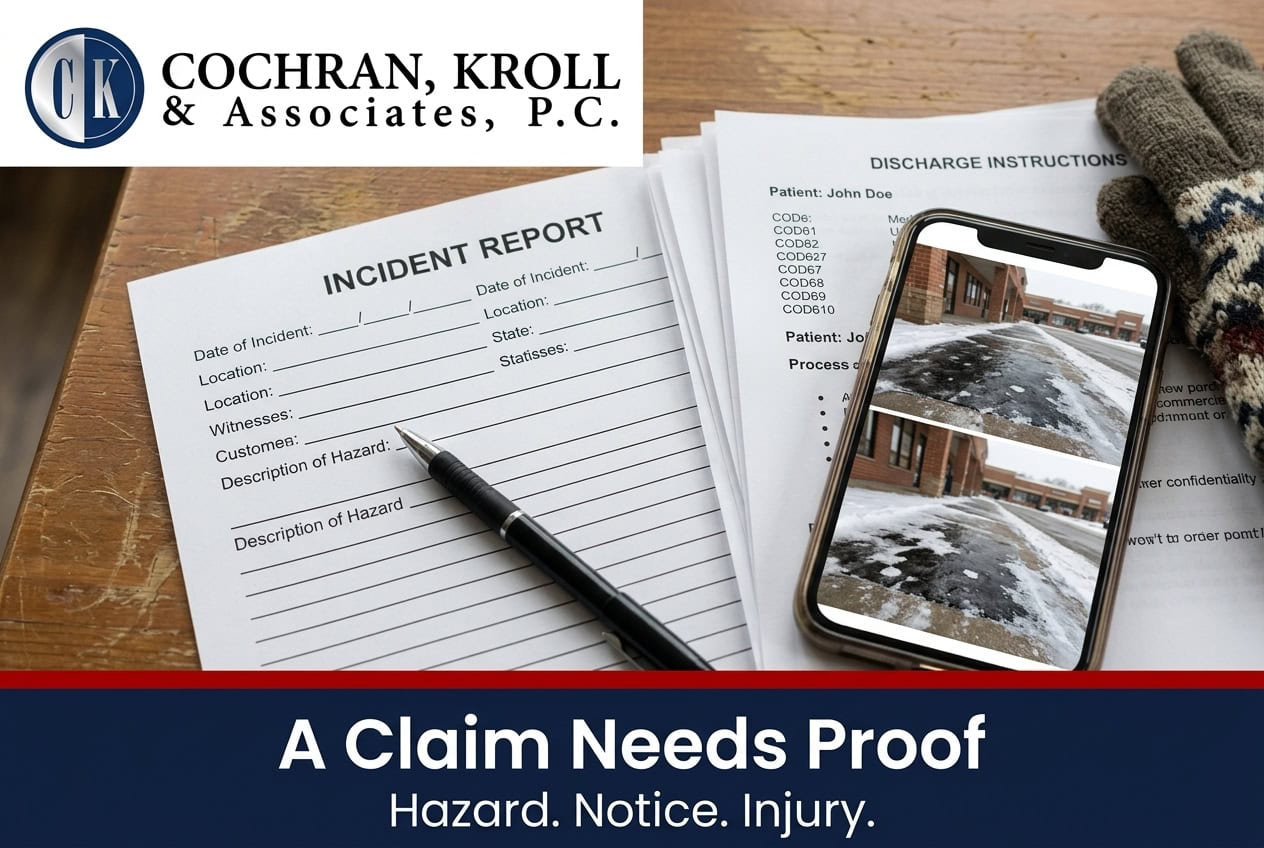
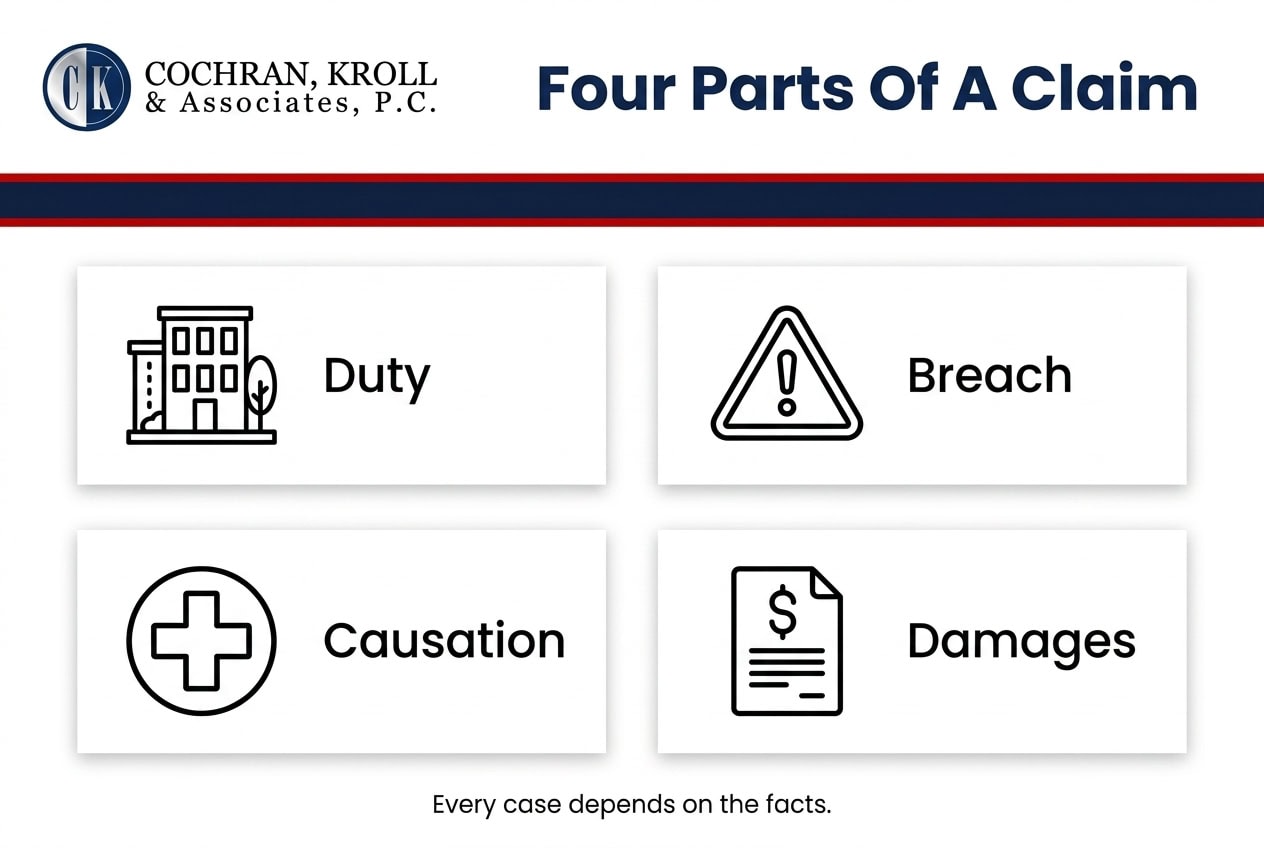
Not every fall is a lawsuit. Michigan premises liability law requires four elements: the property owner owed you a duty of care, the owner breached that duty, the breach caused your injury, and you suffered measurable damages. The duty owed depends on your status on the property. Invitees, such as customers in a Frandor business or guests at a McLaren Greater Lansing waiting room, are owed the highest level of care. Licensees and trespassers are owed less.
A successful claim usually rests on proof that the owner knew or should have known about the hazard and failed to fix it or warn about it within a reasonable time. Internal incident reports, security camera footage, and prior complaints become the spine of the case. We work to preserve all of that evidence before it is overwritten or discarded.
If the hazard caused your fall and the fall caused your injury, you may have a premises liability claim under Michigan law.
Michigan’s Open and Obvious Doctrine
Michigan property owners often raise the open and obvious defense, arguing that an average person should have seen and avoided the hazard. The doctrine has narrowed in recent years and now plays a different role in premises liability cases than it did a decade ago.
Even where the hazard was visible, courts may still find for the injured person if the condition was effectively unavoidable or if special aspects of the hazard made it unreasonably dangerous. A patch of black ice across the only path to a building’s entrance, or a wet floor on a poorly lit stairwell, can both qualify. Whether the doctrine actually bars your claim depends on facts that need to be developed during the case, not on what an insurance adjuster tells you over the phone.
Common Causes of Slip and Fall Accidents in Lansing
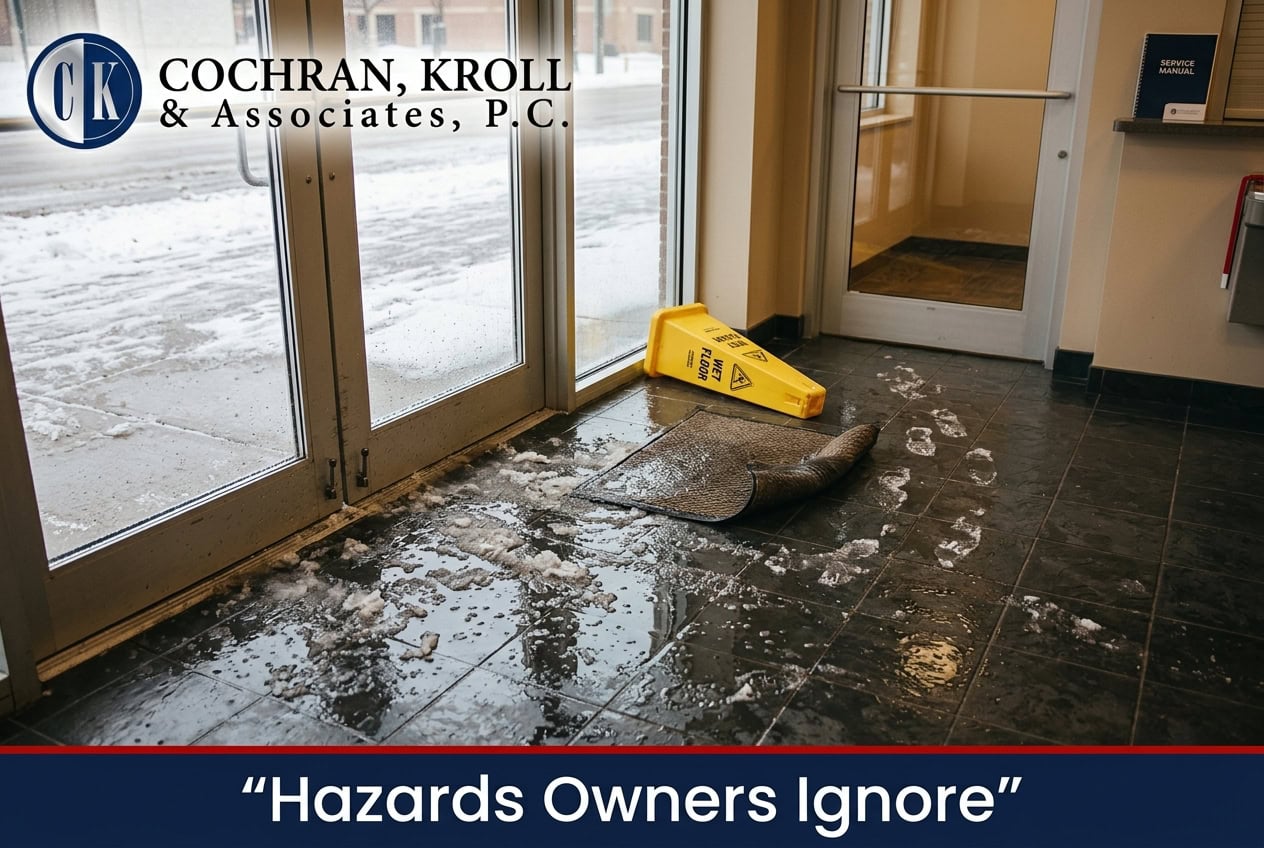
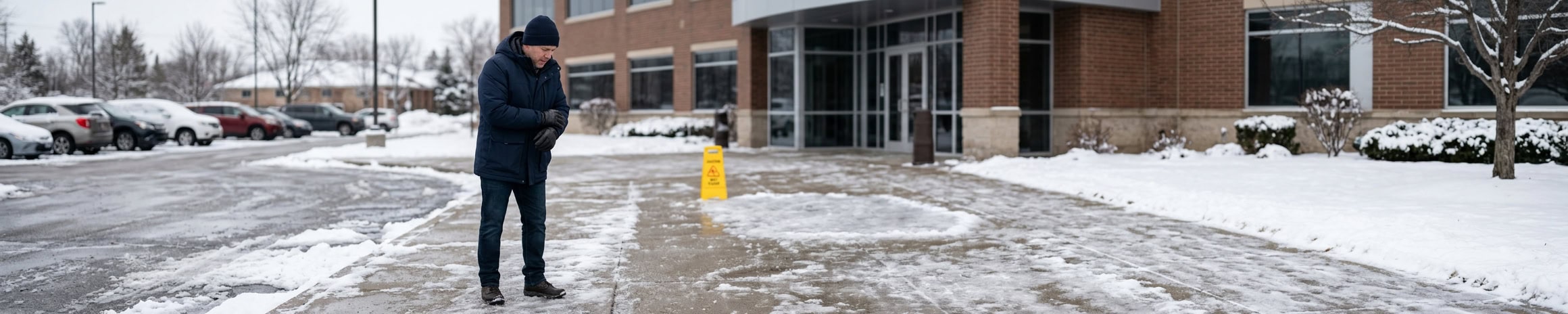
Lansing slip and fall calls cluster around predictable hazards. Ice and packed snow on sidewalks and parking lots dominate from November through March. Wet entryway tile after rainstorms shows up year-round. Uneven sidewalks near older housing stock around Old Town and REO Town cause trips that property owners have known about for years.
Other recurring causes include unlit stairwells, broken handrails in apartment buildings, recently mopped retail floors without warning cones, spilled product in grocery aisles, construction debris on commercial walkways, and poorly maintained parking ramps near the Capitol complex and Sparrow Hospital area.
Injuries We Routinely See After Lansing Slip and Fall Accidents
Slip and fall injuries range from soft tissue strains that resolve within weeks to permanent disabilities that change every day of a person’s life. The most common serious injuries we see are wrist and forearm fractures, hip fractures in older adults, ankle and knee ligament tears, vertebral compression fractures, traumatic brain injuries from striking the head, and shoulder dislocations.
Older adults who fall and fracture a hip face mortality risks that the medical literature has tracked for years. A premises liability claim cannot undo the injury, but it can fund the rehab, the home modifications, and the loss of independence that follows.
How Michigan’s Comparative Negligence Rule Affects Your Recovery
Michigan uses a modified comparative negligence rule. If a jury finds that you were partly at fault for your own fall, your recovery is reduced by your percentage of fault. If a jury finds that you were more than 50% responsible, you cannot recover non-economic damages at all.
The defense will work to push your share of fault up. They will argue you were distracted, in the wrong footwear, or moving too quickly. Our job is to put your conduct in context and demonstrate that the hazard itself was the proximate cause of the injury. The facts you preserve in the first 48 hours often decide that allocation.
Compensation You Can Pursue With a Slip and Fall Lawyer Lansing
Recoverable damages fall into three categories. Economic damages reimburse measurable costs: past and future medical bills, lost wages, diminished earning capacity, and household services you can no longer perform. Non-economic damages compensate for pain, scarring, mental anguish, and loss of enjoyment of life. In severe cases, permanent disability damages address the long-term reality of the injury.
Michigan generally allows three years from the date of injury to file a personal injury lawsuit. The clock does not pause while you negotiate with the insurer, so do not assume that filing is optional. Past results from prior matters are visible on our verdicts page and do not guarantee future outcomes.
Steps to Take Right After a Slip and Fall in Lansing
Get medical attention first. Some of the most serious slip and fall injuries, including subdural hematomas and stress fractures, only show their full picture days later. A documented urgent care or emergency department visit also anchors the timeline of the injury.
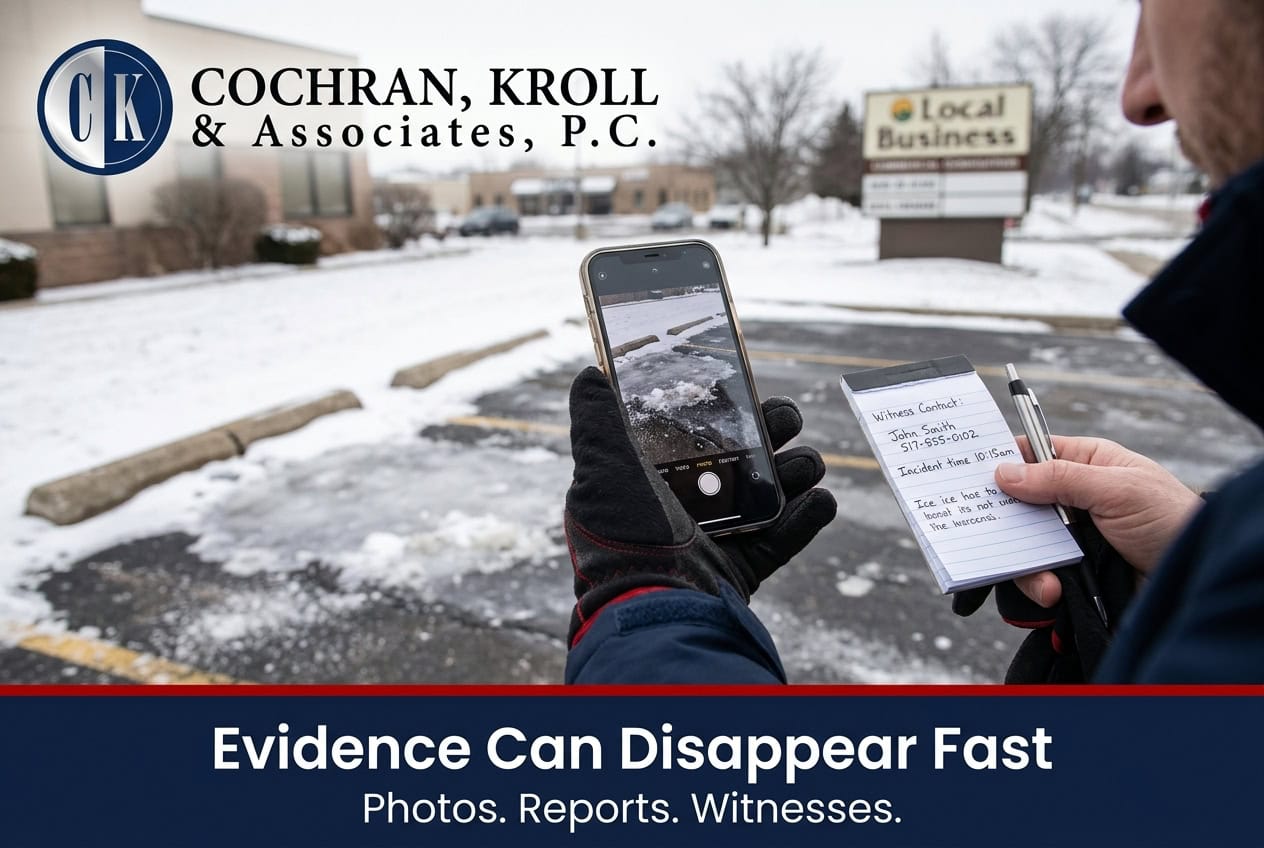
Report the fall to the property owner or manager and ask for a written incident report. Photograph the hazard from multiple angles before it is cleaned, salted, or repaired. Get the names and phone numbers of any witnesses. Save the footwear you were wearing.
Do not give a recorded statement to the property owner’s insurance adjuster before talking to a lawyer. Insurers train adjusters to extract phrases that can be replayed at trial to argue you were at fault. A free consultation costs nothing and protects you from those traps.
Why Lansing Residents Choose Cochran, Kroll & Associates
Premises liability cases live or die on evidence preservation. Surveillance video gets overwritten on a 30-day loop at most national retail chains. Sidewalks get salted, repaired, or rebuilt within weeks. We move quickly to issue preservation letters and lock in the proof before the defense has a chance to clean it up.
Our firm’s track record includes multi-million dollar personal injury recoveries, Super Lawyers recognition, and Martindale-Hubbell AV Preeminent ratings. Eileen Kroll’s clinical training also helps in cases of falls that cause head and spinal injuries, where the medical record can be the most contested part of the case.
Contact Our Slip and Fall Lawyers in Lansing
If you were hurt in a slip and fall accident in Lansing, a property owner’s failure to maintain a safe environment may have put you in this situation. You have the right to pursue compensation for your injuries, and you shouldn’t have to do it alone.
Contact us at Cochran, Kroll & Associates, P.C. for a free consultation. We’ll review your case, explain your options, and map out the strongest path forward. Remember, we don’t get paid unless you win.
Call us at 1-866-MICH-LAW anytime, 24/7, to schedule a free case evaluation.
Frequently Asked Questions About Slip and Fall Cases in Lansing
How long do I have to file a slip and fall claim in Lansing, Michigan?
Michigan generally gives you three years from the date of injury to file a personal injury lawsuit. Different deadlines apply if the property is owned by a governmental entity or if the injured person was a minor. Talk to a lawyer well before the three-year mark so that investigation and evidence preservation can begin while the proof is still fresh.
What happens to my claim if I was partially at fault for my own fall?
Under Michigan’s modified comparative negligence rule, your recovery is reduced by your percentage of fault, and you cannot recover non-economic damages if a jury finds you more than 50% responsible. The exact percentage is a contested issue in most cases. A lawyer’s job is to put your conduct in context.
How much is a Lansing slip and fall case actually worth?
Value depends on injury severity, medical bills, lost income, future care needs, and the strength of liability proof. There is no average dollar figure that meaningfully applies to a new case. We give realistic ranges only after reviewing the records, the incident report, and any video evidence.
Do I really need a lawyer to handle a slip and fall?
Minor injuries that resolve quickly can sometimes be handled directly with the insurer. Anything beyond that benefits from legal representation because premises liability defenses are technical, and adjusters routinely undervalue claims when no lawyer is involved. Our free consultation will tell you which side of that line your case is on.
Can I sue a Lansing business or landlord if I fell on their property?
Yes, if the elements of premises liability are met. Businesses, landlords, property management companies, and even snow removal contractors can all be appropriate defendants depending on the facts. We identify every potential defendant during the pre-suit investigation.
What if the property owner says the hazard was open and obvious?
That is a defense argument, not a final answer. Michigan courts have narrowed the open and obvious doctrine, and exceptions exist for hazards that are effectively unavoidable or have special aspects that make them unreasonably dangerous. Whether the doctrine actually bars your claim is a factual question developed during the case.