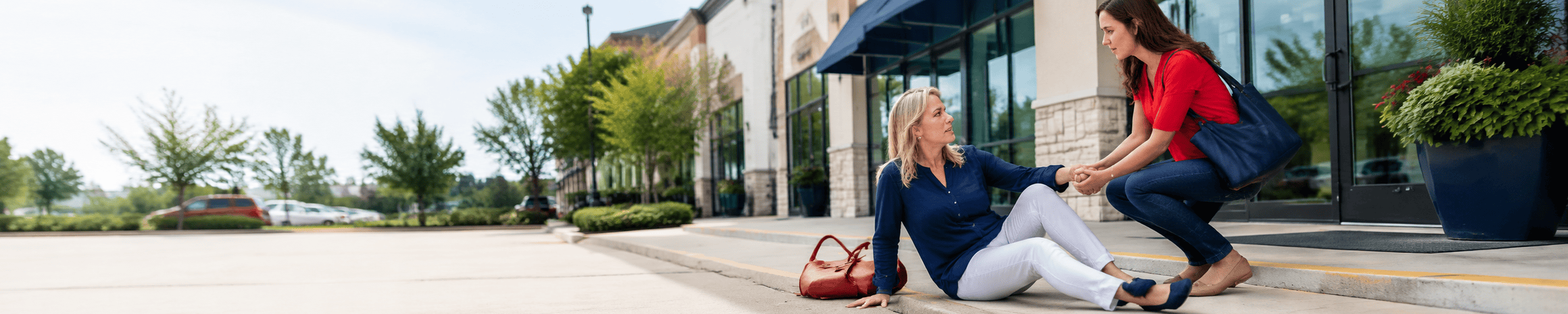
Slip and Fall Accident Attorney in Ann Arbor, MI

A bad fall can leave you in pain, out of work, and unsure who to blame. If a hazard on someone else’s property hurt you, a slip and fall accident attorney in Ann Arbor, MI from Cochran, Kroll & Associates, P.C. can hold the negligent owner accountable. Your consultation is free, and you owe no fee unless we win.
Call now: 1-866-MICH-LAW | Get Your Free Case Review
What Turns a Fall into a Legal Claim in Ann Arbor
Not every fall is someone else’s fault. A claim exists when a property owner or business fails to keep their premises reasonably safe, and that failure causes your injury. Michigan calls this premises liability, and it rests on a simple idea: people who invite the public onto their property owe a duty to address dangers they know about or should have found.
That duty shows up everywhere in Ann Arbor – the retail floors near Briarwood, restaurants and shops along State and Main, parking structures downtown, and the walkways around the University of Michigan campus that thousands cross every day. When an owner ignores a spill, a cracked step, or an iced-over entrance, the resulting injury can support a slip and fall practice claim.
Falls are also more dangerous than people assume. The CDC reports that falls are a leading cause of injury nationwide, sending millions to emergency rooms each year. A fractured wrist, a torn knee, or a head injury can mean months of recovery and lasting limitations.
Where Falls Happen Around Ann Arbor
The location of your fall shapes the evidence and the responsible party. These are the hazards we see most often in Washtenaw County claims.
Wet and Slippery Floors

Spilled drinks, freshly mopped tile, leaking coolers, and tracked-in rain create slick surfaces in stores and restaurants. The question is whether staff knew or should have known and failed to clean it or warn you. Surveillance footage and cleaning logs often tell that story.
Ice and Snow on Michigan Walkways

Ann Arbor winters bring black ice to sidewalks, entrances, and parking lots. Property owners are not expected to keep every surface perfectly clear at all times, but they cannot ignore an obvious, dangerous buildup either. We examine weather records, salting practices, and how long the hazard sat untreated to show what reasonable care would have looked like.
Broken, Uneven, and Poorly Maintained Surfaces
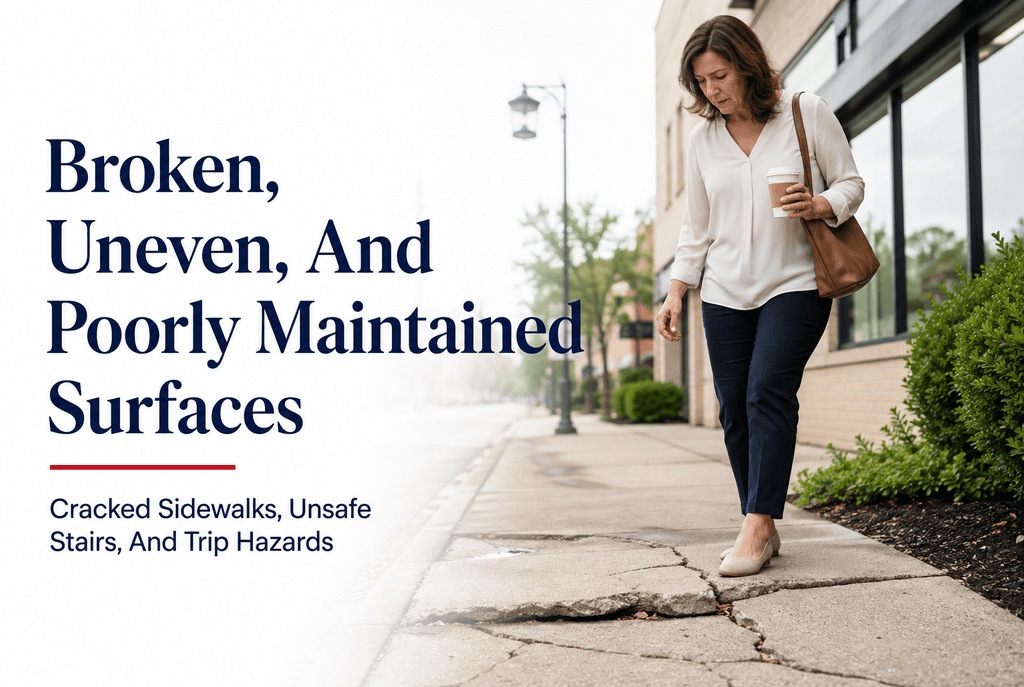
Cracked sidewalks, loose floor tiles, torn carpeting, potholes in lots, and crumbling stairs cause serious trips. Deferred maintenance is a common thread, and inspection records or prior complaints can reveal an owner who knew about the danger and did nothing.
Bad Lighting and Missing Safety Features
A poorly lit stairwell or parking garage hides hazards a person would otherwise avoid, and a missing handrail removes the one thing that could prevent a fall. Building and safety standards, including federal guidance on walking-working surfaces, help establish what an owner should have provided.
Who Can Be Held Responsible for Your Injury
Identifying the right defendant is one of the first things we sort out, because more than one party may share blame.
- Property owners: the people who own the building or land where you fell
- Business tenants: stores, restaurants, or offices responsible for keeping their space safe for customers
- Property managers and landlords: landlords accountable for common areas, stairwells, and shared walkways
- Maintenance and snow-removal companies: contractors hired to plow, salt, or maintain the property
- Government entities: cities, the county, or public universities, which carry special rules and shorter deadlines
Public property changes the analysis significantly. Claims against a city, Washtenaw County, or a public institution face governmental immunity rules and tight notice requirements, so those cases must be moving quickly from day one.
Proving Negligence Under Michigan Premises Law
Winning a fall claim means proving four things: the owner owed you a duty, breached it, that breach caused your fall, and you suffered real damages. Each element needs evidence, and Michigan defendants fight hard on every one.
For years, owners leaned on the “open and obvious” defense – arguing that an obvious hazard relieved them of responsibility. Michigan law on this point has shifted, and courts now weigh the obviousness of a danger as part of fault rather than treating it as an automatic bar to a claim. The current rules are applied by the Michigan Courts, and we will explain exactly how they affect your case.
Michigan also includes a modified comparative fault system. If you were partly responsible for your fall, your recovery can be reduced, and being more than half at fault can limit certain damages. The governing statutes are published by the Michigan Legislature. Because insurers use these rules to shift blame onto you, preserving evidence early is critical: photographs of the hazard, the names of witnesses, the incident report, any surveillance footage, and your medical records.
What Your Ann Arbor Fall Claim Can Be Worth
Compensation depends on how the injury affects your life, not on a fixed formula. We document both the bills you can count and the losses that are harder to measure.
- Medical expenses: emergency care, surgery, imaging, and future treatment
- Lost wages: income lost during recovery and reduced earning capacity going forward
- Rehabilitation: physical therapy and rehabilitation costs
- Non-economic harm: pain, suffering, and the loss of activities you enjoyed
- Disability costs: expenses tied to a long-term or permanent disability
Michigan generally gives injured people three years from the date of a fall to file a personal injury lawsuit, but claims involving government property can carry far shorter notice deadlines. A serious fall that causes a head injury may also overlap with our brain injury claims work, where the long-term costs run especially high.
A Track Record Insurers Take Seriously
Settlement offers improve when the other side knows your firm will go to trial. Cochran, Kroll & Associates has secured substantial results across serious injury matters, including a $3.3 million auto accident recovery and $1.4 million in a brain injury case. You can review our recorded verdicts for a fuller picture.
Past results do not guarantee future outcomes, and every premises case turns on its own facts. What this history signals to an insurer is a firm prepared to litigate rather than accept a lowball offer.
Why Ann Arbor Residents Choose Cochran, Kroll & Associates
We have represented injured Michiganders since 1990, and our attorneys hold recognitions including Super Lawyers and Martindale-Hubbell AV Preeminent ratings. Roughly 95% of our cases settle out of court, yet we prepare each one for trial. You can meet our attorneys and read about their backgrounds before you decide.
Practical access matters too. We take personal injury representation on contingency, so there is no fee unless we recover for you, and our toll-free line answers 24 hours a day. After a fall, you focus on healing while we handle the insurer.
Contact Our Slip and Fall Accident Attorneys in Ann Arbor
If you were hurt in a slip and fall accident in Ann Arbor, a negligent property owner may owe you compensation. Injuries from these accidents can be more serious than they appear, and getting legal help early can protect your claim.
Contact us at Cochran, Kroll & Associates, P.C. for a free consultation. We’ll review your case, explain your options, and map out the strongest path forward. Remember, we don’t get paid unless you win.
Call us at 1-866-MICH-LAW anytime, 24/7, to schedule a free case evaluation.
Frequently Asked Questions
How long do I have to file a slip and fall claim in Ann Arbor?
In most cases, Michigan allows three years from the date of your fall to file a personal injury lawsuit. That window shrinks dramatically when a city, the county, or a public university is involved, since those claims require prompt written notice. The safest move is to call early so no deadline slips past.
What if the property owner says the hazard was obvious?
Owners often argue you should have seen and avoided the danger. Michigan law has changed how this argument works, and an obvious hazard no longer automatically defeats a claim – instead it is weighed as part of fault. We will explain how the current rule applies to your specific fall.
Am I barred from recovering if I was partly at fault?
Not necessarily. Michigan uses a modified comparative fault system, so your compensation can be reduced by your share of responsibility rather than eliminated. There is a threshold that affects certain damages, which is one reason insurers try to pin extra blame on you. We push back with evidence.
Do I really need a lawyer for a fall injury?
For a minor scrape, probably not. For an injury that involves medical bills, missed work, or a lasting limitation, yes – because property owners and their insurers raise technical defenses that are hard to counter alone. A lawyer preserves evidence, values the claim accurately, and negotiates from strength.
What should I do right after falling?
Get medical attention first, even if you feel okay, because some injuries surface later. Then report the fall to the property, photograph the hazard and surroundings, collect witness contact information, and keep your shoes and clothing. Those early steps often make or break a premises liability case.
Can I sue if I fell on city or university property in Ann Arbor?
You may be able to, but public-property claims are governed by governmental immunity and strict notice rules with short deadlines. These cases are more complex than claims against private businesses. Contact an attorney immediately so the required notice is filed correctly and on time.
Does a wet-floor sign automatically end my claim?
No. A warning sign is one factor, not a complete shield. If the sign was hidden, placed too late, or the hazard was unreasonable despite the warning, you may still have a valid claim. We look at where the sign was, when it appeared, and whether it actually gave you a fair chance to avoid the danger.
How much does it cost to hire your firm?
Nothing upfront. We handle slip and fall cases on a contingency fee, meaning you pay no attorney fee unless we recover compensation for you. The consultation is free, so you can learn where you stand without any financial risk.