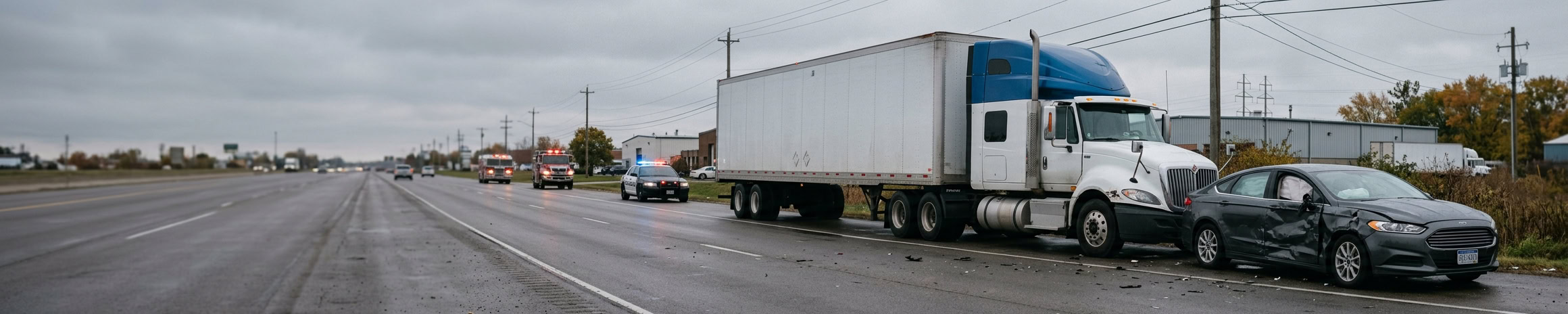
Truck Accident Lawyer in Warren, Michigan
Warren sits at the intersection of some of the busiest commercial corridors in southeast Michigan. I-696, I-75, M-53, and Van Dyke Avenue route thousands of commercial trucks every day, many of them servicing the General Motors Tech Center, Detroit Arsenal, and the dense automotive supply chain in Macomb County. When one of those rigs is involved in a crash, the people in the passenger vehicles take the worst of it. Cochran, Kroll & Associates, P.C. represents Warren-area crash victims in cases against motor carriers, trucking insurers, and cargo loaders. Our Truck Accident Attorney Warren practice has secured results, including a $1.3 million recovery. Call 1-866-MICH-LAW for a free conversation today.
Key Takeaways
- Trucking crashes involve federal regulations, electronic logging devices, and multiple potential defendants that standard auto cases do not.
- Critical evidence, such as electronic control module data and driver logs, can be lost within days if no preservation letter is sent.
- Michigan no-fault coordinates with a third-party claim against the trucking company; the two are not mutually exclusive.
- Catastrophic injuries from truck crashes can include traumatic brain injury, spinal cord damage, and wrongful death.
- Free consultations are available 24/7, and there are no attorney fees until we recover for you.
Why Truck Accident Cases in Warren Are More Complex Than Standard Car Crashes
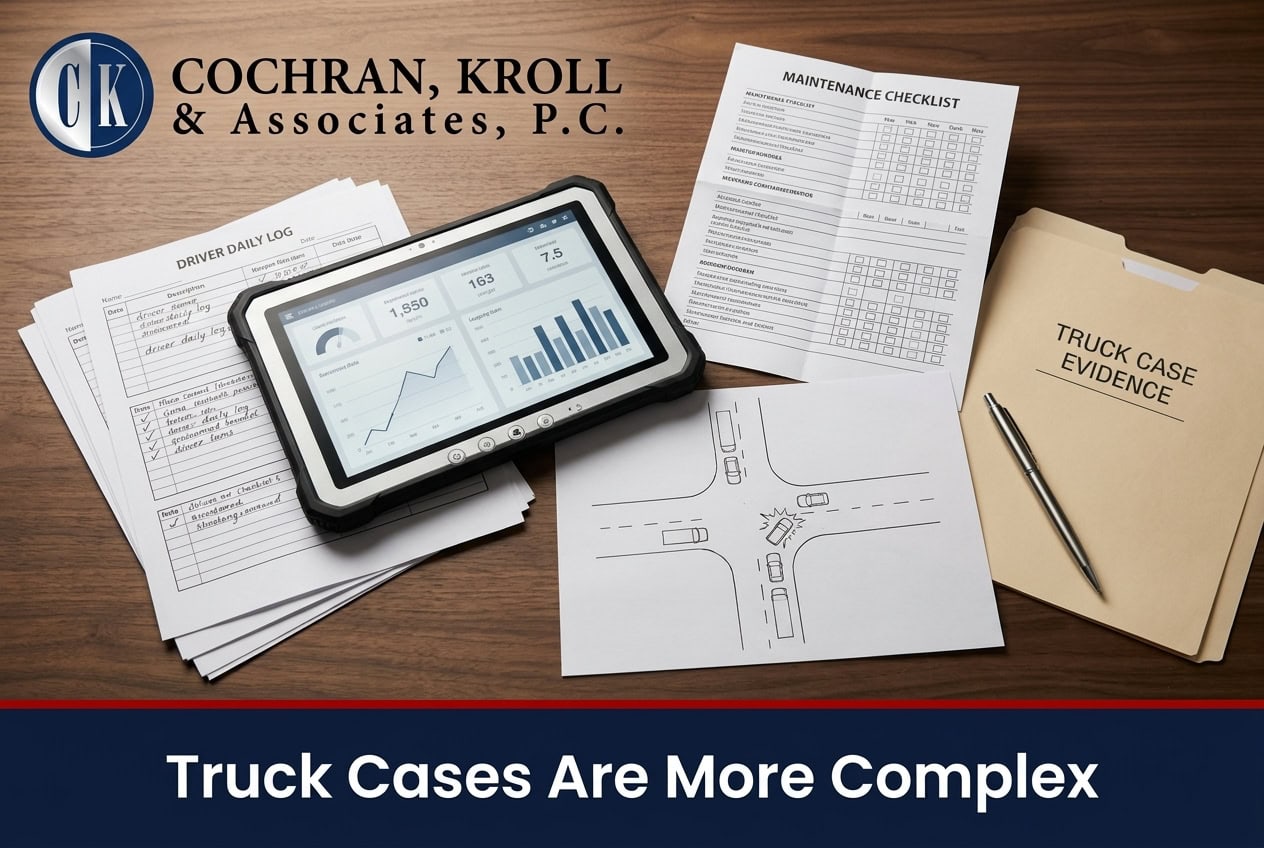
A passenger car weighs roughly 4,000 pounds. A fully loaded tractor-trailer can weigh 80,000 pounds. The physics of the collision are different, and the injuries are predictably worse. So is the legal complexity. Trucking is regulated by the Federal Motor Carrier Safety Administration, which means hours-of-service rules, drug and alcohol testing requirements, equipment inspection standards, and electronic logging device mandates all become evidence in the case.
There are usually more potential defendants than in a car-on-car case. The driver may have one employer, the cargo may have been loaded by a third party, the maintenance may have been outsourced, and the broker who arranged the load may have its own duties. Michigan truck accident claims require a lawyer who knows how to follow each of those threads.
Common Causes of Commercial Truck Crashes on Warren Roads
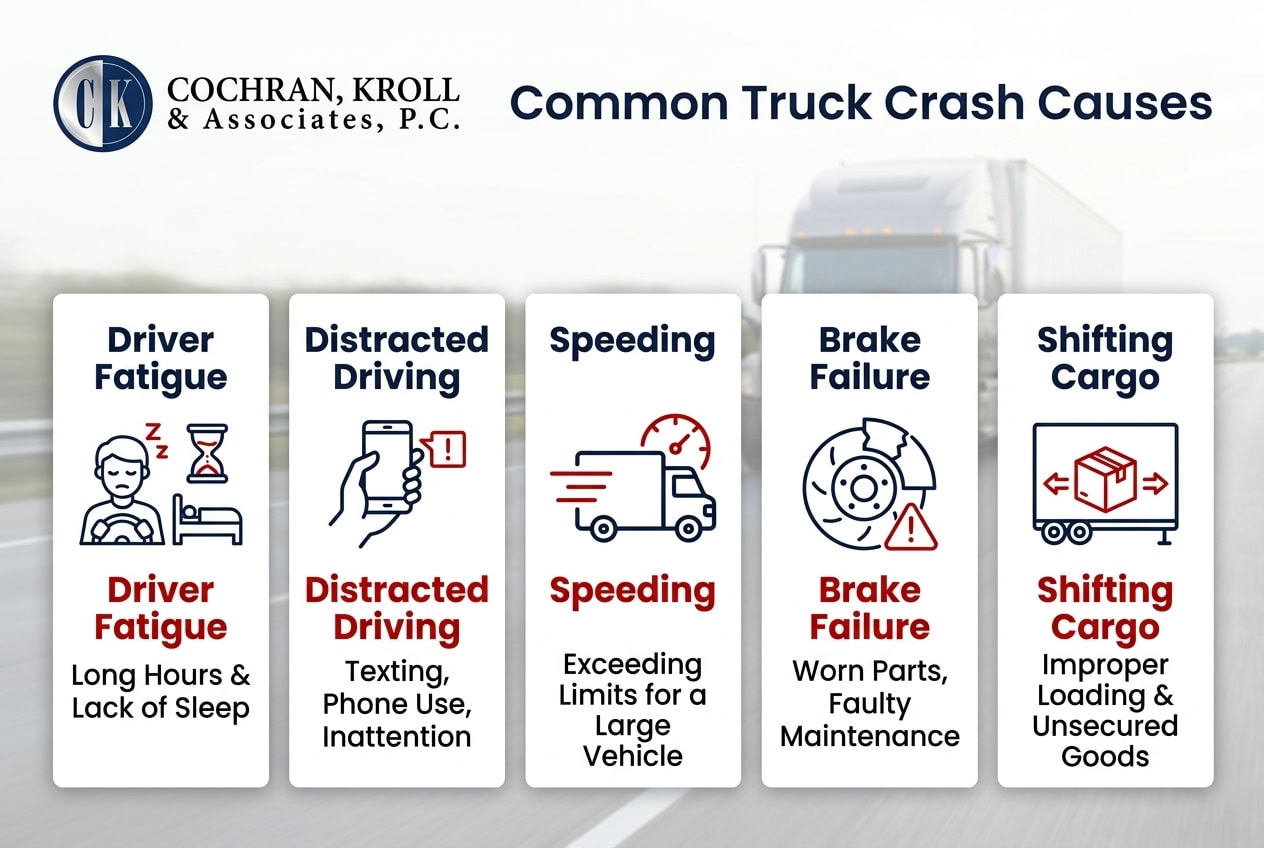
Driver fatigue is the cause we investigate most often. Federal hours-of-service rules cap on-duty time, but pressure to meet delivery windows still leads to log falsification. Distracted driving on smartphones and in-cab fleet management systems is now a routine factor. Speeding on the I-696 corridor and on Van Dyke during rush hour produces a steady stream of rear-end and lane-change crashes.
Other recurring causes include improperly secured cargo that shifts mid-route, brake failure traceable to skipped maintenance, drunk or drug-impaired driving, lane departure caused by drowsy following distances, and equipment defects that the carrier knew about but failed to repair. Each cause has its own evidentiary footprint inside the truck’s electronic and paper records.
Who Can Be Held Liable in a Warren Truck Accident?
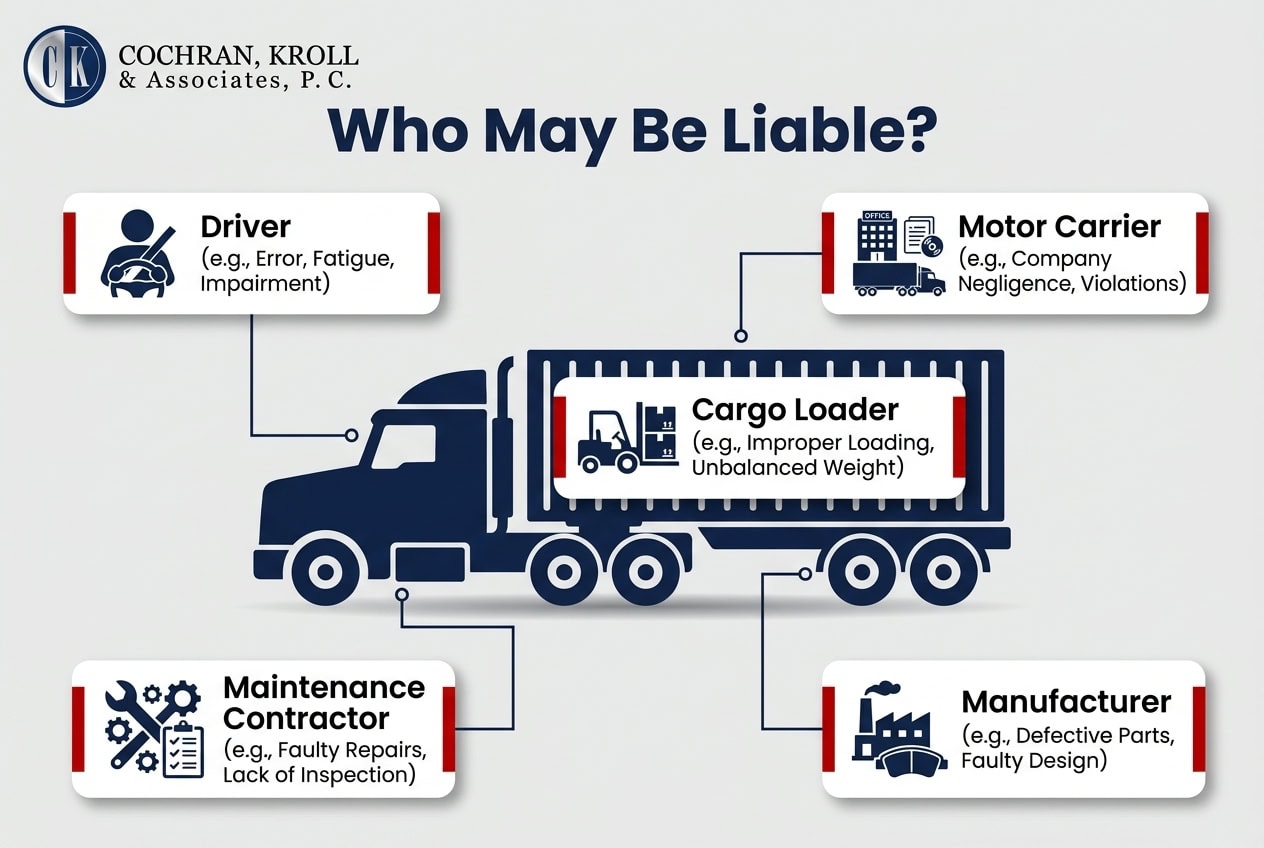
Liability in a commercial truck case often spreads across multiple defendants. The driver bears personal responsibility for negligent driving. The motor carrier that employed the driver may be vicariously liable for the driver’s acts within the scope of employment, and directly liable for negligent hiring, training, supervision, or retention.
The cargo loading company may be liable when an improperly loaded trailer contributed to the crash. The truck manufacturer or component manufacturer may be liable when a mechanical defect played a role. The maintenance contractor may share responsibility when documented inspections were skipped. Even the freight broker may be liable in some cases when the broker knew or should have known the carrier was unsafe.
Our investigation identifies every appropriate defendant before we file. Pulling in the right parties early is what protects the value of the recovery.
Injuries From Truck Crashes and Their Long-Term Impact
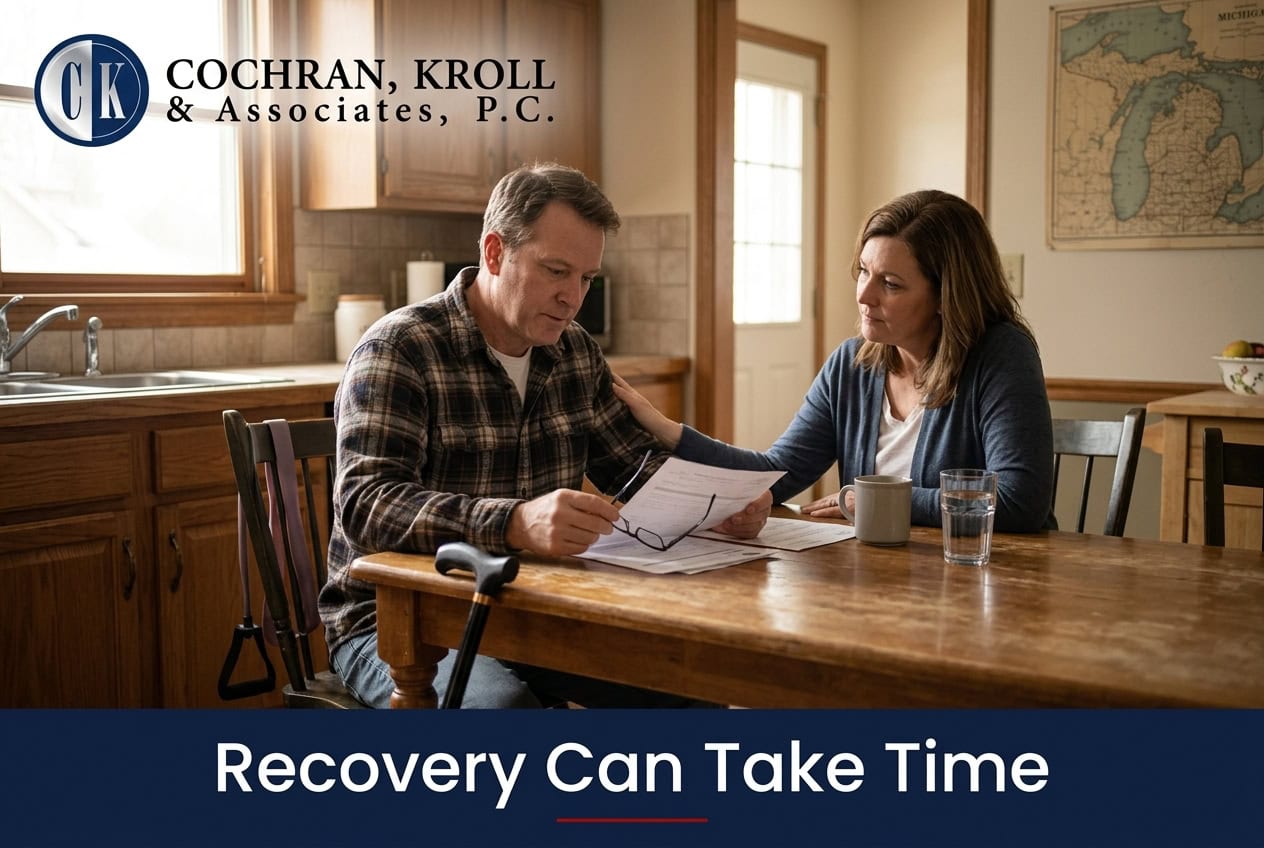
Truck crash injuries are predictable in their severity. Traumatic brain injuries from rapid deceleration or direct impact are common. Spinal cord injuries can produce paralysis or chronic radiculopathy. Internal organ damage and crush injuries are frequent in side-impact and underride collisions. Burns from post-crash fires happen in fuel-line failures. Wrongful death is the worst outcome we see.
Even when the injuries are survivable, the recovery curve stretches for years. Brain injury cases in particular can require ongoing neuropsychological care, vocational retraining, and accommodations that change a family’s financial picture for life.
What Compensation Can You Recover After a Warren Truck Accident?
Compensable damages include medical expenses, lost wages, diminished earning capacity, future medical care, vehicle replacement, and pain and suffering. In catastrophic cases, life care planning becomes part of the damages model so that future surgeries, therapies, and adaptive equipment are funded by the recovery rather than by the family.
Wrongful death cases under Michigan law allow recovery for funeral expenses, loss of financial support, and loss of companionship and society. Specific values are not formulas; they reflect the medical, vocational, and personal facts of the case. Past truck accident results from the firm illustrate the range.
Critical Steps to Take After a Truck Crash in Warren
Call 911 and get medical attention even if you feel functional at the scene. Adrenaline masks serious injuries for hours. A documented emergency department visit anchors the medical timeline that the insurer will later try to argue against.
If you are able, document the scene. Photograph the truck from multiple angles, the trailer placards, the cargo, the road conditions, and the position of every vehicle before they are moved. Record the truck’s DOT number, the carrier name on the cab door, the license plate, and the trailer number. Get the contact information of any witnesses.
Avoid providing any recorded statements to the insurer representing the trucking company. Do not sign authorizations. The trucking insurer’s representatives are trained to extract phrases that limit the carrier’s exposure. Call a lawyer first.
How Our Firm Investigates Warren Truck Accident Cases
Step one is a preservation letter to the motor carrier within hours of being retained. The letter demands preservation of the electronic control module data, the electronic logging device records, the driver’s qualification file, the driver’s hours-of-service logs, post-crash drug and alcohol test results, the truck and trailer inspection records, and any in-cab camera footage. Without that letter, the data can be overwritten.
Step two is accident reconstruction. We work with engineers who can rebuild the crash from skid marks, vehicle damage patterns, and electronic data. Step three is a review of the carrier’s FMCSA compliance history. Step four is the identification of every appropriate defendant. Step five is filing in Macomb County circuit court and proceeding through discovery, mediation, or trial.
Roughly 95% of the firm’s cases resolve through settlement. We prepare every truck case as if it will be tried in front of a Macomb County jury, which is what allows favorable settlements to happen.
How Michigan No-Fault Coordinates With a Truck Accident Claim
Michigan is a no-fault state. Personal injury protection benefits from your own auto policy pay medical expenses and a portion of lost wages regardless of who caused the crash, subject to the coverage limits you selected. A third-party negligence claim against the trucking company is separate and addresses non-economic damages and the parts of your loss that no-fault insurance does not cover.
Coordinating the two systems takes work. Filing a no-fault claim incorrectly or missing a deadline can cost benefits that should have been paid. Our office handles both tracks in parallel so that the no-fault file does not become a problem inside the third-party case.
Contact Our Truck Accident Attorneys in Warren
If you were injured in a truck accident in Warren, the aftermath can be physically, emotionally, and financially draining. Trucking companies have experienced legal teams ready to fight your claim, and you need a skilled attorney ready to fight back.
Contact us at Cochran, Kroll & Associates, P.C. for a free consultation. We’ll review your case, explain your options, and map out the strongest path forward. Remember, we don’t get paid unless you win.
Call us at 1-866-MICH-LAW anytime, 24/7, to schedule a free case evaluation.
Frequently Asked Questions About Truck Accidents in Warren
How long do I have to file a truck accident claim in Michigan?
Michigan generally gives you three years from the date of the crash to file a personal injury lawsuit. Different deadlines apply to claims against governmental entities and to claims involving minors. Michigan no-fault PIP claims have their own much shorter notice requirements, so reach out early.
What is the average truck accident settlement value in Warren?
There is no meaningful average that predicts your case. Value depends on injury severity, future care needs, lost earning capacity, available insurance coverage on the carrier, and the strength of liability proof. Our firm’s past truck recoveries include a $1.3 million result, with the standard disclaimer that prior outcomes do not guarantee any new case.
Can I sue the trucking company instead of just the driver?
Yes, in most cases. The motor carrier that employs the driver is generally vicariously liable for the driver’s negligence during the scope of employment, and directly liable for negligent hiring, training, supervision, or retention. We identify every appropriate defendant during pre-suit investigation.
What happens if the truck driver were an independent contractor?
Whether a driver is genuinely independent or functionally an employee is a contested legal question, often turning on the control the carrier exerts over the work. Even when the driver is independent, the carrier may still be liable on theories of non-delegable duty, brokering liability, or negligent retention. We litigate the classification when the facts support it.
How much does it cost to hire a truck accident lawyer?
Our firm works on contingency. You pay no attorney fees up front, and we charge a percentage of the recovery only if we win. Litigation costs, including accident reconstruction experts and medical reviews, are advanced by the firm while the case is pending.
What kinds of evidence matter most in a commercial truck case?
Electronic control module data, electronic logging device records, driver qualification files, hours-of-service logs, maintenance records, post-crash drug and alcohol testing, in-cab camera footage, and FMCSA compliance history. Most of that evidence has a short shelf life unless a preservation letter is served promptly.